


 Ebola
Ebola
Over 1,900 dead in DR Congo Ebola outbreak—WHO reveals why so many are dying
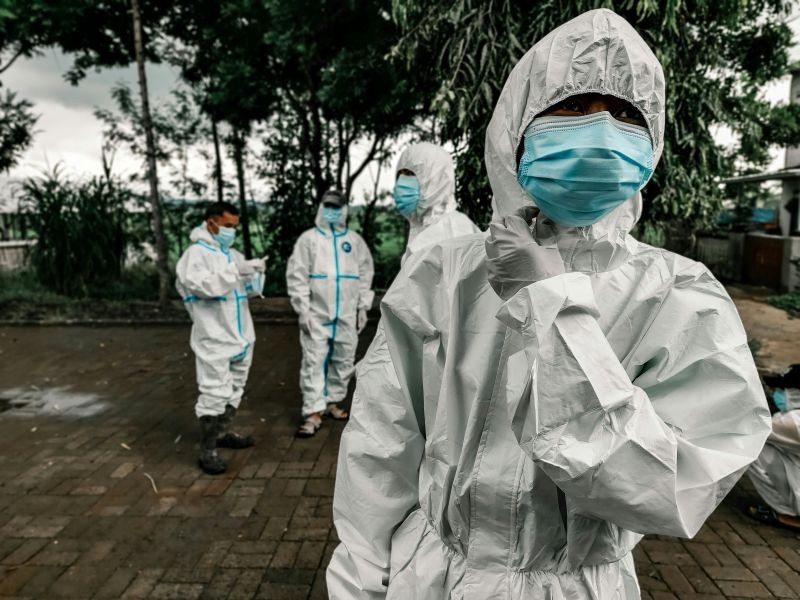
More than 1,900 people have died in the Democratic Republic of the Congo's Ebola outbreak – and most of them never made it to a treatment centre. Between 60 and 70 per cent of deaths are happening in communities far from care, a gap that is now central to the World Health Organization's response.
“The Bundibugyo virus continues to outpace us,” said Dr. Mohamed Janabi, WHO Regional Director for Africa, speaking from Bunia, the epicentre of the outbreak in eastern DRC – referring to a particularly lethal Ebola strain for which there is still no approved vaccine.
“The Bundibugyo virus continues to outpace us,” Dr. Mohamed Janabi, WHO Regional Director for Africa, said at a press conference, referring to the particularly lethal species of Ebola for which no approved vaccine currently exists.
Three months into the outbreak, the UN health agency intends – along with Congolese authorities and their partners – to “urgently intensify” the response because behind the heavy human toll lies a problem that has become central: too many patients are receiving treatment too late.
Understanding the numbers
Dr. Janabi recently spent three days in Bunia, capital of Ituri province – his fifth visit since the epidemic was declared there on 15 May.
Alongside Dr. Steve Ahuka, one of the Congolese leaders of the response, he visited several treatment centres and met community members to understand why the death toll remains so high.
Discussions with representatives of the local transport association highlighted shortcomings in the patient transport system. According to WHO, half of the deaths observed among transported individuals are linked to the conditions of their care.
“We asked ourselves why people are dying in Bunia? But talking to these leaders, we understood two things,” said Dr. Janabi.
“Village centres outside of Bunia, they don’t have these services. As a result, everyone comes to Bunia. Unfortunately, they come late.”
Distances and deaths
The concentration of healthcare capacity in the city thus transforms distance into a factor in mortality.
As patients lack suitable facilities near their homes, they must travel long distances before receiving care, and sometimes when their health is already severely compromised.
The journey itself can also fuel the epidemic. Patients taken to Bunia are not always sent directly to an Ebola treatment centre. Some are first taken home. When they die, their bodies may be taken back to their villages, thus multiplying contacts and the risk of further infections.
WHO wants to break this chain by bringing healthcare facilities closer to communities, better informing the public and transport providers, and promptly referring suspected cases to appropriate centres.
“Three months after the start of the epidemic, if we are seeing only 30 per cent, can we sit down and review our approach?” asked the agency’s head for Africa.
Aru shows the way
The town of Aru, also in Ituri province, provides an example of what this shift in strategy could achieve. No new cases have been recorded there for two weeks, representing a real “success story”.
Dr. Janabi said that after a case was detected, teams identified 159 contacts, including 121 people who were considered suspected cases. However, response was not limited to monitoring these individuals and was extended to surrounding communities, from which many patients originate.
Moreover, healthcare facilities are being established – and awareness campaigns conducted – so that residents no longer have to travel to Bunia for treatment. The objective is twofold: to treat patients earlier and to prevent the provincial capital from becoming a hub for both patients and increased risk of transmission.
Centred on community
“We have to protect Bunia now,” said Dr. Janabi, adding that WHO will meet with the Congolese health authorities “and see how we can build centres now outside Bunia so that we can content those people where they are.”
WHO also plans to add 400 beds dedicated to Ebola patients and another 100 for various health services, but the UN agency also insists on the need to broaden the response beyond the healthcare system alone.
For example, vendors in markets could install handwashing stations themselves, he said, stressing that the fight against Ebola must be a collective effort.
“I don't expect the central Government to do everything. I don't expect our agencies to do everything. But if we raise awareness among market vendors, they can themselves donate a bucket or two for handwashing,” he said.
After three months of the epidemic, WHO is therefore counting on a change of scale but above all, of method: less concentration of the response in Bunia and earlier intervention closer to transmission hotspots.
Dr. Janabi believes that this approach could produce results in the next two or three months.
The top WHO official said he was leaving Bunia “very optimistic”, but the figures demonstrate the current urgency because if the majority of Ebola deaths continue to occur in communities rather than in healthcare facilities, the virus will maintain its advantage.
Support Our Journalism
We cannot do without you.. your contribution supports unbiased journalism
IBNS is not driven by any ism- not wokeism, not racism, not skewed secularism, not hyper right-wing or left liberal ideals, nor by any hardline religious beliefs or hyper nationalism. We want to serve you good old objective news, as they are. We do not judge or preach. We let people decide for themselves. We only try to present factual and well-sourced news.
Support objective journalism for a small contribution.


