 Ebola
Ebola
Ebola panic incoming? WHO chief sounds alarm on global preparedness
The recent Ebola and hantavirus outbreaks demonstrate that the world is still vulnerable to rapidly spreading infectious diseases, Tedros Ghebreyesus, the head of the World Health Organization (WHO), warned on Saturday at the close of the 79th World Health Assembly in Geneva.
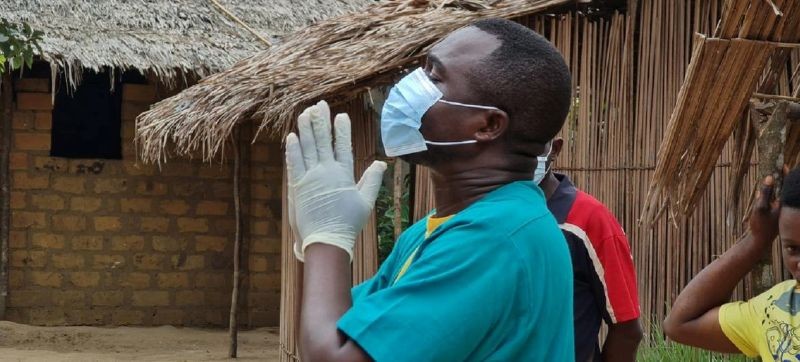
His call came as Ugandan authorities confirmed on Saturday that there were three new cases of the Bundibugyo strain of the Ebola virus, which to date has neither a cure nor a vaccine.
“The three new cases include a Ugandan health worker, a driver and a Congolese national who travelled from Ituri Province in the neighbouring Democratic Republic of the Congo, (DRC), for medical care,” Tedros said in a social media post. “This brings the total number of people in Uganda who have tested positive for Ebola disease caused by the Bundibugyo virus to five.”
WHO is working with the Africa Centres for Diseases Control and Prevention, (Africa CDC) and partners in the DRC and Uganda, to contain the outbreak, support affected people and help to coordinate the response. On Friday, WHO raised the national risk assessment for the DRC to “very high” – although the global risk remains low.
Cross-border collaboration essential
In Kampala, Uganda, WHO held a two-day high-level ministerial meeting on cross-border coordination in response to the Bundibugyo Ebola outbreak.
Addressing ministers from South Sudan, the DRC and Uganda, Dr. Marie Roseline Belizaire, WHO Africa’s Director of Emergency Preparedness and Response, stressed the need to strengthen and sustain cross-border collaboration to contain the outbreak.
She warned that delays in response can have serious consequences and emphasised that stronger surveillance and preparedness systems are critical because “time saves lives” during outbreaks.
Sustained financial contribution
The Director-General appealed to Member States to continue increasing assessed financial contributions to ensure WHO remains strong, independent and capable of responding to future global emergencies.
He also stressed that global agreements must translate into practical action that protects communities, contains outbreaks quickly and ensures healthcare reaches vulnerable populations.
“Every nation is healthier and safer when all nations are healthier and safer,” he said.
Key agreements reached during the assembly
The week-long Assembly concluded with Member States adopting resolutions on several major health priorities, including:
Tuberculosis control
Emergency and critical care
Precision medicine
Stroke prevention and treatment
Neglected tropical diseases (NTDs)
Diagnostic imaging
Pharmacovigilance and medicine safety
Transplantation and liver disease
Countries also agreed to reform the global health architecture through a WHO-hosted, Member State-led process aimed at improving international coordination during health crises.
Leaders emphasised that the success of these agreements will depend on implementation at country level, including stronger health systems, financing and community engagement.body.
Support Our Journalism
We cannot do without you.. your contribution supports unbiased journalism
IBNS is not driven by any ism- not wokeism, not racism, not skewed secularism, not hyper right-wing or left liberal ideals, nor by any hardline religious beliefs or hyper nationalism. We want to serve you good old objective news, as they are. We do not judge or preach. We let people decide for themselves. We only try to present factual and well-sourced news.
Support objective journalism for a small contribution.