


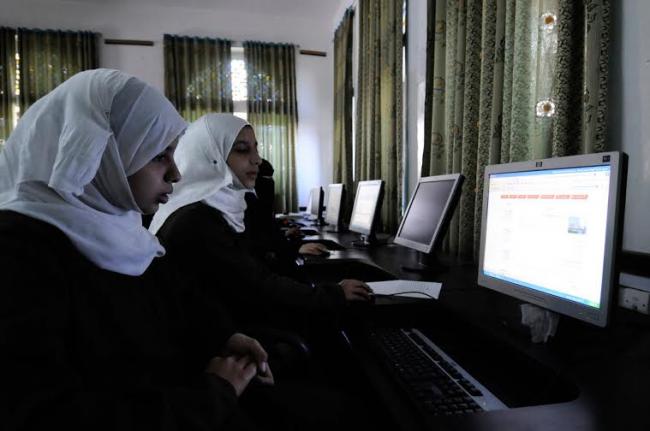
New UN initiative to boost access to science, technology for world's least developed countries
At yesterday’s conclusion of an international gathering in Gebze, Turkey, a High-Level Panel established by the United Nations Secretary-General Ban Ki-moon in November last year, agreed to prepare a study on the creation of a ‘Technology Bank’, specifically aimed at addressing STI gaps in least developed countries (LDCs).
“I am happy with the first meeting of the High-Level Panel, which focused on concrete articulation of the practical and operational aspects of the Technology Bank for LDCs,” said Gyan Acharya, UN High Representative for LDCs, Landlocked Developing Countries and Small Island Developing States.
“Once operational, the Bank will make critical contributions to transforming the lives of the poorest segments of the global community,” he added.
The state of science and technology is weak in the least developed countries and as a result, they face immense challenges in their use of science, technology and innovation to fight poverty and improve the socio-economic conditions of their people. Acquiring new technologies and building a knowledge base to be able to fully that technology is critical for the socio-economic transformation of the LDCs. Development of this sector is also expected to bridge LDCs’ digital divide and technology gap.
The 11-person Panel, made up of representatives from LDCs and development partners, is tasked with ensuring that the proposed Technology Bank is able to effectively address questions relating to technology transfer, including intellectual property rights issues. A key undertaking of the new study will be to identify existing international initiatives in order to limit duplication of effort, as well as take into consideration streamlined management and costs.
The UN Office for Least Developed Countries, Landlocked Developing Countries and Small Island Developing States (UN-OHRLLS) will serve as Secretariat to the Panel and coordinate the undertaking of the study. The Panel is expected to deliver its recommendations on the details of the Technology Bank to the Secretary-General in July 2015.
The genesis of a multilateral effort to advance and accelerate science and technology among LDCs emerged from the Fourth UN Conference on the Least Developed Countries which was held in Istanbul, Turkey in May 2011. That gathering called for an evaluation of a proposed Technology Bank, Science, and Information support mechanism, which would help improve research, promote networking institutions and help LDCs access critical technologies.
Photo: World Bank/Dana Smillie
Support Our Journalism
We cannot do without you.. your contribution supports unbiased journalism
IBNS is not driven by any ism- not wokeism, not racism, not skewed secularism, not hyper right-wing or left liberal ideals, nor by any hardline religious beliefs or hyper nationalism. We want to serve you good old objective news, as they are. We do not judge or preach. We let people decide for themselves. We only try to present factual and well-sourced news.
Support objective journalism for a small contribution.


