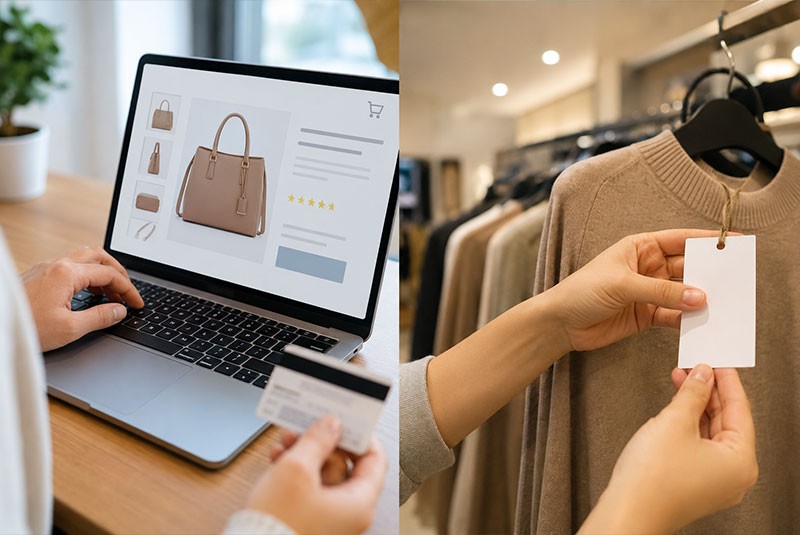
Why the price you see online is not always what you pay at the store
With online shopping becoming so popular now, it is easier than ever to compare different products, find worthy deals and make various purchases with just a few clicks. It is, however, common for consumers to think that the price listed on a website or mobile application is the same they would pay in a retail store. However, sometimes the final price may be more or less than what is advertised online.
There can be factors leading to such price discrepancies, like taxation, shipping costs, special offers, and retailer tactics. Sometimes, the same product can even be offered at different prices online and in a brick-and-mortar store.
Let us explore the reasons behind these price variations, which will aid consumers in making better selections and preventing unpleasant surprises.
Why is there a difference between online and in-store prices?
Retailers usually function via more than one sales channel, which can be their websites, mobile applications, and retail outlets. Every channel comes with its own costing, promotion schemes and strategy of pricing.
Consequently, depending on the channel, that same product can be sold for different prices. Retailers can also tweak prices in response to consumer demand, stock availability or ongoing promotion campaigns. Knowing these differences not only helps customers avoid being taken aback at checkout but also enables them to effectively compare options prior to buying.
Some common factors which influences the final price
Here are some factors to consider.
Promotional offers and discounts
Retailers often end up offering various promotions for different channels. A discount you see online may not be offered in the retail store. Similarly, an in-store discount may not be valid for online orders.
Certain offers might also demand the use of a voucher code, a minimum purchase quantity or a particular payment option . By paying close attention to the offer terms, shoppers can be aware of how much they are actually saving.
Different operating costs across sales channels
There are costs like monthly rent, electricity charges, and employee salaries borne by physical stores, which can affect the in-store pricing of products. The cost structure for online retailers may be different, and for some businesses, these reduced operating costs can result in more competitive pricing online.
Taxation and additional charges
The online pricing does not always reflect all charges, and sometimes it's possible to add taxes, delivery fees, or convenience fees during the checkout process. This may result in the final price at the point of sale exceeding the price advertised. Checking the full detailed cost before ordering can help prevent such unforeseen expenses.
Membership and loyalty benefits
Some prices may only apply to those who participate in subscription services or loyalty programs. These advantages can be in the form of reward points, exclusive discounts, or cashback schemes.
This means that two customers who buy the same product could be charged different prices. Before purchasing, shoppers can verify available membership benefits to maximise their savings.
Dynamic pricing and inventory levels
In many businesses, prices are adjusted according to the demand and availability of the product. The price can go up if the demand grows considerably, whereas when there is surplus stock, discounts may be offered.
Retailers can also adopt distinct pricing strategies for various outlets or channels, which can lead to price discrepancies between online and offline store prices for the same product.
How can shoppers avoid unexpected costs?
Here is how you can avoid such costs.
Read promotional terms carefully
Discounts and special offers may be subject to conditions. A proper understanding of these conditions will help you to figure out if the offer is truly reducing the end cost or not.
Compare the final checkout amount
Do not just look at the price that is on the display, but check the amount that has to be paid in total before you make a purchase. This can consist of taxes, delivery charges, and other fees.
Compare prices across channels
By comparing the prices of online and offline stores, the most cost-effective option can be identified. This is especially beneficial for buying products where the prices fluctuate often. For example, a person buying silver artefacts in Mumbai can compare silver rates in Mumbai today or even compare the silver prices in general before buying across different channels.
Conclusion
Not all of the prices shown online are the actual prices that the customer pays. We now know the different reasons and register the impact. Whether one is shopping online or in a physical store, it is essential to be conscious of what one wants, compare prices, stay aware, and make smart choices. Consumers can make more informed decisions and avoid unexpected expenses by understanding the factors that come into play and reviewing the full price prior to buying.
Support Our Journalism
We cannot do without you.. your contribution supports unbiased journalism
IBNS is not driven by any ism- not wokeism, not racism, not skewed secularism, not hyper right-wing or left liberal ideals, nor by any hardline religious beliefs or hyper nationalism. We want to serve you good old objective news, as they are. We do not judge or preach. We let people decide for themselves. We only try to present factual and well-sourced news.
Support objective journalism for a small contribution.