 Arun Jaitley
Indian Finance Ministry highlights positive changes under GST regime on Arun Jaitley's death anniversary
New Delhi/UNI: On the occasion of the first death anniversary of former Finance Minister Arun Jaitley on Monday, the Finance Ministry highlighted 'positive changes brought forth under the Goods and Services Tax (GST) regime.'
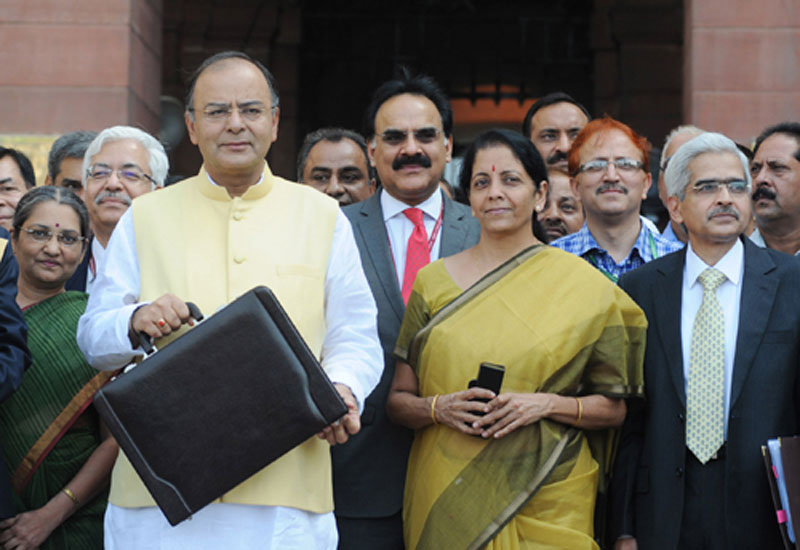
In a series of tweets, the ministry said, "On the first death anniversary of Late Arun Jaitley, we pay our respects and remember his lasting contribution to nation-building and the legacy he left behind as Union Finance Minister during 2014-19."
Jaitley held the ministry when the GST was implemented in July 2017.
The ministry acknowledged the key role Jaitley played in the implementation of GST, which will go down in history 'as one of the most fundamental landmark reforms in Indian taxation'.
Before GST, the combination of VAT, Excise, Central Sales Tax and the cascading effect of tax on tax resulted in the standard rate of tax being as high as 31 per cent in many cases, the ministry said.
'The multiple markets across India, with each state charging a different rate of tax, led to huge inefficiencies and costs of compliance. Under GST, compliance has been improving steadily. Taxpayer base has almost doubled to 1.24 crore,' it added.
GST has reduced the rate at which people have to pay tax. The revenue neutral rate as per the RNR Committee was 15.3 per cent. Compared to this, the weighted GST rate at present, according to the RBI, is only 11.6 per cent.
'It is now widely acknowledged that GST is both consumer and taxpayer-friendly. While the high tax rates of the pre-GST era acted as a disincentive to paying tax, the lower rates under GST helped to increase tax compliance,' said the ministry.
Substantial concessions have been extended to the agriculture sector in GST. On fertilisers, the net tax incidence was halved in GST. On agricultural machineries, the tax incidence has come down significantly from 15-18 per cent to 12 per cent and on certain items from about 8 per cent to 5 per cent.
Various vital services in the agricultural sector for construction and installation of cold storage and mechanized grain handling systems are now taxed at 12 per cent. The pre-GST incidence on such services was 17-18 per cent.
Substantial concessions have been extended to the agriculture sector in GST. On fertilisers, the net tax incidence was halved in GST. On agricultural machineries, the tax incidence has come down significantly from 15-18 per cent to 12 per cent and on certain items from about 8 per cent to 5 per cent.
Now, Businesses with an annual turnover of up to Rs 40 lakh are GST exempt. Initially, this limit was Rs 20 lakh. Additionally, those with a turnover up to Rs 1.5 crore can opt for the Composition Scheme and pay only 1 per cent tax.
Once GST was implemented, the tax rate on a large number of items was brought down. As of now, the 28 per cent rate is almost solely restricted to sin and luxury items.
Out of a total of about 230 items in the 28 per cent slab, about 200 items have been shifted to lower slabs.
Significant relief has been extended to the construction sector, particularly the housing sector. It has now been placed at the 5 per cent rate. GST on affordable housing has been reduced to 1 per cent.
The taxpayer base has almost doubled since the roll out of GST. The numbers of assessee covered by the GST at the time of its inception were about 65 lakh. Now the assessee base exceeds 1.24 crore.
All process in GST have been fully automated. Till now 50 crore returns have been filed online and 131 crore e-way bill generated.
Support Our Journalism
We cannot do without you.. your contribution supports unbiased journalism
IBNS is not driven by any ism- not wokeism, not racism, not skewed secularism, not hyper right-wing or left liberal ideals, nor by any hardline religious beliefs or hyper nationalism. We want to serve you good old objective news, as they are. We do not judge or preach. We let people decide for themselves. We only try to present factual and well-sourced news.
Support objective journalism for a small contribution.