


 Pakistan
Suicide bombings and US weapons push Pakistan into its deadliest year in over a decade
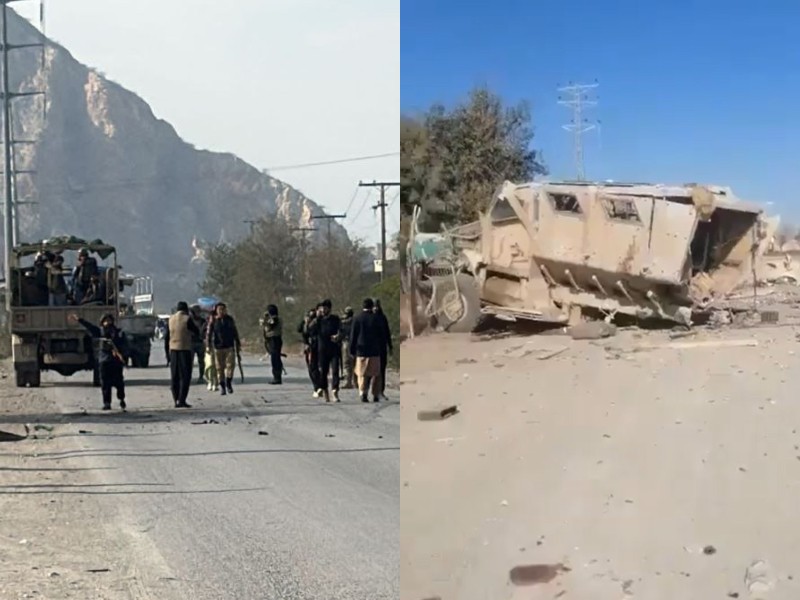
Islamabad/IBNS: Pakistan experienced its deadliest year in more than a decade in 2025, with conflict-related fatalities surging dramatically amid intensified militant violence and counterterror operations.
According to fresh data released by the Islamabad-based Pakistan Institute for Conflict and Security Studies (PICSS), the country recorded a 74 percent rise in deaths compared to 2024, underscoring a sharp escalation in internal security challenges.
The report attributes the spike primarily to an increase in suicide bombings, the growing use of sophisticated weapons by militant groups, and large-scale military operations conducted by Pakistani security forces against insurgent outfits.
Terror fatalities jump to over 3,400
PICSS data shows that at least 3,413 people were killed in terror-related incidents across Pakistan in 2025, a steep jump from 1,950 deaths recorded the previous year.
The figure marks one of the highest annual death tolls since the early 2010s, reflecting the widening scope and intensity of militant activity.
The study highlights that militant groups remained highly active across multiple regions, with attacks targeting security forces, civilians and state-backed peace committees.
Militancy turns inward after decades
For decades, Pakistan’s security establishment has been accused of using militant groups as strategic tools, particularly against India.
Historically, Islamabad was widely seen as a key supporter of the Taliban, from backing anti-Soviet fighters in the 1980s to recognising the Taliban regime in the 1990s and maintaining ties even after the US-led invasion of Afghanistan in 2001.
However, 2025 marked a shift as the violence increasingly turned inward.
Pakistan accused Afghanistan’s Taliban-led government of allowing Pakistani Taliban fighters to operate from Afghan territory, a charge Kabul has consistently denied.
This reversal has deepened mistrust and fuelled instability along the porous border.
Suicide bombings and US weapons fuel violence
According to PICSS, terrorists accounted for 2,138 of the total deaths recorded in 2025.
This represented a 124 percent increase in militant fatalities, reflecting intensified counterterror operations against groups such as the Tehrik-e-Taliban Pakistan (TTP).
PICSS Managing Director Abdullah Khan said the elevated death toll was driven by a resurgence of suicide attacks and the militants’ access to advanced weaponry.
He pointed to US military equipment left behind during the 2021 American withdrawal from Afghanistan, which later reached Pakistani militant groups, significantly enhancing their operational capabilities.
Civilian and security force casualties reach alarming levels
The violence also took a heavy toll on civilians and security personnel.
The report recorded 667 security force fatalities in 2025, a 26 percent increase over the previous year and the highest annual figure since 2011.
Civilian deaths climbed to 580, marking the deadliest year for non-combatants since 2015.
Additionally, 28 members of pro-government peace committees were killed, highlighting the widespread impact of militant violence beyond frontline security forces.
Attacks surge across Pakistan
PICSS documented at least 1,066 terror attacks during the year, with suicide bombings rising by 53 percent to 26 incidents.
Security agencies also ramped up intelligence-based operations, arresting around 500 militants in 2025, compared to 272 arrests in 2024.
Militant groups, particularly the TTP, claimed responsibility for a majority of the attacks, reinforcing concerns about their expanding reach and resilience.
Afghan-Pakistan border tensions add to instability
The report’s release came amid heightened tensions between Pakistan and Afghanistan.
Pakistan’s military spokesperson, Lt Gen Ahmad Sharif Chaudhry, said security forces conducted over 67,000 intelligence-based operations in 2025, killing 1,873 militants, including 136 Afghan nationals.
Border violence escalated after deadly explosions in Kabul in October, which Afghanistan blamed on Pakistan.
Although a Qatar-mediated ceasefire has largely held, talks aimed at easing tensions failed to produce a breakthrough.
All border crossings between the two countries have remained closed since October, disrupting trade and civilian movement.
Islamabad has linked reopening the crossings to written assurances from Kabul that Afghan soil will not be used for attacks against Pakistan.
Regional fallout and uncertain outlook
Pakistan has also accused Afghanistan of blocking humanitarian aid deliveries, a claim Kabul has not publicly addressed.
In December, newly appointed armed forces chief Field Marshal Asim Munir urged Afghanistan’s Taliban leadership to choose between maintaining ties with Islamabad or backing the Pakistani Taliban.
As militant violence, regional tensions and internal security operations converge, 2025 stands out as a grim milestone, marking Pakistan’s deadliest year in over a decade and highlighting the complex challenges facing the country’s security landscape.
Support Our Journalism
We cannot do without you.. your contribution supports unbiased journalism
IBNS is not driven by any ism- not wokeism, not racism, not skewed secularism, not hyper right-wing or left liberal ideals, nor by any hardline religious beliefs or hyper nationalism. We want to serve you good old objective news, as they are. We do not judge or preach. We let people decide for themselves. We only try to present factual and well-sourced news.
Support objective journalism for a small contribution.


