


Venezuela must guarantee judicial impartiality - UN human rights expert
New York, Mar 2 (IBNS): As political tensions continue to escalate in Venezuela, a United Nations independent human rights expert has called on the Government to “take all necessary measures to guarantee judicial independence,” following concerns that some pressure may have been placed on the country’s justice system “to act against the political opposition”.
“All Venezuelan State institutions must respect, promote and guarantee the independence and impartiality of the judiciary, including judges and prosecutors, so that that they can maintain their independence in the face of undue pressure,” said the expert, Diego García-Sayán, who specializes in safeguarding the independence of judges and lawyers around the world. “It is essential that the Constitution and human rights treaties are respected,” he added.
“I am concerned that pressure is being put on the judicial system to act against the political opposition.”
Tensions started escalating at the end of January, when Mr. Guaidó, head of the country’s National Assembly, challenged the legitimacy of the sitting President, Nicolás Maduro, and was declared interim president by the National Assembly. President Maduro has been in power since 2013 and was sworn in again for a second term on 10 January.
"The measures taken against Guaidó and the pressure being exerted on him are unacceptable,” stated the UN human rights expert, deploring the criminal investigation that is being conducted, “as this could be politically motivated,” he explained.
García-Sayán further noted that “statements already made by Tarek William Saab, a leading supporter of the incumbent President Maduro, about the Guaidó investigation may already be affecting the legal presumption of innocence” and that "the equitable, independent and impartial administration of justice, requires prosecutors to work in a way that is fair and which avoids any discrimination.”
García-Sayán called on Venezuela to “organise its State apparatus in a way that is compatible with its international obligations to guarantee the rule of law, the independence and impartiality of the judiciary and international human rights standards”.
He added that "in accordance with the human rights treaties to which it is a party, Venezuela must adopt all legislative, administrative, judicial and other measures necessary for the establishment of an independent and impartial judiciary and the proper administration of justice.”
On Sunday, the UN human rights chief, Michelle Bachelet, expressed grave concern over other human rights violations taking place in the country, highlighting the killing and injuring of civilians due to excessive use of force by the Venezuelan security forces.
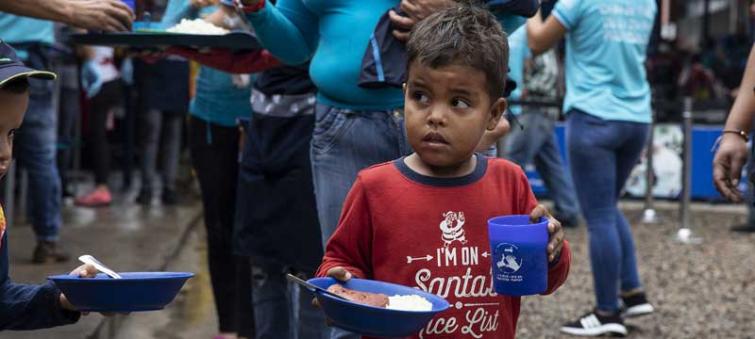
The UN humanitarian coordination office (OCHA) has been documenting the humanitarian crisis in the country: infant mortality has increased by more than 50 per cent since 2017; four in five hospitals lack the necessary medicines and staff to be operational. To date, the UN refugee and migration agencies (UNHCR and IOM, respectively), estimate that the number of Venezuelans to have fled their country stands at 3.4 million.
Image Credit: UNHCR/Siegfried Modola
Support Our Journalism
We cannot do without you.. your contribution supports unbiased journalism
IBNS is not driven by any ism- not wokeism, not racism, not skewed secularism, not hyper right-wing or left liberal ideals, nor by any hardline religious beliefs or hyper nationalism. We want to serve you good old objective news, as they are. We do not judge or preach. We let people decide for themselves. We only try to present factual and well-sourced news.
Support objective journalism for a small contribution.


