 UNICEF
UNICEF assessment reflects 2024 was one of the worst years in history for children in conflict
The impact of armed conflicts on children around the world reached devastating and likely record levels in 2024, as per an assessment by the UN Children’s Fund (UNICEF).
The study, released on Friday, finds that the rights of a record number of children are being violated, including by being killed and injured, missing out of school and life-saving vaccines, and being critically malnourished; the number is only expected to grow.
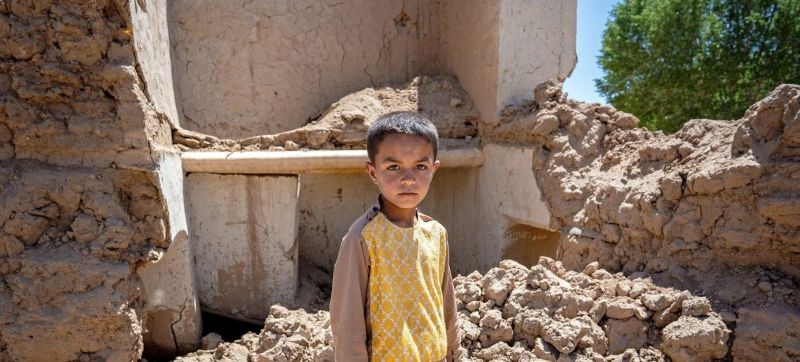
From Palestine to Myanmar, Haiti to Sudan, the world is experiencing the highest number of conflicts since the World War II. Almost 19 per cent of the world’s children – over 473 million – now live in conflict zones, and 47.2 million have been displaced by conflict and violence.
Thousands of children have been killed and injured in Gaza, and in Ukraine, the UN verified more child casualties during the first 9 months of 2024 than during all of 2023.
There have been widespread reports of rape and sexual violence against women and girls in conflict settings.
In Haiti, so far this year, there has been a 1,000 per cent increase in reported incidents of sexual violence against children. In situations of armed conflict, children with disabilities also tend to be disproportionately exposed to violence and rights violations.
Education severely disrupted
More than 52 million children in countries affected by conflict are estimated to be out of school.
Children in the Gaza Strip, and a significant portion of children in Sudan, have missed out on more than a year of education, while in countries such as Ukraine, the Democratic Republic of the Congo, and Syria, schools have been damaged, destroyed or repurposed, leaving millions of children without access to learning.
The destruction of educational infrastructure and insecurity near schools have exacerbated an already dire situation for children’s education in these regions.
Malnutrition and famine
Malnutrition among children in conflict zones has also risen to alarming levels, as conflict and armed violence continue to be the primary drivers of hunger in numerous hotspots, disrupting food systems, displacing populations, and obstructing humanitarian access.
For example, in Sudan, famine was declared in North Darfur, the first famine determination since 2017. In 2024, more than half a million people in five conflict-affected countries are estimated to be living in the most extreme food insecurity situations.
Healthcare threatened
Conflicts are also having devastating effect on children’s access to critical healthcare.
Around 40 per cent of unvaccinated and under-vaccinated children live in countries that are either partially or entirely affected by conflict.
These children are often the most vulnerable to disease outbreaks like measles and polio, because of disruptions and lack of access to security, nutrition, and health services.
The impact on children’s mental health is also huge; exposure to violence, destruction and the loss of loved ones can result in reactions such as depression, nightmares and difficulty sleeping, aggressive or withdrawn behaviour, sadness and fear, among others.
This must not be the new normal
“By almost every measure, 2024 has been one of the worst years on record for children in conflict in UNICEF’s history – both in terms of the number of children affected and the level of impact on their lives,” said UNICEF Executive Director Catherine Russell.
“A child growing up in a conflict zone is far more likely to be out of school, malnourished, or forced from their home – too often repeatedly – compared to a child living in places of peace. This must not be the new normal. We cannot allow a generation of children to become collateral damage to the world’s unchecked wars.”
Support Our Journalism
We cannot do without you.. your contribution supports unbiased journalism
IBNS is not driven by any ism- not wokeism, not racism, not skewed secularism, not hyper right-wing or left liberal ideals, nor by any hardline religious beliefs or hyper nationalism. We want to serve you good old objective news, as they are. We do not judge or preach. We let people decide for themselves. We only try to present factual and well-sourced news.
Support objective journalism for a small contribution.