UN should never be a target, Baghdad bombing survivors stress, 15 years after deadly attack
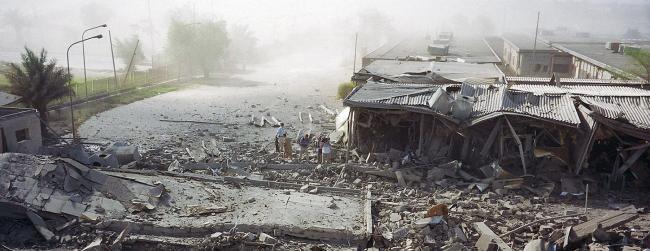
New York, Aug 11 (IBNS): On 19 August 2003, a suicide bomber drove a truck full of explosives to the United Nations headquarters in the Iraqi capital, Baghdad, Iraq, and blew it up, killing 22 people – among them Sergio Vieira de Mello, the UN High Commissioner for Human Rights and the head of the UN mission in Iraq.
The attack on the Canal Hotel building also wounded more than 150; most of them aid workers who had come to Iraq to help reconstruct the country following the overthrow of Saddam Hussein.
The attack was one of the most lethal in UN history, and marked a turning point in how the UN and aid groups operate in the field. It was the first time that a neutral international humanitarian organization, had been deliberately targeted in such a way.
UN Secretary-General António Guterres paid tribute this week ahead of the anniversary to the staff who lost their lives 15 years ago in what he has described as “one of the darkest days in our history.”
Ahead of the anniversary, UN News spoke with some of the survivors. The conversations, which have been edited, provide insight into what happened that day, how it impacted them, and continues to impact the entire community that makes up the United Nations.
Since the 2003 Canal Hotel terrorist attack, which Secretary-General at the time, Kofi Annan, referred to as “the darkest day in our lives at the United Nations”, we have looked back on the day through the memories and recollections of UN staff who survived.
Among those who told their story back in 2009, were Nada Al Nashif, a Jordanian national of Palestinian origin, who was sitting around a table with colleagues in UN Headquarters, when the explosives detonated, bursting her eardrum in the process. Her desk was swept away by the blast.
Khaled Mansour, an Egyptian who arrived to witness a scene of carnage, offering help, remembers seeing the bloody palm prints of the wounded, as they tried to escape, and a ticking watch on the wrist of a dead colleague emerging from under a sheet, as their body was carried away on a makeshift stretcher.
Support Our Journalism
We cannot do without you.. your contribution supports unbiased journalism
IBNS is not driven by any ism- not wokeism, not racism, not skewed secularism, not hyper right-wing or left liberal ideals, nor by any hardline religious beliefs or hyper nationalism. We want to serve you good old objective news, as they are. We do not judge or preach. We let people decide for themselves. We only try to present factual and well-sourced news.
Support objective journalism for a small contribution.