UN decolonization successes can ‘inspire us today,’ UN chief tells Special Committee
New York, Feb 22 (IBNS): Since the early 1960s, the United Nations decolonization committee has “accompanied many territories in their journey”, Secretary-General António Guterres said on Thursday, opening the body’s 2019 session.
Reminding the Special Committee on Decolonization that as a Portuguese national, he came from a country oppressed by dictatorship, Mr. Guterres called the decolonization agenda “an area close to my heart and to which I reiterate my commitment.”
Back in 1946, some Member States identified a roster of non-self-governing territories and placed them on a UN list. In 1960 the Declaration on the Granting of Independence to Colonial Countries and Peoples was adopted and the following year the General Assembly established the Special Committee, known by the shorthand ‘C-24’ after its original 24 members, to monitor its implementation.
As “one of the most significant chapters of the Organization’s history,” Guterres credited decolonization with helping to transform UN membership, “propelling the Organization’s growth from 51 original members to 193 today.”
Over the years this process has resulted in the removal of most territories from the list.
“But this story is still being written,” the UN chief continued, “as 17 non-self-governing territories remain,” each waiting to attain self-government, in accordance with Chapter XI of the UN Charter, the 1960 Declaration and relevant UN resolutions.
Among other things, the Special Committee annually reviews the territories remaining on the list – making recommendations on implementation and supporting the dissemination of public opinion information on the decolonization process.
Decolonization under way today
Most recently, Guterres explained, New Caledonia in the South Pacific territory took an important decolonization step forward through a referendum last November.
He commended France, the country administering the territory, on its cooperation throughout the process – in accordance with the 1998 Nouméa Accord, which set out that a referendum on self-determination would be held by 2018.
Meanwhile, the Special Committee assisted in the period leading up to the referendum, including by dispatching two visiting missions to New Caledonia.
“To achieve decolonization, the voices of the peoples of the territories should be heard,” underscored Guterres adding that “likewise vital” was the cooperation of all concerned, including the administering powers.
As he wished the Committee “every success” throughout the 2019 session, Guterres said: “The UN’s decolonization successes across the decades can inspire us today.”That the people of the non-self-governing territories understand the options regarding their political status and right to choose their future freely is “paramount,” according to the UN chief.
“Let us uphold our duty to assist all the peoples of the non-self-governing territories in bringing their decolonization process to a successful conclusion, according to their own choice,” concluded the Secretary-General.
The C-24 also observes the Week of Solidarity with the Peoples of Non-Self-Governing Territories.
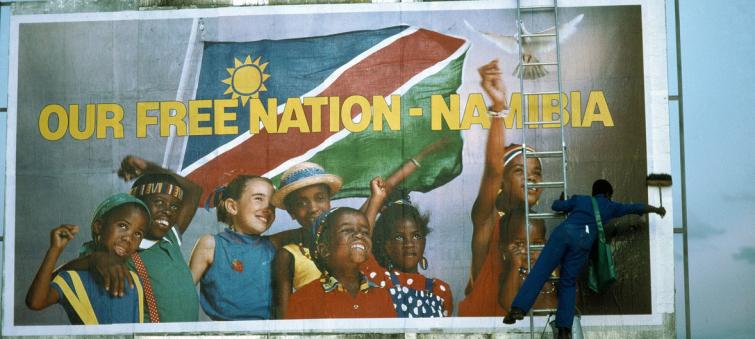
Image Credit:UN Photo/John Isaac
Support Our Journalism
We cannot do without you.. your contribution supports unbiased journalism
IBNS is not driven by any ism- not wokeism, not racism, not skewed secularism, not hyper right-wing or left liberal ideals, nor by any hardline religious beliefs or hyper nationalism. We want to serve you good old objective news, as they are. We do not judge or preach. We let people decide for themselves. We only try to present factual and well-sourced news.
Support objective journalism for a small contribution.