 Middle East
UAE tycoon asks Trump: 'Who authorised turning our region into a battlefield?'
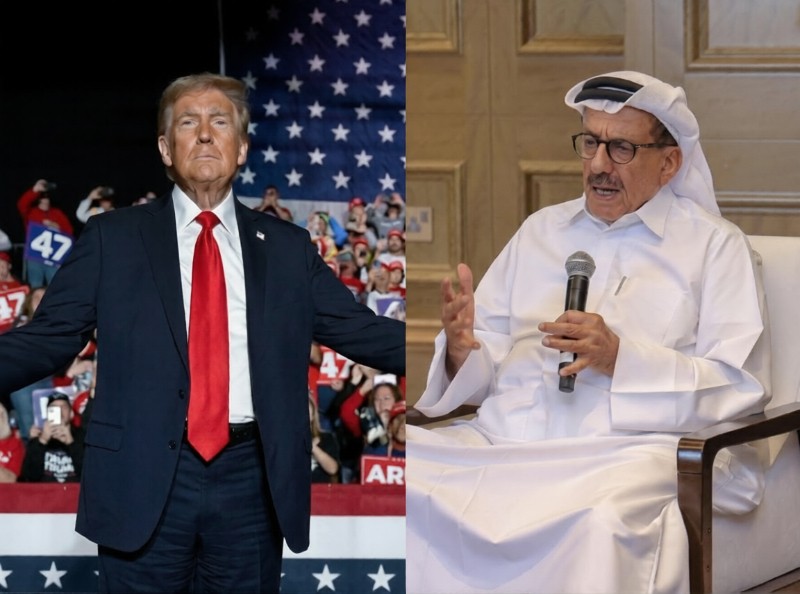
A prominent business leader from the United Arab Emirates has publicly questioned the authority of US President Donald Trump to draw the Middle East into a widening military confrontation with Iran.
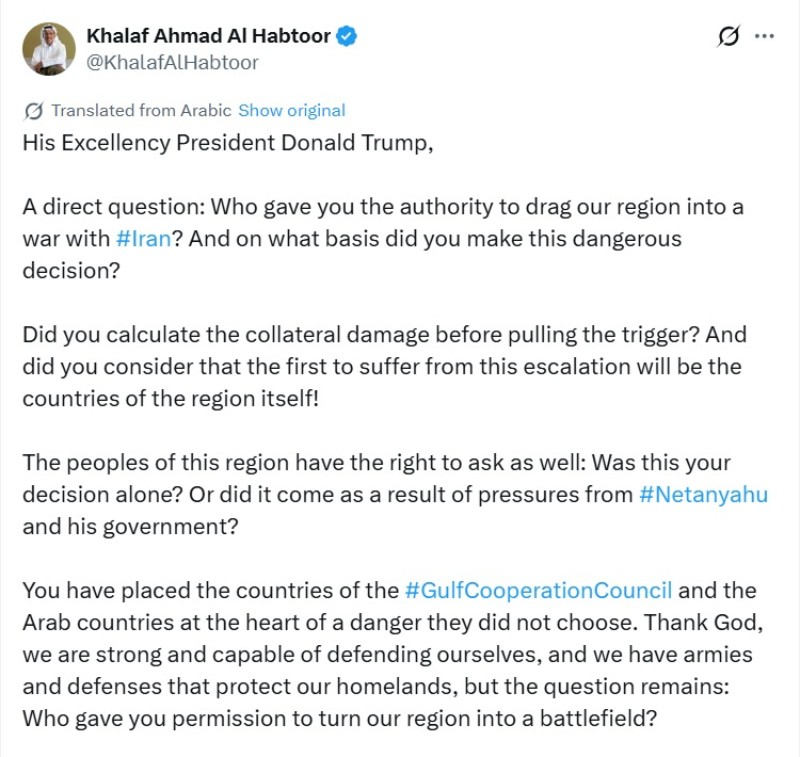
In an open letter released on social media, billionaire entrepreneur Khalaf Ahmad Al Habtoor criticised Washington’s decision to launch military operations alongside Israel against Iran, arguing that the escalation had placed Gulf nations in a conflict they did not choose.
The founder of the Dubai-based Al Habtoor Group published the message in Arabic on the social media platform X, raising pointed questions about the motivations and authority behind the military action.
A direct challenge to Washington
In the strongly worded letter, Al Habtoor asked whether the decision to wage war had been taken independently by the US president or influenced by Israeli leadership, specifically Prime Minister Benjamin Netanyahu.
The letter came days after coordinated military strikes by the United States and Israel targeted Iran’s leadership and strategic military infrastructure.
The attacks marked one of the most serious escalations in regional tensions in recent years.
Following the strikes, Iran responded by launching missiles and drones towards several Gulf states, including the United Arab Emirates.
Air defence systems across the region intercepted most of the projectiles before they could cause major damage, according to regional reports.
Despite the successful interceptions, Gulf leaders warned that the confrontation had brought the region dangerously close to a broader conflict.
Gulf nations call for de-escalation
Governments across the Gulf have repeatedly called for restraint and diplomatic engagement.
Leaders in the region have urged all sides to halt military operations and return to negotiations.
Al Habtoor echoed these concerns in his letter, arguing that the conflict had imposed a severe security threat on countries belonging to the Gulf Cooperation Council.
“You have placed the Gulf Cooperation Council and the Arab countries at the heart of a danger they did not choose,” he wrote.
The businessman stressed that regional states possess capable armed forces and defence systems, but insisted that the fundamental question remained unresolved: who authorised turning the region into a battlefield.
His message reflected growing anxiety among Gulf observers who fear that tensions between Iran, the United States and Israel could quickly spiral into a wider war.
Economic costs of the conflict
Al Habtoor also warned that the consequences of the war extend beyond regional security, affecting the global economy and the American public.
Citing estimates from the Institute for Policy Studies, he highlighted the financial burden of the military campaign.
According to the think tank’s projections, direct military operations could cost between $40 billion and $65 billion.
If broader economic disruptions and indirect losses are included, the total cost could reach $210 billion should the conflict continue for four to five weeks.
In his letter, the Emirati tycoon argued that such expenditures ultimately fall on American taxpayers, despite earlier promises that the United States would avoid new foreign wars.
He wrote that citizens in the United States were now effectively financing a conflict whose long-term consequences remain uncertain.
Questions over campaign promises
Al Habtoor’s message also referenced the US president’s earlier pledges to avoid large-scale military interventions abroad.
The businessman claimed that the current administration had authorised military actions in multiple countries during its second term, including Somalia, Iraq, Yemen, Nigeria, Syria, Iran and Venezuela.
He also pointed to expanded naval operations in the Caribbean and the eastern Pacific Ocean.
According to the figures cited in the letter, more than 658 foreign airstrikes were conducted during the president’s first year in office alone.
Al Habtoor argued that the scale of these operations contradicted earlier criticism of previous administrations for engaging in prolonged foreign conflicts.
He suggested that such decisions had begun to influence domestic political sentiment in the United States.
Declining support at home
The Emirati businessman warned that the growing involvement in overseas military campaigns could carry political costs for the US administration.
He claimed that the president’s approval ratings had fallen by around nine percentage points within the first 400 days of his term, reflecting rising concern among American voters about another prolonged conflict.
According to Al Habtoor, these numbers indicate increasing unease within the United States about the economic and human consequences of foreign wars.
He emphasised that if the military initiatives were launched in the name of global stability, then governments had an obligation to provide transparency and accountability regarding their objectives and outcomes.
Who will pay the price?
In a separate message posted on X, Al Habtoor expanded on his concerns, asking who would ultimately bear responsibility for the consequences of the conflict.
He argued that Gulf nations, including the UAE, were suffering the fallout from a confrontation involving three major actors — Iran, the United States and Israel — despite having no direct role in initiating the escalation.
“Our economies, our security, and the stability of our peoples are not arenas for settling scores among the great powers,” he wrote.
Al Habtoor warned that regional stability, economic growth and public safety were being placed at risk by decisions taken outside the region.
He concluded by calling for restraint and responsible leadership, stressing that the Middle East required calm diplomacy rather than actions that could intensify the conflict further.
Support Our Journalism
We cannot do without you.. your contribution supports unbiased journalism
IBNS is not driven by any ism- not wokeism, not racism, not skewed secularism, not hyper right-wing or left liberal ideals, nor by any hardline religious beliefs or hyper nationalism. We want to serve you good old objective news, as they are. We do not judge or preach. We let people decide for themselves. We only try to present factual and well-sourced news.
Support objective journalism for a small contribution.