 Children
Thousands of children killed or maimed by explosive weapons in populated areas: UNICEF
Meaningful action to prevent the use of explosive weapons in populated areas could reduce the number of child casualties in conflicts by nearly half, the UN Children’s Fund (UNICEF) said on Monday.
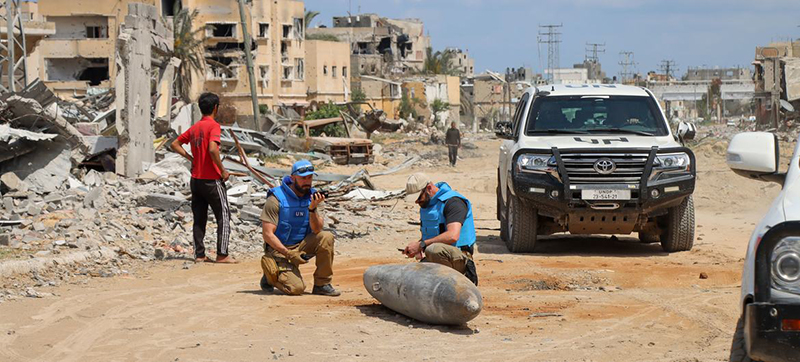
UNICEF warned that as urban warfare increases, the use of weapons designed for open battlefields are now a common reality in cities, towns and villages, with devastating effects on their young residents.
Between 2018 and 2022, explosive weapons were responsible for 49.8 per cent of the more than 47,500 instances of children killed and maimed that were verified by the UN in more than 24 conflict zones globally, with the vast majority occurring in populated areas.
Irrefutable evidence
“The evidence is irrefutable. When explosive weapons are used in populated areas, children suffer profoundly, not just physically but in every aspect of their lives,” said UNICEF Deputy Executive Director Ted Chaiban.
“Thousands of young lives are abruptly ended or forever altered each year,” he added.
“Beyond children’s physical injuries and scars lie additional – often less visible – psychological, educational and social impacts, that can persist throughout their lifetimes, creating cycles of hardship and suffering.”
The use of explosive weapons also has broader social, economic and environmental impacts that severely affect children’s access to healthcare, education, clean water and other essential services.
In addition, the destruction of infrastructure has long-term consequences for their development and the health of the community at large.
Prevention is critical
UNICEF is working on the ground in conflict zones to mitigate impacts, delivering aid and support to the children most at risk.
However, the agency stressed the critical need for prevention, which requires “a robust and sustained international response”.
It is sounding the alarm as countries meet this week in Oslo for the first international follow-up conference to the Political Declaration on the Use of Explosive Weapons in Populated Areas (EWIPA), adopted in November 2022.
More than 85 countries have endorsed the Declaration, which commits States to take steps to avoid civilian harm when conducting military operations in populated areas.
Protect future generations
UNICEF called on all warring parties, and those with influence over them, to protect and ensure respect for children’s rights, including by ending the use of explosive weapons in populated areas.
All countries are urged to sign the EWIPA Declaration, while those that are already signatories should identify and adopt military measures, policies and practices that reduce harm to children.
Other areas for action include providing sustained financial support for programmes and interventions that will protect children, for example, through injury surveillance, victim assistance and conflict preparedness and protection.
Member States should also refrain from transferring explosive weapons to warring parties that are likely to use them against civilians and civilian objects in line with the Arms Trade Treaty.
Mr. Chaiban said ongoing commitment by leaders and implementation of the EWIPA Declaration are critical.
"As the international community continues to witness the unspeakable harm these weapons cause, we must take decisive action to protect our future generations. The cost of inaction is too high, a price paid by our children,” he said.
Support Our Journalism
We cannot do without you.. your contribution supports unbiased journalism
IBNS is not driven by any ism- not wokeism, not racism, not skewed secularism, not hyper right-wing or left liberal ideals, nor by any hardline religious beliefs or hyper nationalism. We want to serve you good old objective news, as they are. We do not judge or preach. We let people decide for themselves. We only try to present factual and well-sourced news.
Support objective journalism for a small contribution.