


Tajikistan’s sectoral reform must prioritize sanitation and drinking water: UN expert
“Tajikistan is known as a champion of water at the global level,” said Léo Heller, Special Rapporteur on the human right to safe drinking water and sanitation, stressing that “the Government must now become a champion of sanitation and water for its own people.”
Despite Tajikistan’s rich water resources, sanitation is put almost entirely on the shoulders of individual households in rural areas, which account for 70 per cent of the population and are made up of refugees, displaced and resettled people.
Diarrhoea and typhoid fever, as a result of deficiencies in water, sanitation and hygiene (WASH), is still widespread in remote areas.
Same challenges of WASH also remain in public institutions, such as causing difficulties in infection control in hospitals and the high drop-out rate in schools.
“Tajikistan must not abdicate its responsibilities in dealing with water and sanitation issues in rural areas,” said Heller, stressing that “the Government must invest in sanitation and water services to guarantee affordable services for the poor and marginalized.”
Surprised at almost invisible State budget of less than 0.2 per cent allocated to water and sanitation, the human rights expert warned the authorities that “it has an obligation to prioritize its budgets in order to realize fundamental human rights.”
Improved health and saving work losses, said Heller, are evident benefits of such investment.
The human rights expert also addressed the importance of balancing affordability and sustainability and called on Tajik decision-makers to adopt a comprehensive policy on water and sanitation tariffs as well as a new Water Code.
“I am confident that with efforts the Government can make the human rights to water and sanitation a reality for everyone in the country,” said Heller.
Independent experts or special rapporteurs are appointed by the Geneva-based Human Rights Council to examine and report back on a country situation or a specific human rights theme.
The positions are honorary and the experts are not UN staff, nor are they paid for their work.
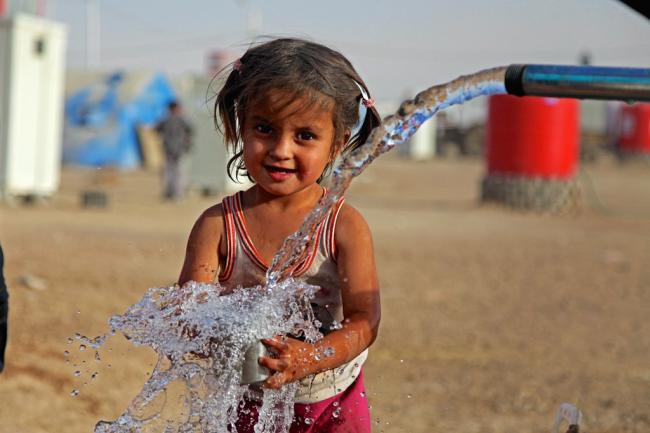
Photo: UNICEF/Wathiq Khuzaie
Support Our Journalism
We cannot do without you.. your contribution supports unbiased journalism
IBNS is not driven by any ism- not wokeism, not racism, not skewed secularism, not hyper right-wing or left liberal ideals, nor by any hardline religious beliefs or hyper nationalism. We want to serve you good old objective news, as they are. We do not judge or preach. We let people decide for themselves. We only try to present factual and well-sourced news.
Support objective journalism for a small contribution.


