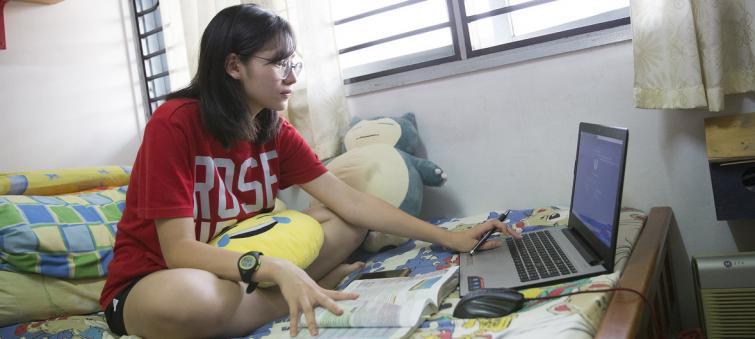
Safer Internet Day: ‘Be kind online’, says UNICEF, urging action to prevent cyberbullying, harassment
New York, Feb 6 (IBNS): Online violence, cyberbullying and digital harassment affect over 70 per cent of young people globally, the United Nations Children’s Fund (UNICEF) said on Tuesday, calling for concerted action to tackle and prevent this form of violence.
“We’ve heard from children and young people from around the globe and what they are saying is clear: the Internet has become a kindness desert,” said UNICEF Executive Director Henrietta Fore on Safer Internet Day.
A recent one-million-strong UNICEF poll of 15- to 24-year old’s from more than 160 countries prompted the call, along with a series of student-led #ENDviolence Youth Talks held globally, which examined out what parents, teachers and policymakers could do to keep them safe.
In the end, kindness stood out as one of the most powerful means to prevent bullying and cyberbullying.
“That’s why this Safer Internet Day, UNICEF is inviting everyone, young and old, to be kind online, and calling for greater action to make the Internet a safer place for everyone”, stressed Fore.
Regardless of income level, the Internet has become a mainstay of youth.
According to the UN International Telecommunications Union (ITU), 94 per cent of 15- to 24-year old’s in developed countries are online, and more than 65 per cent of their developing country counterparts – well ahead of the pace of Internet usage among the general population.
Moreover, half of the world’s total population, regardless of age, is online, which brings increased risks.
Related: Safer Internet Day is not just on 5 February, but every day, says ITU
According to data from the UN Educational, Scientific and Cultural Organization (UNESCO), the proportion of children and adolescents affected by cyberbullying ranges from five per cent to 21 per cent, with girls at higher risk than boys.
“Cyberbullying can cause profound harm as it can quickly reach a wide audience, and can remain accessible online indefinitely, virtually ‘following’ its victims online for life,” according to UNICEF.
Bullying and cyberbullying also feed into each other, forming “a continuum of damaging behavior”.
Victims of cyberbullying are more likely to use abuse drugs and alcohol, skip school, receive poor grades and experience low self-esteem and health problems. In extreme situations, it has even led to suicide.
On Safer Internet Day, UNICEF is reminding everyone that “kindness – both online and off – is a responsibility that begins with each of us”.
In honor of the UN child-rights convention, which turns 30 this November, UNICEF is also calling for renewed urgency and cooperation to put children’s rights at the forefront of digital efforts.
“Thirty years after the adoption of the Convention on the Rights of the Child and the creation of the World Wide Web, it is time for governments, families, academia and the private sector to put children and young people at the centre of digital policies,” said Fore.
“By protecting them from the worst the Internet has to offer and expanding access to its best, we can each help tip the balance for good”, concluded the UNICEF chief.
Image Credit: UNICEF/UN0140097/Humphries
Support Our Journalism
We cannot do without you.. your contribution supports unbiased journalism
IBNS is not driven by any ism- not wokeism, not racism, not skewed secularism, not hyper right-wing or left liberal ideals, nor by any hardline religious beliefs or hyper nationalism. We want to serve you good old objective news, as they are. We do not judge or preach. We let people decide for themselves. We only try to present factual and well-sourced news.
Support objective journalism for a small contribution.