


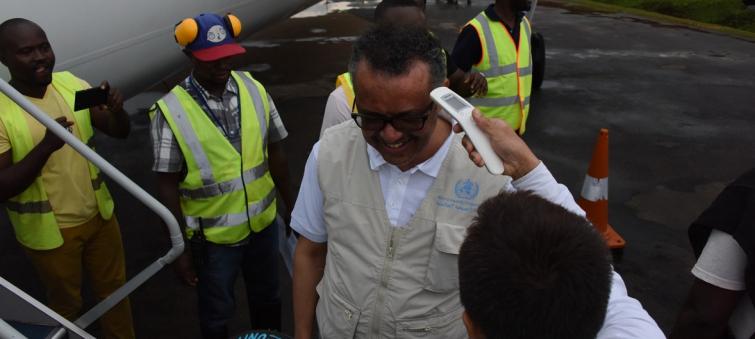
Ramped-up emergency preparedness, part of ‘changing the DNA’ of the UN’s health agency
New York, Mar 7 (IBNS): Better preparing itself to respond to emergency situations is just one of a sweeping range of changes the World Health Organization (WHO) announced on Wednesday to further improve its role as the world’s leading authority on public health.
According to WHO, a new Division of Emergency Preparedness will complement its existing emergency response work to better support countries in preventing and mitigating the impact of outbreaks and other health crises.
A new Division of the Chief Scientist at WHO Headquarters in Geneva is also slated as part of its goal to modernize and reinforce the Organization’s core scientific, standard-setting work while improving career opportunities for scientists.
“The changes we are announcing today are about so much more than new structures, they’re about changing the DNA of the organization to deliver a measurable impact in the lives of the people we serve,” said WHO Director-General Tedros Adhanom Ghebreyesus.
The upgrades are designed to support countries in achieving the ambitious “triple billion” targets set by WHO: one billion more people benefitting from universal health coverage (UHC); one billion more people better protected from health emergencies; and one billion more, enjoying better health and well-being overall.
Coordinating its processes and structures with these targets and the Sustainable Development Goals (SDGs) is at the centre of WHO’s five-years strategic plan.
Based on four pillars, the new structure and operating model will align its work at headquarters, regional offices and country offices – eliminating duplication and fragmentation.
Another institution-strengthening reform will come through a new department dedicated to boosting digital health to help countries in assessing, regulating and maximizing all that digital technologies and artificial intelligence innovations (AI), have to offer.
To provide new learning opportunities for staff and public health professionals around the world, a state-of-the-art WHO Academy has also been proposed to create a more dynamic, diverse workforce.
Other measures include a streamlined recruitment process to cut hiring time in half; more management training; new opportunities for national professional officers, and previously-announced improvements in conditions for interns.
“Our vision remains the same as it was when we were founded in 1948: the highest attainable standard of health for all people”, the WHO chief said.
But, he explained, WHO must develop a new mindset to seek out and build partnerships that harness the combined strength of the global health community, both in the public and private sectors.
“The world has changed, which is why we have articulated a new mission statement for what the world needs us to do now: to promote health, keep the world safe and serve the vulnerable”, he concluded.
Image Credit: MONUSCO
Support Our Journalism
We cannot do without you.. your contribution supports unbiased journalism
IBNS is not driven by any ism- not wokeism, not racism, not skewed secularism, not hyper right-wing or left liberal ideals, nor by any hardline religious beliefs or hyper nationalism. We want to serve you good old objective news, as they are. We do not judge or preach. We let people decide for themselves. We only try to present factual and well-sourced news.
Support objective journalism for a small contribution.


