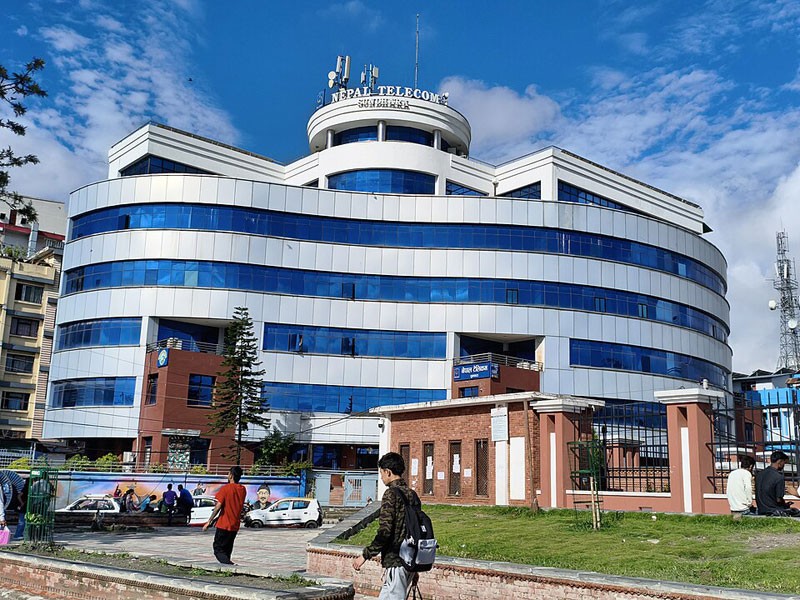
 Nepal Telecom
Nepal Telecom billing deal sparks fresh corruption allegations over Chinese firms
Kathmandu/IBNS: Nepal is once again grappling with allegations of corruption, with the spotlight now firmly on the telecommunications sector.
The latest controversy centres on a proposed billing system procurement by Nepal Telecom (NT), a state-owned enterprise in which the Nepali government holds a majority stake.
The case has revived concerns about transparency in projects involving Chinese contractors and suppliers.
Over recent years, multiple infrastructure and technology deals linked to Chinese firms have drawn scrutiny in Nepal.
Critics argue that weak oversight and opaque tendering processes have allowed politically sensitive projects to proceed without adequate competition.
Billing system contract under question
At the heart of the dispute is a contract linked to the installation of a “Convergent Real-Time Billing and Customer Support” system.
The project is designed to integrate billing across Nepal Telecom’s wide range of services, including GSM mobile connections, fibre internet, leased lines, broadband, wireline services and wireless broadband.
The system has been associated with AsiaInfo Linkage Technologies (China) Inc., also known as AsiaInfo Yunghang Software (Beijing) Ltd.
The scale of the project is significant, with the estimated cost pegged at around NPR 5 billion, or roughly $34 million, making it one of Nepal Telecom’s most expensive technology upgrades in recent years.
Tender process raises eyebrows
Nepal Telecom invited bids for the new billing system on March 18. Two Chinese companies participated in the tender process.
However, only Huawei cleared the technical evaluation stage, a development that immediately triggered allegations of a tailored tender.
Industry observers and critics claim that the technical specifications were framed in a manner that effectively ensured Huawei’s qualification while excluding competitors.
Huawei already manages Nepal Telecom’s core network infrastructure, raising additional concerns about over-dependence on a single foreign vendor.
Whale Cloud, another Chinese technology firm that submitted a bid, was disqualified during the technical evaluation phase.
The lack of detailed public disclosure on the reasons for its rejection has further fuelled suspicions of an uneven process.
Sudden delay after ministerial change
Huawei’s financial bid was scheduled to be opened on September 24, 2025.
However, the process was abruptly put on hold following the appointment of Jagadish Kharel as Minister of Communications and Information Technology on September 22.
Citing “special circumstances,” the ministry postponed the opening indefinitely, without providing further clarification.
The sudden delay has intensified speculation about political interference and internal disagreements within the government over the handling of the tender.
Broader concerns over transparency
The Nepal Telecom case has reignited a broader debate over governance and accountability in public-sector procurement.
Analysts warn that repeated controversies involving Chinese-linked projects risk undermining public trust and could expose Nepal to long-term financial and strategic vulnerabilities.
As questions continue to mount, calls are growing for a comprehensive review of the billing system tender and greater transparency in future procurements.
For Nepal Telecom, the stalled project has become more than a technical upgrade—it is now a test of institutional credibility.
Support Our Journalism
We cannot do without you.. your contribution supports unbiased journalism
IBNS is not driven by any ism- not wokeism, not racism, not skewed secularism, not hyper right-wing or left liberal ideals, nor by any hardline religious beliefs or hyper nationalism. We want to serve you good old objective news, as they are. We do not judge or preach. We let people decide for themselves. We only try to present factual and well-sourced news.
Support objective journalism for a small contribution.