More attacks, ‘persisting security challenges’ threaten progress in West Africa, Sahel
New York, Jan 11 (IBNS): A rising number of attacks by extremist groups, using more sophisticated tactics, risk undermining progress in West Africa and the Sahel, the region’s UN envoy told the Security Council on Thursday.
“Military solutions, while necessary, are not sufficient,” Mohamed Ibn Chambas, the Special Representative for West Africa and the Sahel (UNOWAS), pushing for holistic responses, “grounded in the respect of human rights, and the socioeconomic needs of the population in the affected areas.”
In breaking down some of the most pressing challenges, he highlighted:
In the Chad Basin, there have been increased Boko Haram attacks in recent months, notably against military installations. Also, violent clashes between farmers and herders continue, but on a lesser scale.
Burkina Faso: Against the backdrop of a significant rise in security incidents, a state of emergency had been declared in seven of the country’s 13 regions in the north, west and east.
Niger: Despite mass mobilization of defense and security forces, they are “continuing to face challenges in the west and south.”
Niger, Benin and Togo: “Increased attacks and kidnappings by extremist groups are heightening security risks”.
Against the backdrop of high population growth, worsening youth unemployment and economic austerity measures, including the elimination of subsidies in some countries, Mr. Chambas underscored that “rising insecurity has placed a heavy burden on governments in the region”.
He also noted that while “laudable progress” was made in implementing the Council’s 2017 resolution for a regional response to the Lake Chad Basin crisis, “more support is needed to advance the stabilization efforts in the Sahel”.The Special Representative outlined that UNOWAS was working to advance the region’s long-term stabilization goals, cooperating closely with regional partners, within the framework of the last year’s new UN Integrated Strategy for the Sahel (UNISS).
Elections: ‘A litmus test’
Beyond the “persisting security challenges” Mr. Chambas lauded presidential elections in Mali last year, regional elections in Mauritania, and voting across Togo and Cote d’Ivoire, while underscoring that “despite appreciable progress in democratic consolidation in the region, continuous efforts are needed to address contentious issues around elections”.
Indicating that this was of particular importance over the next six months as the region would conduct “several high-stake elections” in Nigeria, Senegal, Mauritania and Benin, he called the next cycle of regional elections “a litmus test for the consolidation of democratic gains”.
Chambas pointed out that women continue to be discriminated against and marginalized from political processes, saying that they “comprise less than 15 per cent of parliamentarians in several countries of the region”.
He also expressed concern over human rights challenges, particularly allegations of human rights violations by security forces, as well as the increasing re-emergence of self-defence groups, “whose actions have been fueling intercommunal tensions”.
“Through inclusive approaches predicated on national ownership, we must continue to work hard on addressing the governance deficits, the extreme poverty and lack of development that feed and sustain armed violence and extremism”, concluded the UN Special Representative.
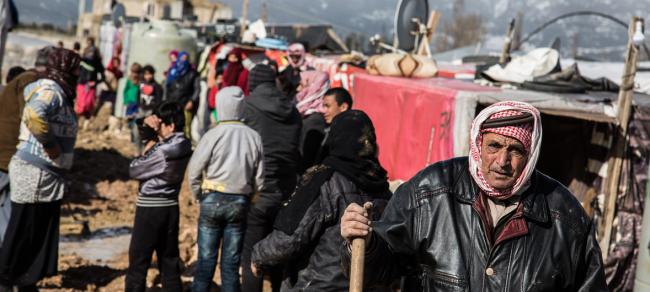
UN Photo/Eskinder Debebe
Support Our Journalism
We cannot do without you.. your contribution supports unbiased journalism
IBNS is not driven by any ism- not wokeism, not racism, not skewed secularism, not hyper right-wing or left liberal ideals, nor by any hardline religious beliefs or hyper nationalism. We want to serve you good old objective news, as they are. We do not judge or preach. We let people decide for themselves. We only try to present factual and well-sourced news.
Support objective journalism for a small contribution.