 Green Job
‘Just Transition’ policies needed to create 20 million green jobs: UN report
New York: Some 20 million jobs could be created by investing in policies that support nature and address climate change, disaster risk, food insecurity, and other major challenges, according to a UN report published on Friday.
Launched by the International Labour Organization (ILO), UN Environment Programme (UNEP) and International Union for Conservation of Nature at the UN's Biodiversity Conference (COP15) in Montreal, the Decent Work in Nature-based Solutions report underscores the need for greening the economy in a way that is fair and inclusive, creating meaningful work opportunities for all.
“It is critical that as we scale up the use of Nature-based Solutions (NbS) we make sure we do not also scale up decent work deficits, such as the informal work, low-pay and low productivity conditions that many workers in NbS currently face”, said Vic van Vuuren, Director, ILO Enterprises Department.
“The ILO’s Just Transition Guidelines provide a framework to help us do this”.
Working in nature
Nature-based solutions aim to protect, restore, and sustainably manage waters and marine ecosystems while also provide human well-being, ecosystem resilience and biodiversity benefits.
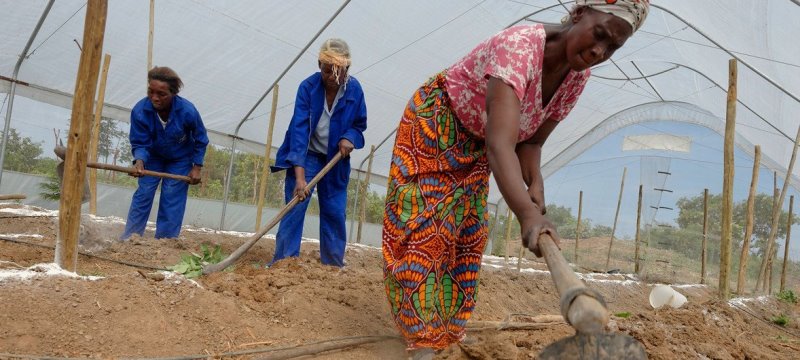
Currently, NbS employs nearly 75 million people, 96 per cent of whom live in Asia and the Pacific and lower middle income countries – despite the fact that most global NbS expenditure occurs in high income countries.
NbS jobs, many of which are part-time, add up to the equivalent of around 14.5 million full time jobs.
However, the report cautions that there are challenges in measuring NbS employment and that the figures do not capture job losses and displacements that may occur while implementing Nature-based Solutions.
Jobs breakdown
Nearly all NbS work in low and lower-middle income countries - 98 and 99 per cent respectively - is in the agriculture and forestry sectors.
This falls to 42 per cent for upper-middle income nations, and 25 per cent for high income.
In industrialized countries, where agricultural productivity is high, NbS spending is concentrated in ecosystem restoration and natural resource management.
Public services contribute 37 per cent of NbS work in high income countries.
An additional 20 million jobs could be generated worldwide if investment in NbS were tripled by 2030 – a key step toward achieving biodiversity, land restoration and climate goals like those set out in the UN State of Finance for Nature 2021 Report.
Green job standards
However, the report warns that there is currently no guarantee that NbS employment will meet ILO’s standards for green jobs in the environmental sector, nor compensate workers fairly in conditions of freedom, equity, security and human dignity.
“We welcome the emphasis given to Nature-based Solutions at COP27 in Sharm el Sheikh. Not only are NbS a critical part of the mitigation equation – they host multiple co-benefits, including buffering the impacts of climate change”, said Susan Gardner, Director of UNEP’s Ecosystems Division.
“What this report brings to light is how to make NbS work for people and the economy, and this will be a key success factor. A broad-based coalition with youth at the fore, is needed to achieve this”.
Just Transitions
The report calls for the implementation of Just Transition policies, including measures to support NbS enterprises and cooperatives; appropriate skills development; the integration of NbS into mainstream university curricula; and policies that align NbS with international and national labour standards, including minimum wage levels, occupational safety and health, and channels for constructive dialogue.
‘Just Transition’ policies will also be needed to mitigate the risks to jobs and livelihoods during the transition to more sustainable practices.
Meanwhile, the new Green Jobs for Youth Pact, launched by ILO and UNEP at COP27, aims to create one million new green jobs and ensure the realization of the report’s recommendations on the ground.
Support Our Journalism
We cannot do without you.. your contribution supports unbiased journalism
IBNS is not driven by any ism- not wokeism, not racism, not skewed secularism, not hyper right-wing or left liberal ideals, nor by any hardline religious beliefs or hyper nationalism. We want to serve you good old objective news, as they are. We do not judge or preach. We let people decide for themselves. We only try to present factual and well-sourced news.
Support objective journalism for a small contribution.