 Bangladesh Election
From uprising momentum to electoral setback: Why Jamaat-E-Islami fell short in Bangladesh’s 2026 election
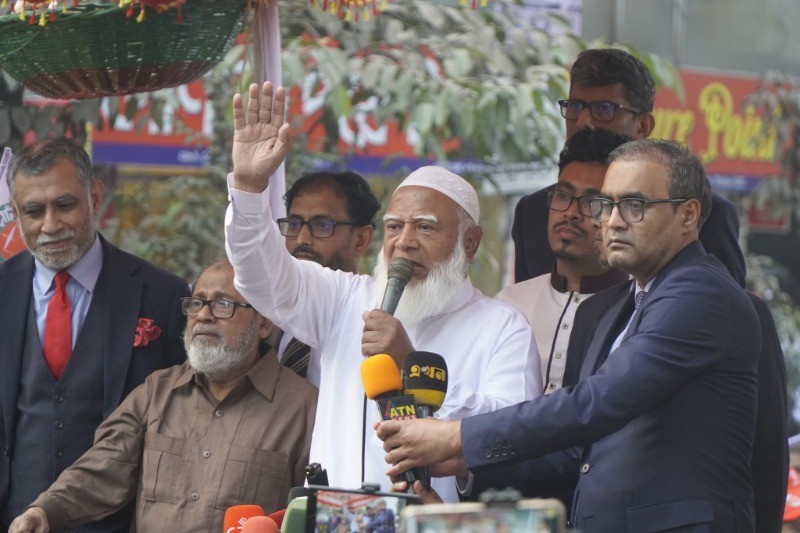
In the run-up to Bangladesh’s February 12 general election, few political parties projected as much confidence as the Bangladesh Jamaat-e-Islami.
Political analysts in Dhaka had speculated that the party could be poised for its strongest showing since independence.
Jamaat leaders signalled that they were not merely contesting seats but aiming to emerge as a central force in national governance.
However, the political landscape shifted dramatically after polling day.
As the Bangladesh Nationalist Party, led by Tarique Rahman, claimed a decisive victory, Jamaat adopted a more cautious and critical stance.
The party publicly raised concerns about the integrity of the results process, stating it was dissatisfied with the way outcomes were being handled and urging patience until official tallies were released.
Meanwhile, momentum appeared firmly in the BNP’s favour.
The election marked the first national vote since the violent 2024 uprising that reshaped Bangladesh’s political order.
Even before final results were formally declared, the United States embassy in Dhaka congratulated Tarique Rahman and the BNP, describing the outcome as historic.
For Jamaat, the contrast between pre-election optimism and post-election reality underscored a sharp political reversal.
Early momentum after 2024 uprising
The political recalibration began after the July 2024 student-led uprising that toppled the Awami League government led by Sheikh Hasina.
In the immediate aftermath, Jamaat was widely perceived as having organisational energy and street-level credibility.
The party had played a visible role in the protests that culminated in the government’s fall.
With the Awami League barred from contesting the election, the political field narrowed significantly.
For the first time in years, Jamaat was no longer confined to the margins of formal politics. The absence of its longtime rival created a rare opening.
Additionally, Tarique Rahman’s relatively late formal entry into the electoral race provided Jamaat with a temporary tactical advantage.
In several constituencies, the BNP’s campaign infrastructure had not yet fully mobilised, allowing Jamaat to consolidate support during the early stages of campaigning.
But as the campaign intensified, that advantage began to erode.
Voter blocs shift toward BNP
As polling day approached, several key voter segments moved decisively toward the BNP rather than Jamaat.
Young voters, many of whom had driven the 2024 uprising, cast ballots in significant numbers for the BNP.
Women voters, whom Jamaat had actively courted through revised messaging, did not shift in the anticipated numbers.
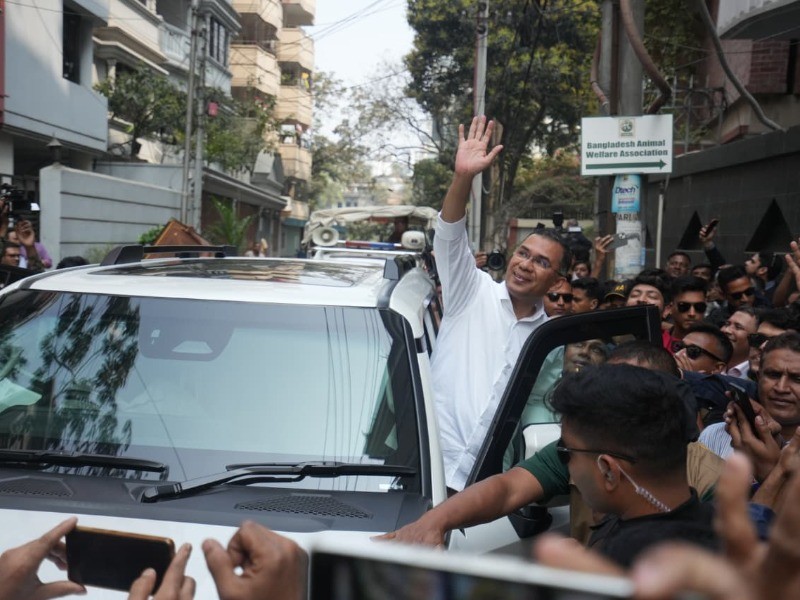 BNP claims 'historic victory' as its chairman, Tarique Rahman, wins big. Photo: Facebook/@bnpbd.org
Minority communities, including Hindus, largely consolidated behind the BNP.
Even voters historically aligned with the Awami League who chose to participate in the election did not migrate to Jamaat.
Instead, they also gravitated toward the BNP, reinforcing its broad-based coalition.
The cumulative effect was a narrowing of Jamaat’s potential electoral base.
While it had initially positioned itself as a principal beneficiary of the post-uprising realignment, the BNP ultimately captured the larger share of anti-Awami League sentiment.
Diplomatic undercurrent
Jamaat’s campaign unfolded amid reports of increased engagement between the party and Western diplomats.
An article in The Washington Post cited audio recordings suggesting quiet outreach efforts by American officials and indicated that concerns over Jamaat’s potential policy direction were discussed.
The report altered the tone of the campaign discourse.
During a roadshow in Thakurgaon, BNP Secretary General Mirza Fakhrul Islam Alamgir alleged that Jamaat had reached a secret understanding with the United States, warning of possible implications for national sovereignty and stability.
Jamaat did not confirm any formal agreement but described its meetings with foreign envoys as routine diplomatic exchanges ahead of the Thirteenth National Parliamentary Election.
In statements following meetings with Western diplomats, including French Ambassador Jean-Marc Sere-Charlet, the party emphasised discussions on ensuring a free and fair election, democratic strengthening and expanded cooperation in trade and commerce.
While Jamaat portrayed these engagements as standard political outreach, the public debate around foreign involvement became a campaign issue that the BNP leveraged effectively.
A complicated historical legacy
Founded in 1941 by Islamic scholar Syed Abul Ala Maududi, Jamaat-e-Islami has long carried a controversial legacy in Bangladesh.
The party opposed Bangladesh’s independence during the 1971 Liberation War and aligned with West Pakistan.
Leaders were associated with paramilitary groups such as Razakar, Al-Badr and Al-Shams, which were accused of widespread atrocities.
Following independence, Jamaat was banned in 1972 for misusing religion in politics, though the ban was lifted in 1979.
Over subsequent decades, the party entered coalitions with the BNP and held ministerial positions.
Under Sheikh Hasina’s government between 2009 and 2024, several Jamaat leaders were prosecuted by the International Crimes Tribunal.
Senior figures, including Motiur Rahman Nizami and Ali Ahsan Mohammad Mojaheed, were executed.
In 2013, the Bangladesh High Court cancelled Jamaat’s registration, citing constitutional conflicts.
Its student wing, Islami Chhatra Shibir, remained active, frequently clashing with rivals and maintaining influence within madrassas.
For 15 years, Jamaat operated under significant political isolation.
Rebranding after isolation
The 2024 uprising provided Jamaat with an opportunity to re-enter mainstream politics.
The party reorganised, reframed its messaging and adopted the language of the protest movement, presenting itself as pro-uprising and anti-authoritarian.
Under the leadership of Shafiqur Rahman, Jamaat sought to soften its public image.
It promoted minority rights, fielded its first Hindu candidate and moderated explicit references to Sharia law during campaign speeches.
Rahman emphasised inclusivity, pledging equal participation for women and men in building the country’s future and promising a justice-based, discrimination-free Bangladesh.
He also drew contrasts with the BNP, arguing that a Jamaat-led 10-party alliance would represent a collective victory for the people rather than for any single family or party.
Despite these efforts, longstanding concerns continued to shape public perceptions.
Jamaat’s advocacy of Sharia-based legal frameworks, its previous opposition to certain women’s rights reforms, allegations of political violence linked to its student wing and apprehensions among minority communities remained factors in voter calculations.
The gap between strategy and sentiment
Jamaat-e-Islami entered the 2026 general election with organisational momentum, a recalibrated public message and an open political field created by the Awami League’s absence.
Yet as ballots were counted, the anticipated breakthrough did not materialise.
The BNP’s consolidation of youth, minority and former Awami League voters proved decisive.
Diplomatic narratives and historical legacies further complicated Jamaat’s positioning.
While the party sought to project transformation and inclusivity, the electorate ultimately coalesced around a rival force.
Support Our Journalism
We cannot do without you.. your contribution supports unbiased journalism
IBNS is not driven by any ism- not wokeism, not racism, not skewed secularism, not hyper right-wing or left liberal ideals, nor by any hardline religious beliefs or hyper nationalism. We want to serve you good old objective news, as they are. We do not judge or preach. We let people decide for themselves. We only try to present factual and well-sourced news.
Support objective journalism for a small contribution.