


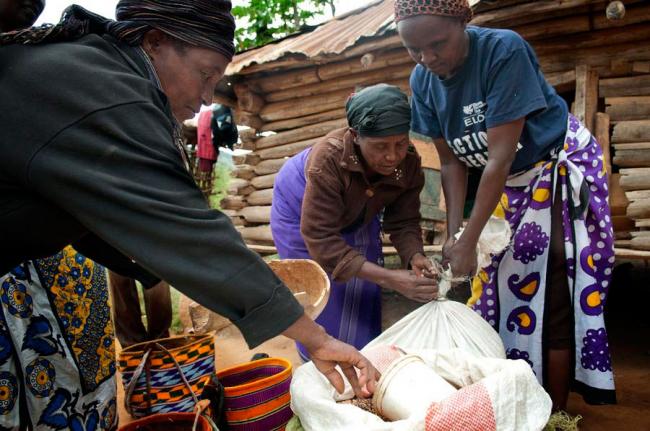
Formal trade in Africa can improve region, prospects for women – UN agency reports
“Informal cross-border trading, in which transactions are not compliant with local tax and other rules, accounts for a large share – between 20 and a hefty 70 per cent
– of employment in sub-Saharan Africa,” according to the UN Food and Agricultural Organization (FAO).
“Putting it on a regular footing can lift sustainable prosperity and markedly improve prospects for women,” FAO said in a new publication, Formalization of informal trade in Africa.
Informal cross-border trade, often agricultural, is the result of poor access to government offices, a lack of administrative skills and improper understanding of import and custom-tax laws.
One of the main groups that would be affected by formalization is women, who constitute the largest share of informal traders – about 70 per cent in Southern Africa and more than half in other parts, according to the report.
“Facilitating formalization is the only viable policy option for Africa's transformation agenda to realize its objectives,” said Suffyan Koroma, FAO senior economist and lead author of the report.
The publication was presented today at a conference in Kigali, Rwanda. The event is part of ongoing FAO-supported work in the country, along with UN Women and other development partners, aimed at enabling women to benefit more from agri-food chains, a project geared to allowing women small traders access useful information as well as start-up capital.
Photo: FAO/Christena Dowsett
Source: www.justearthnews.com
Support Our Journalism
We cannot do without you.. your contribution supports unbiased journalism
IBNS is not driven by any ism- not wokeism, not racism, not skewed secularism, not hyper right-wing or left liberal ideals, nor by any hardline religious beliefs or hyper nationalism. We want to serve you good old objective news, as they are. We do not judge or preach. We let people decide for themselves. We only try to present factual and well-sourced news.
Support objective journalism for a small contribution.


