Food is best vaccine against chaos, insists UN World Food Programme head
New York/IBNS: Tens of millions more people are likely to go hungry this year because of the COVID-19 crisis, the UN World Food Programme (WFP) said on Monday, as it announced plans for a massive boost to its global aid operation so it can reach them.
In an alert, WFP head David Beasley said that new estimates show that 270 million people face food insecurity “before the year’s end”.
Food insecure nearly doubles
This is an 82 per cent increase from before the pandemic took hold, he said, adding that the coronavirus was affecting regions of the world that had “previously escaped” severe food insecurity.
“The frontline in the battle against the coronavirus is shifting from the rich world to the poor world,” he said.
Latin American countries are experiencing the worst effects of the health crisis, with an almost three-fold rise in the number of people requiring food assistance.
This includes urban communities in low and middle-income countries, which the WFP warns “are being dragged into destitution” by job losses and a sharp drop in remittances.
Hunger spikes are also happening in West and Central Africa, which has seen a 135 per cent jump in the number of food insecure people, as well as in Southern Africa where there has been a 90 per cent rise.
WFP record response
To tackle this rising tide of hunger, WFP is undertaking the biggest humanitarian response in its history.
It intends to ramp up the number of people it assists to 138 million - from a record 97 million last year.
To do this, sustained funding is required urgently, Mr. Beasley said, in an appeal for $4.9 billion over the next six months to help 83 countries.
“Until the day we have a medical vaccine, food is the best vaccine against chaos. Without it, we could see increased social unrest and protests, a rise in migration, deepening conflict and widespread under-nutrition among populations that were previously immune from hunger.”
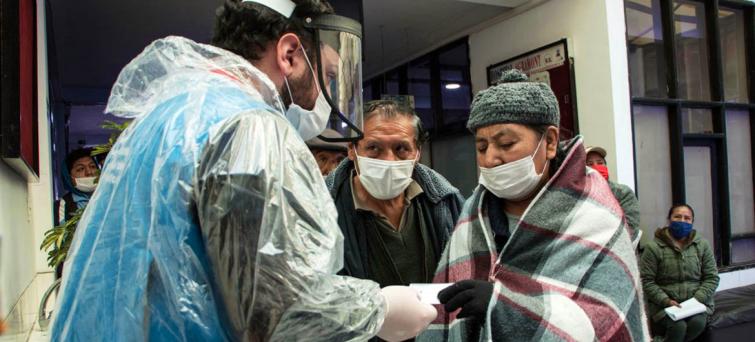
Photo credit and caption: WFP/Morelia Eróstegui
During the COVID-19 pandemic, the World Food Programme (WFP), is distributing electronic cash cards to 1,500 families in El Alto and La Paz, Bolivia.
Support Our Journalism
We cannot do without you.. your contribution supports unbiased journalism
IBNS is not driven by any ism- not wokeism, not racism, not skewed secularism, not hyper right-wing or left liberal ideals, nor by any hardline religious beliefs or hyper nationalism. We want to serve you good old objective news, as they are. We do not judge or preach. We let people decide for themselves. We only try to present factual and well-sourced news.
Support objective journalism for a small contribution.