 Work Life Balance
Flexible work arrangements, a benefit to all – ILO report
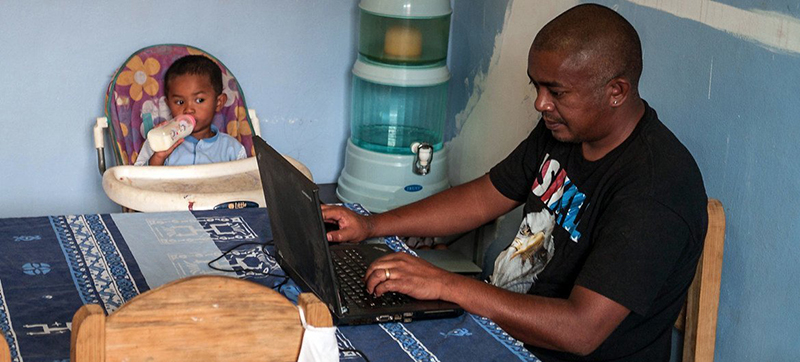
New York: Flexible working hours can advance economies and businesses while helping employees and families achieve a better work-life balance, according to a new report launched by the International Labour Organization (ILO) on Friday.
Issues surrounding working hours and conditions are “at the heart of most labour market reforms and evolutions taking place in the world today”, Branch Chief Philippe Marcadent said in the foreword to ILO’s Working Time and Work-Life Balance Around the World.
“The number of hours worked, the way in which they are organized, and the availability of rest periods can significantly affect not only the quality of work, but also life outside the workplace”.
Recording hours
The study, which is the first to focus on work-life balance, examines the affects that working hours and time schedules have on the performance of businesses and their employees.
Covering the periods before and during COVID-19, the report reveals that more than a third of all employees are regularly working more than 48 hours per week, while a fifth of the global workforce is labouring fewer than 35 hours per week, on a part-time basis.
“The so-called ‘Great Resignation’ phenomenon has placed work-life balance at the forefront of social and labour market issues in the post-pandemic world”, said lead author Jon Messenger.
Varying arrangements
The report analyses different work schedules and their effects on work-life balance, including shifts, arrangements for being on call, compressed hours, and hours-averaging schemes.
Innovative working-time arrangements, such as those introduced during the COVID-19 crisis, can bring great benefits, including greater productivity and improved work-life balance, said Mr. Messenger.
“This report shows that if we apply some of the lessons of the COVID-19 crisis and look very carefully at the way working hours are structured, as well as their overall length, we can create a win-win, improving both business performance and work-life balance”, he added.
However, the report cautioned that the benefits of some flexible arrangements, such as spending more time with the family, may also be accompanied by greater gender imbalances and health risks.
Pandemic responses
The report also looks at crisis response measures which governments and businesses took during the pandemic to help keep organizations functioning and preserve jobs, which found that more workers on reduced hours helped to prevent job losses.
The study also highlights long-term changes.
“The large-scale implementation of telework nearly everywhere in the world that it was feasible to do so, changed…the nature of employment, most likely for the foreseeable future” it asserts.
The COVID-19 crisis measures also yielded powerful new evidence showing that by giving workers more flexibility in how, where and when they work, can be positive both for them and for business, with significant productivity gains.
Conversely, restricting flexibility brings substantial costs, including higher staff turnover.
“There is a substantial amount of evidence that work–life balance policies provide significant benefits to enterprises, supporting the argument that such policies are a ‘win-win’ for both employers and employees”, stated the report.
Observations
The report includes a number of conclusions, such as that longer working hours are generally associated with lower productivity, while shorter hours are linked with greater output.
It also upholds that laws and regulations which set an upper limit on hours worked and statutory rest periods, contribute to the long-term health and well-being of society.
Recommendations
According to Working Time, countries should continue to support pandemic-era initiatives such as inclusive short-time work schemes, which not only saved jobs but also boosted purchasing power and helped cushion the effects of economic crises.
It also advocates for a public policy shift to reduce the number of working hours in many countries, and promote a healthy work-life balance.
And finally, the report encourages teleworking to help maintain employment and give workers more agency.
However, to contain potential negative effects, it warned that these and other flexible working arrangements need to be well regulated, to support what is often called the “right to disconnect” from work.
Support Our Journalism
We cannot do without you.. your contribution supports unbiased journalism
IBNS is not driven by any ism- not wokeism, not racism, not skewed secularism, not hyper right-wing or left liberal ideals, nor by any hardline religious beliefs or hyper nationalism. We want to serve you good old objective news, as they are. We do not judge or preach. We let people decide for themselves. We only try to present factual and well-sourced news.
Support objective journalism for a small contribution.