 Financial Transparency
Financial transparency, 'sound governance and accountability’ essential to reach Global Goals
New York: Financial integrity is “paramount to the success of the 2030 Agenda”, the President of the UN General Assembly said on Thursday, launching a new report that offers a blueprint to address a range of obstacles, particularly surrounding illicit finance flows.
“As an international community committed to addressing inequality and advancing sustainable development, we must put in place the very principles of transparency, sound governance, and accountability that we so often champion”, Volkan Bozkir said at the release of the Report of the High-Level Panel on International Financial Accountability, Transparency and Integrity for Achieving the 2030 Agenda (FACTI).
Putting sound principles in place
In the Financial Integrity for Sustainable Development report, the FACTI Panel recommends that governments finance critical action on extreme poverty, COVID-19 and the climate crisis by recovering billions of dollars lost through tax abuse, corruption and money-laundering.
“Developing countries could not afford to lose resources during the best of times and they certainly cannot afford to now, in the midst of the COVID crisis”, attested the Assembly President.
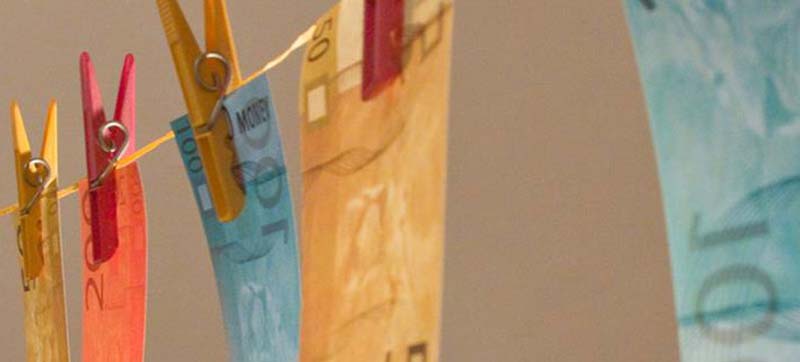
Noting that as much as 2.7 per cent of the global GDP is laundered annually, the FACTI Panel is calling on governments to agree to a Global Pact for Financial Integrity for Sustainable Development.
Making the case
Pointing out that corporations shopping for tax-free jurisdictions cost governments up to $600 billion a year, the Panel flagged the need for stronger laws and institutions to prevent corruption and money laundering and advocated for those enabling financial crimes to face punitive sanctions.
The report also calls for greater transparency around company ownership, public spending and stronger international cooperation to prosecute bribery and to increase tax levels on giant digital corporations.
“A corrupt and failing financial system robs the poor and deprives the whole world of the resources needed to eradicate poverty, recover from COVID and tackle the climate crisis”, said FACTI co-chair and former president of Lithuania, Dalia Grybauskaitė.
Ibrahim Mayaki, FACTI co-chair and former prime minister of Niger, added that “closing loopholes that allow money laundering, corruption and tax abuse…are steps in transforming the global economy for the universal good”.
Cutting tax avoidance
At a time when billionaires’ wealth soared by 27.5 per cent and COVID-19 has pushed 131 million into poverty, the report notes that a tenth of the world’s wealth could be hidden in offshore financial assets – preventing governments from collecting their fair share of taxes.
Recovering annual loss to tax avoidance and evasion would, for example, allow Bangladesh to expand its social safety net to nine million more elderly, permit Chad to pay for 38,000 classrooms, and enable Germany to build 8,000 wind turbines, according to the report
Mr. Bozkir welcomed the Panel’s new system, which fosters financial “fairness, accountability and integrity” for sustainable development and expressed confidence that “if duly implemented” it can “advance progress towards achieving Agenda 2030”.
“None of us stand to benefit from failure to act”, he attested. “The onus is on each of us to put in place a system of financial integrity for sustainable development” to free up resources that would otherwise be lost and build “trust in our international, national and local systems of governance, demonstrating transparency, accountability and the ability to deliver on the 2030 Agenda”.
Support Our Journalism
We cannot do without you.. your contribution supports unbiased journalism
IBNS is not driven by any ism- not wokeism, not racism, not skewed secularism, not hyper right-wing or left liberal ideals, nor by any hardline religious beliefs or hyper nationalism. We want to serve you good old objective news, as they are. We do not judge or preach. We let people decide for themselves. We only try to present factual and well-sourced news.
Support objective journalism for a small contribution.