 Millets
Exhibition showcases millets as ‘smart food’, rich in heritage and full of potential
New York: A new exhibition highlighting the crucial role millets play in boosting global food and nutrition security, adapting to agrarian risks posed by climate change, and contributing to progress on the sustainable development goals (SDGs) agenda, opened on Tuesday at UN Headquarters in New York.
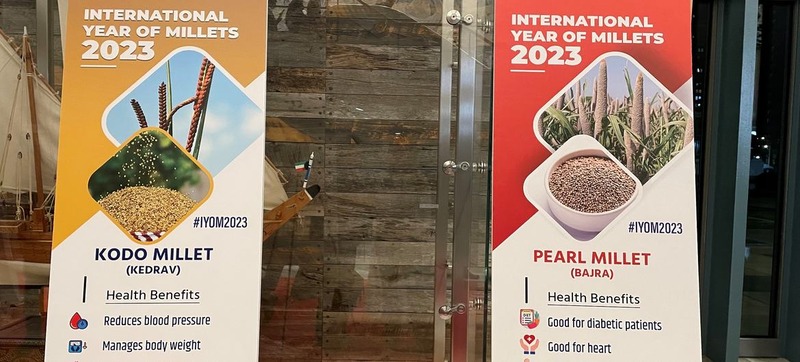
Launched by India’s mission to the UN, during the International Year of Millets, the exhibition showcases different kinds of millets grown in India, their nutritional value and various health benefits.
Millets encompass a diverse group of nutritious cereals including pearl, proso, foxtail, barnyard, kodo, browntop, finger and Guinea millets, as well as fonio, sorghum and teff.
Millet-based refreshments and millet grains were also placed on display at the exhibition which saw the presence of UN delegates and senior officials.
In a video message for the event, UN Deputy Secretary-General Amina Mohammed underscored that millets are rich in heritage and full of potential.
“For thousands of years, they have been a staple source of food and nutrition for millions of people around the world.”
“This special exhibition can help raise awareness on the virtues of millets to address food insecurity and support the transformation of our food systems worldwide.”
Rooted in ancient traditions
Millets were among the first plants to be domesticated and serve as a traditional staple crop for millions of farmers in dry zones of Asia and Africa, with India being the top producer followed by Nigeria, Niger and China.
Often called “Nutri-Cereals” due to their high nutritional value, millets provide a rich source of dietary fibre, antioxidants, protein and minerals.
They are climate resilient, tolerant of poor soils, drought and harsh growing conditions, and are adaptable to different production environments, without high fertilizer and pesticide needs.
Millets as ‘smart food’
Opening the launch event, India’s Permanent Representative, Ambassador Ruchira Kamboj, summed up the significance of these crops.
“Millets are more than just foods. They are smart foods.”
“Millets are incredibly versatile and resilient crops that can grow in a wide range of climatic and soil conditions, making them ideal for small farmers in developing countries.”
Against the backdrop of the ever-growing global population that needs sufficient and healthy food, rising climate risks and depleting natural resources, Ms. Kamboj particularly underscored their importance and relevance in the face of crises and challenges surrounding food security and nutrition today.
Millets and the SDGs
Recognizing their wide-ranging benefits, the UN General Assembly at its 75th session in March 2021 declared 2023 the International Year of Millets.
“The international year of millets provides an opportunity to highlight how the sustainable production, processing, marketing, and consumption of millets can contribute to alleviating hunger,” said Ms. Mohammed, stressing that it can also “help us move forward on all areas of the 2030 agenda for sustainable development.”
“Promoting the cultivation harnessing the potential of millets can improve the livelihoods of many smallholder farmers, and actors along the value chain,” she added.
IYM 2023 aims to contribute to the UN 2030 Agenda for Sustainable Development, particularly SDG 2 (Zero Hunger), SDG 3 (Good health and well-being), SDG 8 (Decent work and economic growth), SDG 12 (Responsible consumption and production), SDG 13 (Climate action) and SDG 15 (Life on land).
A tasty solution
Sharing his experiences on his journey with millets from the farm to the table, Arun Nagpal, Director and Co-founder of the MRIDA Group, pointed out that we often tend to feel that healthy products involve compromise in taste.
“However, millet-based products, carefully crafted and combined with other ingredients, can bring taste and value to almost every world cuisine today.”
“From flours to cookies to pizzas, pastas, muffins, cakes, breakfast cereals, smoothies and so on.”
He emphasized that millets need not be forced into our diets but can be easily integrated into an existing style or pattern across ages and cultures, across cuisines and nations, and across the dietary preferences.
The exhibition will be on display at the United Nations General Assembly Delegates Entrance Exhibition area from 14-17 February.
Support Our Journalism
We cannot do without you.. your contribution supports unbiased journalism
IBNS is not driven by any ism- not wokeism, not racism, not skewed secularism, not hyper right-wing or left liberal ideals, nor by any hardline religious beliefs or hyper nationalism. We want to serve you good old objective news, as they are. We do not judge or preach. We let people decide for themselves. We only try to present factual and well-sourced news.
Support objective journalism for a small contribution.