


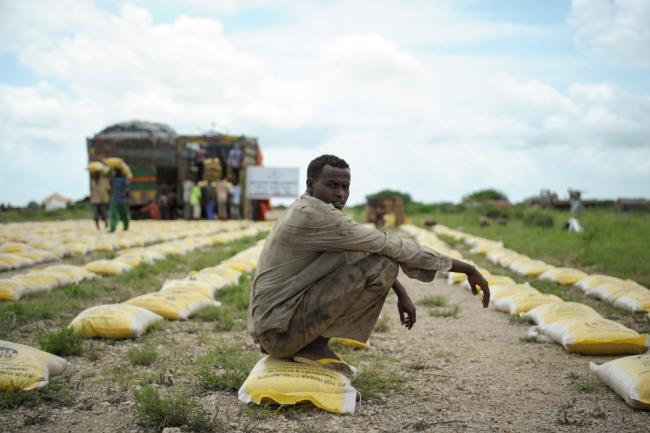
El Niño threatens at least 60 million people in high-risk countries: UN agency
El Niño is a warming of the central to eastern tropical Pacific Ocean which affects rainfall patterns and temperatures in many parts of the world but most intensely in the tropical regions of Africa, Asia-Pacific, and Latin America which are particularly vulnerable to natural hazards. Typically, some places receive much more rain than normal while others receive much less.
“From Ethiopia to Haiti to Papua New Guinea, we are seeing the damage from El Niño, and we believe the impact on public health is likely to continue throughout 2016, even after El Niño winds down,” said Dr Richard Brennan, Director of WHO’s Emergency Risk Management & Humanitarian Response Department, in a press release.
“To prevent unnecessary deaths and illnesses, governments must invest now in strengthening their preparedness and response efforts,” he highlighted.
According to a new report by WHO, severe drought, flooding, heavy rains and temperature rises are all known effects of El Niño that can lead to food insecurity and malnutrition, disease outbreaks, acute water shortages, and disruption of health services.
The health implications are usually more intense in developing countries with fewer capacities to reduce the health consequences.
The current El Niño from 2015 to 2016 is predicted to be the worst in recent years, and comparable to the El Niño in 1997-1998 which had major health consequences worldwide.
In Eastern Africa, as a result of the El Niño in 1997-1998, WHO found that rainfall patterns were unusually heavy and led to serious flooding and major outbreaks of malaria, cholera and Rift Valley Fever.
Based on the latest UN figures, the report estimates 60 million people will be impacted by El Niño this year with many suffering health consequences. Thus far, requests for financial support by seven high-risk countries – Ethiopia, Lesotho, Kenya, Papua New Guinea, Somalia, Tanzania and Uganda – have reached $76 million.
WHO expects more countries will seek financial support to respond to El Niño effectively. Part of the response will be to provide additional health services to those in need, such as increased surveillance and emergency vaccination. Immediate needs also require funds to provide treatments for severely malnourished children in many countries, such as Ethiopia.
UN Photo/Tobin Jones/www.justearthnews.com
Support Our Journalism
We cannot do without you.. your contribution supports unbiased journalism
IBNS is not driven by any ism- not wokeism, not racism, not skewed secularism, not hyper right-wing or left liberal ideals, nor by any hardline religious beliefs or hyper nationalism. We want to serve you good old objective news, as they are. We do not judge or preach. We let people decide for themselves. We only try to present factual and well-sourced news.
Support objective journalism for a small contribution.


