 Durand Line Conflict
Durand Line dispute raises major existential concerns for Pakistan
Islamabad/IBNS: The dispute over the Durand Line region, which is a strategic concern for both Afghanistan and Pakistan, has been posing a major existential concerns for Islamabad, according to media reports.
The Durand Line, a border established under British colonial rule and the Afghan King in 1893, divides the traditional Pashtun homelands in Afghanistan and Pakistan.
Owing to the tribal, linguistic, social and economic ties, the border was mainly porous until recently fenced and heavily guarded, reports International Forum for Right and Security (IFFRAS).
Traditionally, Pashtunistan or the Pashtun homeland stretches from areas south of the Amu River in Afghanistan to west of the Indus River in modern-day Pakistan, and as the British prepared to exit India in 1947, Afghanistan had demanded a revision of its international border to reclaim back its Pashtun lands.
Though the request was denied and to add to it, the setting up of Pakistan as a state was consolidated.
According to IFFRAS, Afghanistan announced that all former Durand Line agreements, including the subsequent Anglo-Afghan treaties upholding it, were invalid because the party with whom the contract was signed – British India Administration – no longer existed.
By supporting the Taliban and helping it seize control of Afghanistan, Islamabad hoped to intensify its strategic depth in the country and persuade the Taliban Government into legitimizing the Durand Line, IFFRAS reported.
However, things seem to be turning out otherwise as the Taliban have refused to give in to the pressure to recognize the Durand Line, the report said.
Commenting on Islamabad's interference, Taliban spokesperson Zabihullah Mujahid in an interview with Ariana News said, “I have to say that we do not want anyone, including Pakistan, to interfere."
"We are an independent country. We do not accept these interventions. Pakistan is a separate country, and we do not want to interfere in their internal affairs and they cannot interfere [in Afghanistan’s affairs],” the Taliban spokesman added.
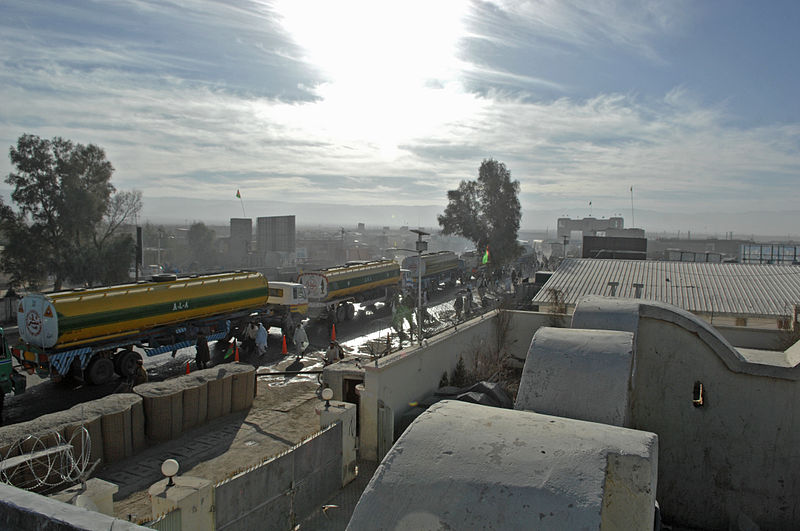
The Taliban have also stated their opposition to border fencing along the Durand Line, to which Pakistan resorted to employing extreme measures such as imposing a blockade at the Chaman Post in early October 2021 in addition to existing disruptions at the Torkham Post, reports Asian News International (ANI).
Chaman Post and Torkham Post were major crossings for men and goods and also a major source of revenue for the bankrupt Taliban government as well as ordinary citizens on both sides of the border, according to the IFFRAS report.
In an event where the Durand Line gets subsumed, Greater Afghanistan or very unlikely independent Pashtunistan would be carved out of Pakistan, expanding Afghanistan all the way to the Indus River and leaving Pakistan with just two provinces, Sindh and Punjab, thereby Pakistan may cease to exist as a state, reported ANI.
The IFFRAS reported the Durand Line is one of the main concerns for Pakistan but it has been hiding the real issue behind Kashmir cover since the Kashmir region may not pose as much an existential threat to the Pakistani state as is Durand Line.
After losing much of its territory to Bangladesh after the 1971 War, Pakistan has been left with a small area with four provinces and a Federally Administered Tribal Area (FATA), which now is merged with the Khyber Pakhtunkhwa province, according to data available on the webpage of Pakistan Embassy in Sweden and Finland.
Support Our Journalism
We cannot do without you.. your contribution supports unbiased journalism
IBNS is not driven by any ism- not wokeism, not racism, not skewed secularism, not hyper right-wing or left liberal ideals, nor by any hardline religious beliefs or hyper nationalism. We want to serve you good old objective news, as they are. We do not judge or preach. We let people decide for themselves. We only try to present factual and well-sourced news.
Support objective journalism for a small contribution.