 Somalia
Drought, conflict force 80,000 Somalis to shelter in Kenya’s Dadaab refugee camps
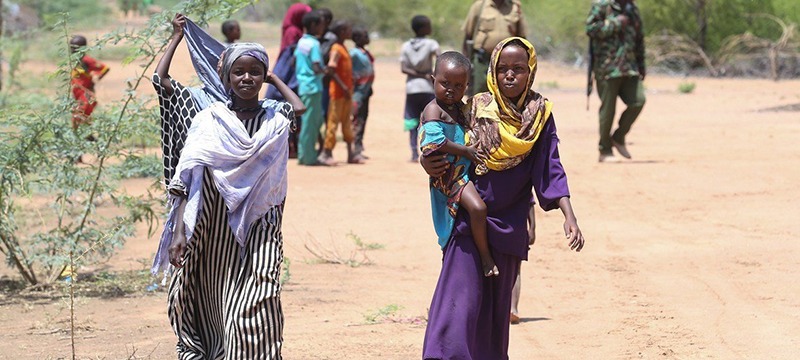
New York: Tens of thousands of people have sought shelter in recent weeks at Kenya’s Dadaab camps, forced from their homes by extremist violence in neighbouring Somalia and an “unrelenting” drought, the UN refugee agency, UNHCR, said on Tuesday.
An estimated 24,000 people have arrived at the camp complex since the end of September, some of the more than 80,000 taken in there during the past two years, according to UNHCR spokesperson Boris Cheshirkov.
He told journalists in Geneva that despite a recent drop in the pace of daily arrivals at Dadaab, an arid part of northeast Kenya, “adequate space in the camps …is running out”.
This has forced many to construct makeshift shelters along the outskirts of the camps, “where clean water and sanitation facilities are either grossly insufficient or non-existent”.
Deadly cholera fears
Even more alarming is the cholera outbreak that has affected host and refugee communities. “Over 350 cases have been identified since the end of October; those are mainly affected children,” the UNHCR spokesperson noted.
“In one area that UNHCR teams recently visited, a family was hosting up to 28 people, eight of them had already been infected,” he continued. “Treatment centres need more personnel and supplies to help curb any further spread of the disease.”
UN support
Help has been provided to the new arrivals, including clean drinking water and extended sanitation and hygiene facilities at the outskirts of the camps.
Targeted protection services have also been put in place for the most vulnerable. “Malnourished children are being screened and admitted to stabilization centres,” Mr. Cheshirkov explained.
“Plans are under way to boost assistance by providing additional basic relief items including dignity kits for women and girls” at Dadaab’s Dagahaley, Ifo and Hagadera camps.
Working with partners, the UN agency is also assisting host communities surrounding Dadaab by rehabilitating boreholes, providing generators for water pumps and trucking in water. UNHCR has also planned additional treatment centres to boost healthcare access for new arrivals and to prepare for future cholera infections.
Climate emergency
Meanwhile, humanitarians remain deeply concerned about the continued failed rains and drought in the whole Horn of Africa region, which Mr. Cheshirkov described as “the longest and most severe” in decades.
“Some 4.5 million Kenyans, mainly in the northern and eastern parts of the country, are also battling with the effects of the devastating drought,” he explained.
UN humanitarian aid coordinating office, OCHA, has already warned that more than 36.4 million people across the Horn of Africa will be affected by the most prolonged and severe drought in recent history in the last months of this year. This includes 24.1 million in Ethiopia and 7.8 million in Somalia.
Pastoralism dying
Large swathes of Somalia, southern and south-eastern Ethiopia, and northern and eastern Kenya have faced the most prolonged drought in recent history, while the March to May 2022 rainy season was the driest on record in the last 70 years, OCHA said.
“The 2020 to 2022 drought has now surpassed the horrific droughts in 2010 to 2011 and 2016 to 2017 in both duration and severity and will continue to deepen in the months ahead, with catastrophic consequences,” it added, noting that over 9.5 million livestock - which pastoralist families rely upon for sustenance and livelihoods - have already died across the region, including four million in Ethiopia, 2.5 million in Kenya and over three million in Somalia.
Support Our Journalism
We cannot do without you.. your contribution supports unbiased journalism
IBNS is not driven by any ism- not wokeism, not racism, not skewed secularism, not hyper right-wing or left liberal ideals, nor by any hardline religious beliefs or hyper nationalism. We want to serve you good old objective news, as they are. We do not judge or preach. We let people decide for themselves. We only try to present factual and well-sourced news.
Support objective journalism for a small contribution.