Displaced civilians in South Sudan’s Upper Nile at risk of further violence, UN rights chief warns
“Civilians in Aburoc are at serious and imminent risk of gross human rights violations, inter-ethnic violence and re-displacement,” said UN High Commissioner for Human Rights Zeid Ra’ad Al Hussein.
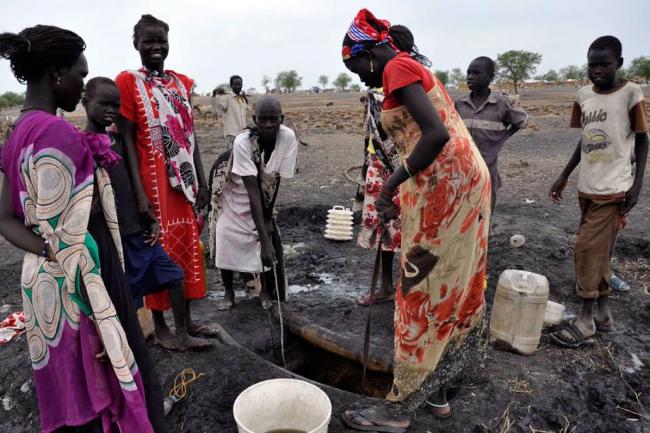
He said these people fleeing from towns like Tonga and Kodok were forced to walk through the bush for up to 150 kilometres in searing temperatures. Many reportedly died along the way, but the rest ended up in Aburoc where they face grave violence and shortages of food, water and healthcare.
“These are women, children and men at the mercy of military commanders, on both sides of the political divide, who have consistently shown little or no regard for the protection of civilians,” he added.
Despite the August 2015 peace agreement, South Sudan slipped back into conflict due to renewed clashes between rival forces – the Sudan People's Liberation Army (SPLA) loyal to President Salva Kiir and the SPLA in Opposition backing former First Vice-President Riek Machar.
Aburoc, a town on the west bank of the River Nile, holds between 35,000 and 50,000 people, most of whom arrived in recent weeks after SPLA attacks on areas to the south.
Civilians in Aburoc now find themselves in areas controlled by the opposition armed group, facing a military offensive by the Government forces.
The High Commissioner urged the Government to adhere to the pledges made by President Kiir on 25 March, when he committed to declare a unilateral ceasefire, and to work towards political engagement to bring the conflict to an end.
Zeid called on all parties to the conflict to comply with international humanitarian law, including taking all feasible precautions to prevent civilian casualties.
He also called on the Government to grant the UN Mission in South Sudan (UNMISS) access to Aburoc and Kodok, and to ensure that humanitarian agencies are able to deliver crucial aid to the internally displaced population.
Photo: OCHA/Gemma Connell
Support Our Journalism
We cannot do without you.. your contribution supports unbiased journalism
IBNS is not driven by any ism- not wokeism, not racism, not skewed secularism, not hyper right-wing or left liberal ideals, nor by any hardline religious beliefs or hyper nationalism. We want to serve you good old objective news, as they are. We do not judge or preach. We let people decide for themselves. We only try to present factual and well-sourced news.
Support objective journalism for a small contribution.