Cutting-edge tech a ‘double-edged sword for developing countries’: UN report
New York, Oct 9 (IBNS): The latest technological advances, from artificial intelligence to electric cars, can be a “double-edged sword”, says the latest UN World Economic and Social Survey (WESS 2018), released on Monday.
The over-riding message of the report is that appropriate, effective policies are essential, if so-called “frontier technologies” are to change the world for the better, helping us to achieve the Sustainable Development Goals (SDGs) and addressing climate change: without good policy, they risk exacerbating existing inequality.
Amongst several positive indicators, WESS 2018 found that the energy sector is becoming more sustainable, with renewable energy technology and efficient energy storage systems giving countries the opportunity to “leapfrog” existing, often fossil fuel-based solutions.
The wellbeing of the most vulnerable is being enhanced through greater access to medicines, and millions in developing countries now have access to low-cost financial services via their mobile phones.
Referring to the report, UN Secretary-General António Guterres said that “good health and longevity, prosperity for all and environmental sustainability are within our reach if we harness the full power of these innovations.”
However, the UN chief warned of the importance of properly managing the use of new technologies, to ensure there is a net benefit to society: the report demonstrates that unmanaged implementation of developments such as artificial intelligence and automation can improve efficiency but also destroy quality jobs.
“Clearly, we need policies that can ensure frontier technologies are not only commercially viable but also equitable and ethical. This will require a rigorous, objective and transparent ongoing assessment, involving all stakeholders,” Guterres added
The Survey says that proactive and effective policies can help countries to avoid pitfalls and minimize the economic and social costs of technology-related disruption. It calls for regulation and institutions that promote innovation, and the use of new technologies for sustainable development.
With digital technology frequently crossing borders, international cooperation, the Survey shows, is needed to bring about harmonized standards, greater flexibility in the area of intellectual property rights and ensuring that the market does not remain dominated by a tiny number of extremely powerful companies.
Here, the UN has a vital role to play, by providing an objective assessment of the impact that emerging technologies have on sustainable development outcomes – including their effects on employment, wages and income distribution – and bringing together people, business and organizations from across the world to build strong consensus-led agreements.
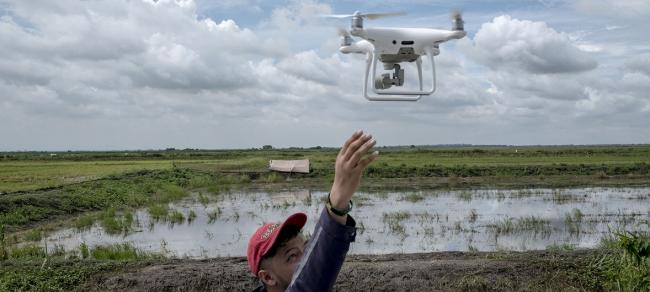
©FAO/Veejay Villafranca
Support Our Journalism
We cannot do without you.. your contribution supports unbiased journalism
IBNS is not driven by any ism- not wokeism, not racism, not skewed secularism, not hyper right-wing or left liberal ideals, nor by any hardline religious beliefs or hyper nationalism. We want to serve you good old objective news, as they are. We do not judge or preach. We let people decide for themselves. We only try to present factual and well-sourced news.
Support objective journalism for a small contribution.