 Cosmic Crops
Cosmic crops poised for harvest on Earth
New York: UN food and atomic energy agencies are readying to reap the rewards of a ground-breaking ‘astrobotany’ investigation, announcing on Monday that seeds sent to space in 2022 are now poised to return to Earth.
“This is science that could have a real impact on people’s lives in the not-too-distant future, by helping us grow stronger crops and feed more people,” Rafael Mariano Grossi, head of the International Atomic Energy Agency (IAEA), said.
With the world’s population estimated to reach almost 10 billion by 2050, there is a clear need for innovative solutions through science and technology aimed at producing more food, as well as crops that are more resilient and farming methods that are more sustainable, the agencies said.
Reaching for the stars
While similar experiments have been carried out since 1946, this is the first time that the IAEA and the UN Food and Agriculture Organization (FAO) are conducting genomic and biological analyses on seeds sent to space in around 60 years of experience in inducing plant mutations that could be of benefit to people and planet.
The experiment aims at developing new crops that can adapt to climate change and help boost global food security.
Two kinds of seeds are now in space: arabidopsis, a type of cress that has been studied extensively by plant botanists and geneticists, and sorghum, which belongs to the family of millets and is a drought and heat-tolerant grain grown in many developing countries for food.
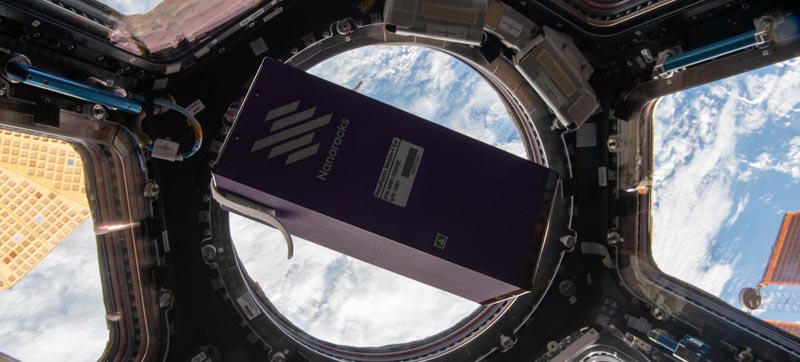
The seeds were sent in an uncrewed cargo shuttle from NASA on 7 November 2022. While in space, they were exposed to a complex mixture of cosmic radiation, microgravity, and extreme temperatures, inside and outside the International Space Station (ISS).
Upon their return in early April, scientists at the Joint FAO/IAEA Centre of Nuclear Techniques in Food and Agriculture plan to grow the seeds and screen them for useful traits to better understand space-induced mutations and identify new varieties.
Transforming agrifood systems
Once grown, a series of analyses will help understand whether cosmic radiation and harsh space conditions can lead to crops becoming more resilient in the face of increasingly difficult growing conditions on Earth, the agencies said.
“I am very proud of our partnership with IAEA, bearing fruits both on Earth for years, and now with seeds that travelled through space,” FAO Director-General Qu Dongyu said.
“I am in awe of the resilience of nature, and excited by the endless benefits that space exploration can bring to transform our agrifood systems to be more efficient, more inclusive, more resilient and more sustainable across the globe.”
Support Our Journalism
We cannot do without you.. your contribution supports unbiased journalism
IBNS is not driven by any ism- not wokeism, not racism, not skewed secularism, not hyper right-wing or left liberal ideals, nor by any hardline religious beliefs or hyper nationalism. We want to serve you good old objective news, as they are. We do not judge or preach. We let people decide for themselves. We only try to present factual and well-sourced news.
Support objective journalism for a small contribution.