Benefits of rural migration effect often overlooked, new UN report suggests
New York, Oct 16 (IBNS): Agricultural policies should work to maximize the contributions of rural migration to economic and social development, while minimizing the costs, says a major new report released on Monday by the UN Food and Agriculture Organization (FAO).
The agency’s annual report titled, The State of Food and Agriculture 2018 (SOFA), points to migration as a choice, its costs and benefits, and lays out the implications arising from important investment decisions surrounding rural development.
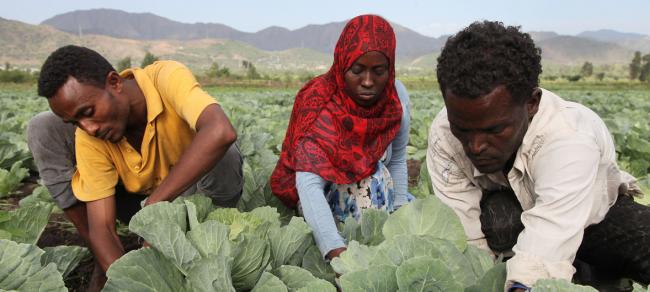
With a focus on rural migration, the report notes that while international migration has grabbed the headlines, movement within national borders is a significantly larger phenomenon, accounting for more than a billion people.FAO Director-General Jose Graziano da Silva said in his forward to the report, that “the objective must be to make migration a choice, not a necessity, and to maximize the positive impacts while minimizing the negative ones.”
Graziano said that it often makes sense to support migration, helping migrants overcome any possible constraints, and, “allowing them to take advantage of the opportunities that migration offers.” He said this means providing attractive opportunities, especially when it involves boosting sustainable development.
For rural communities, this means reinforcing agricultural value and jobs, according to the report’s recommendations. In cases where communities are forced to flee, strategies should include having approaches that will promote independence and resilience for the displaced.
For migrants, relocation could mean access to improved livelihoods and champion development in countries of origin, through remittances, which could contribute to overall socio-economic development.
The cost of migration for the poor can be overwhelming, especially where the young and educated leave rural areas.
The report notes that development paves the way for more, not less, international migration. Low- and lower-middle income countries benefit from development, as it assists with income growth and thus, enables communities to cover costs associated with migration.
Overall, the general improvement of infrastructure and services in small cities, towns and rural areas makes communities less isolated, creating more incentive for people to stay, and slow the flight to big cities.
FAO/Tamiru Legesse
Support Our Journalism
We cannot do without you.. your contribution supports unbiased journalism
IBNS is not driven by any ism- not wokeism, not racism, not skewed secularism, not hyper right-wing or left liberal ideals, nor by any hardline religious beliefs or hyper nationalism. We want to serve you good old objective news, as they are. We do not judge or preach. We let people decide for themselves. We only try to present factual and well-sourced news.
Support objective journalism for a small contribution.