


 Bangladesh
Bangladesh poll manifestos mirror India’s welfare schemes as BNP, Jamaat bet big on women, freebies
As Bangladesh heads towards one of its most consequential elections in nearly two decades, its political discourse is beginning to sound strikingly familiar to Indian voters.
Cash handouts for women, universal healthcare, affordable housing and subsidised food now dominate the manifestos of Bangladesh’s major political players, mirroring welfare schemes that have delivered decisive electoral gains in India.
The Bangladesh Nationalist Party (BNP), led by Tarique Rahman, and Jamaat-e-Islami have both rolled out ambitious welfare-heavy manifestos, drawing clear parallels with Indian initiatives such as Ayushman Bharat, the Ladli and Ladki Bahin schemes, and Pradhan Mantri Awas Yojana.
These promises come as Bangladesh prepares for elections on February 12, following months of political instability triggered by the ouster of Sheikh Hasina in August 2024.
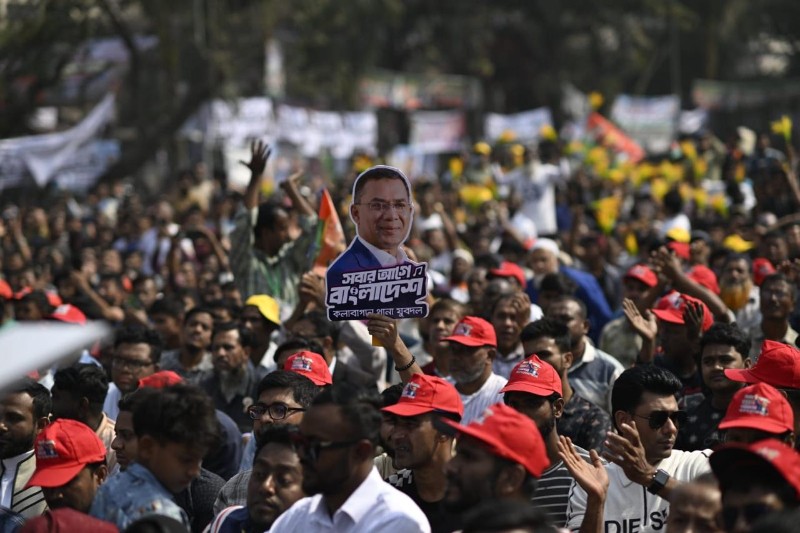 Photo: Facebook/@bnpbd.org
India’s welfare blueprint crosses the border
Freebies and women-focused welfare programmes have reshaped electoral politics in India over the past decade.
From Madhya Pradesh to Maharashtra, targeted cash transfers and social security schemes for women have proved to be powerful vote-mobilisers.
That template now appears to have crossed the border.
An analysis by India Today indicates that at least six schemes proposed by Bangladeshi parties bear close resemblance to Indian government programmes.
The borrowing is not limited to policy ideas alone. Jamaat-e-Islami’s ‘People’s Manifesto’ reportedly includes images sourced from India, including photographs by a Kolkata-based photographer and visuals lifted from a 2017 Uttar Pradesh government report on child labour.
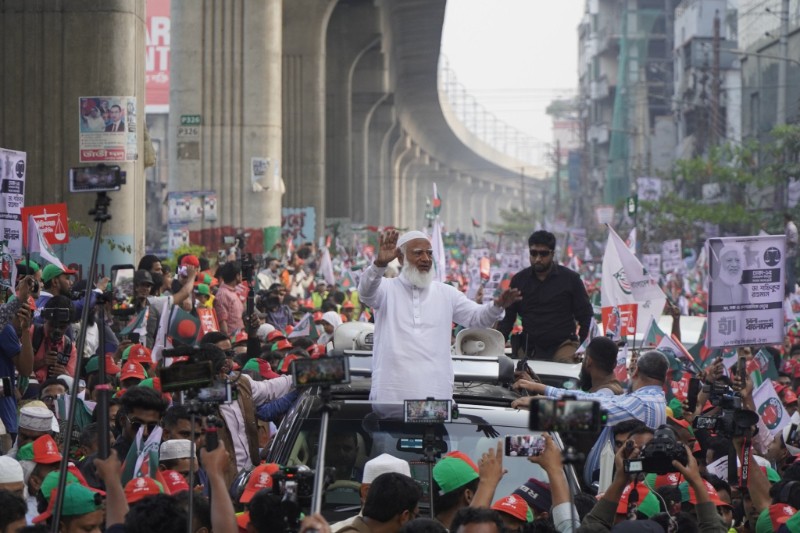 Photo: Facebook/@BJI.Official
Jamaat’s welfare turn raises eyebrows
Jamaat-e-Islami’s manifesto marks a notable departure from its past positions, especially on social welfare and women.
At its core is a promise of universal healthcare, including phased access to advanced medical treatment for economically weaker sections.
The proposal closely mirrors India’s Ayushman Bharat scheme, which offers health insurance coverage of up to Rs 5 lakh per family annually to nearly 55 crore people.
Affordable housing also features prominently, with Jamaat pledging a housing programme akin to India’s Pradhan Mantri Awas Yojana for low- and middle-income families.
The party has further promised reduced working hours for women during maternity, proposing a five-hour workday.
Perhaps most striking is Jamaat’s renewed emphasis on women, despite its controversial history on gender issues.
While women outnumber men on Bangladesh’s electoral rolls, only around 4 percent of candidates in this election are women.
Jamaat has pledged to induct a “significant number of women” into its cabinet if elected, even though it has not fielded a single woman candidate.
These promises have surprised political observers, given the party’s earlier record of opposing women’s empowerment.
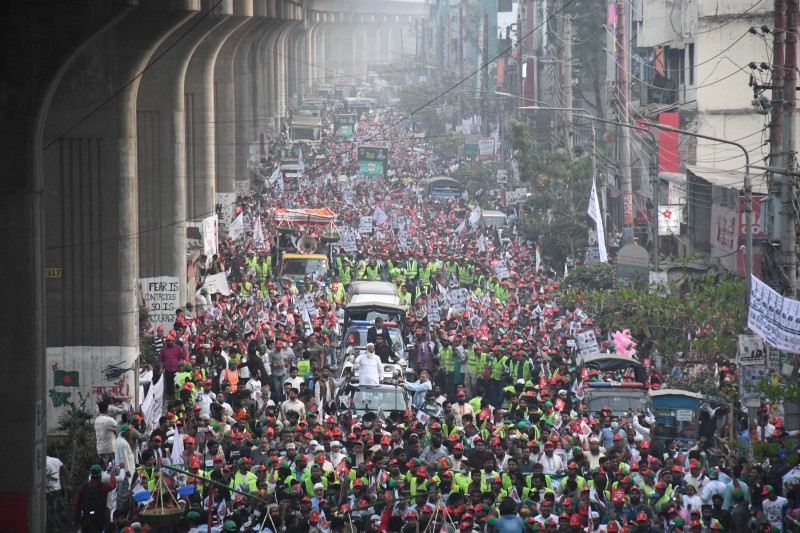 Photo: Facebook/@BJI.Official
BNP bets big on women, welfare
For the BNP, welfare schemes aimed at women form the backbone of its election strategy.
Tarique Rahman, who recently returned to Dhaka after ending a 17-year exile, has unveiled a ‘Family Card’ programme offering monthly cash assistance of approximately Rs 2,000 to women, along with access to subsidised essentials such as rice, pulses, oil and salt.
The initiative is expected to initially cover 50 lakh women from low-income households.
The approach echoes India’s Ladli Bahna Yojana and Maharashtra’s Ladki Bahin Yojana, both credited with swinging state elections.
Such direct cash transfers to women represent a sharp shift from earlier Bangladeshi election campaigns, where gender-focused welfare rarely featured so prominently.
The BNP manifesto also includes a microfinance and skills development scheme for economically weaker women, drawing parallels with India’s Mahila Samriddhi Yojana.
In agriculture, the party has proposed a ‘farmer card’ system similar to India’s Kisan Credit Card, offering affordable credit, subsidies and crop insurance.
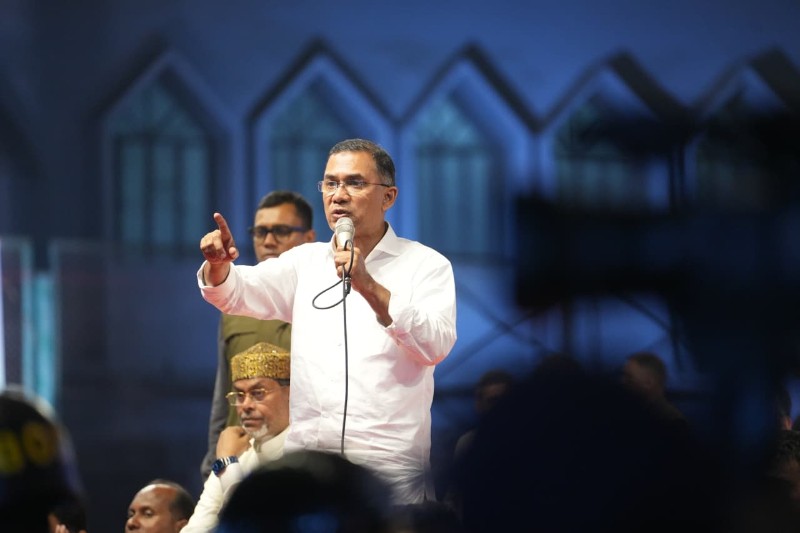 Photo: Facebook/@bnpbd.org
Mid-day meals and mass outreach
Education welfare has not been left out.
The BNP has promised to introduce a school meal programme inspired by India’s mid-day meal scheme, which currently provides daily cooked meals to over 11.8 crore children across more than 11 lakh schools.
The proposal aims to boost school attendance and address child nutrition, issues that resonate strongly with Bangladesh’s rural electorate.
A high-stakes election after turmoil
The welfare-heavy manifestos reflect the high stakes facing both BNP and Jamaat as Bangladesh emerges from months of unrest and political violence.
With public trust shaken and economic pressures mounting, parties appear keen to deploy tried-and-tested populist tools to reconnect with voters.
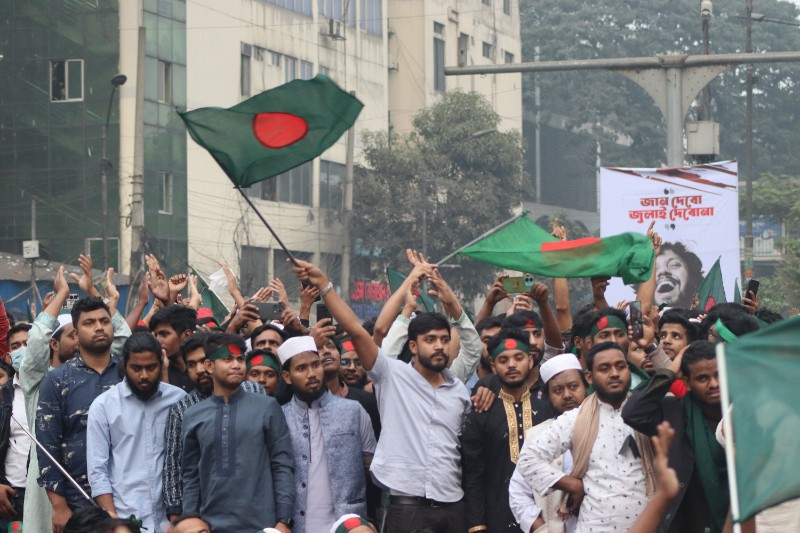 Photo: Wikimedia Commons/Wasiul Bahar
In India, welfare schemes targeting women, farmers and the poor have long served as decisive electoral weapons.
Their apparent adoption in Bangladesh signals a shift in South Asian electoral politics, as governance models increasingly cross borders.
Whether these ambitious promises translate into votes will become clear when Bangladesh goes to the polls on Thursday, in what could redefine the country’s political trajectory for years to come.
Support Our Journalism
We cannot do without you.. your contribution supports unbiased journalism
IBNS is not driven by any ism- not wokeism, not racism, not skewed secularism, not hyper right-wing or left liberal ideals, nor by any hardline religious beliefs or hyper nationalism. We want to serve you good old objective news, as they are. We do not judge or preach. We let people decide for themselves. We only try to present factual and well-sourced news.
Support objective journalism for a small contribution.


