


Africa’s Sahel must be a top priority for UN peacebuilding efforts, says commission
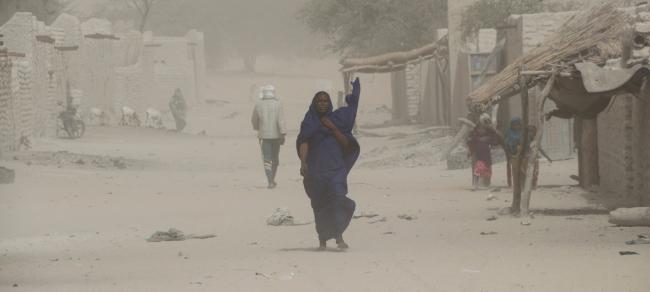
New York, June 30 (IBNS): The vast Sahel region of Africa, which is facing multiple threats and challenges – including destructive climate change, drought, terrorism and organized crime – must continue to be a top priority for United Nations peacebuilding efforts, the Security Council heard on Friday.
The mutually-supportive relationship with the UN Peacebuilding Commission was highlighted by Cho Tae-yul, its former chair, speaking first, saying that “the Council emphasized the importance” of its “convening role” with the Commission, to mobilize support in collaboration with UN Office for West Africa and the Sahel (UNOWAS). He said it was vital to continue advancing the UN Integrated Strategy for the Sahel, known as UNISS.
The Sahel extends from Senegal in the east, to Sudan in the west, below the arid Sahara desert, including Mauritania, Mali, Burkina Faso, Niger, and Chad.
Cho also noted other countries in Africa, where cooperation with the Council had proved effective, citing Burundi’s socio-economic development, and the Commission’s role helping to develop a peacebuilding plan for Liberia as the UN Mission there prepared to withdraw earlier this year.
He also noted that the Commission’s convening role has also created space to engage with civil society organizations.
“Last year, in the discussions on Colombia, Solomon Islands and Sri Lanka, local civil society representatives contributed to the Commission's deliberations by sharing their views on what peacebuilding and sustaining peace, mean in practice,” he added.
Additionally, the former chair elaborated that the Commission has been increasingly taking a more regional view of its work, “as the challenges faced by certain countries are intertwined with that of other countries in the region, making it increasingly important to address the issues with a regional, cross-border approach.”
Taking the floor, the current chair, Ion Jinga, stressed that the Sahel remained a clear priority for the Commission moving forward, saying that it would be the exclusive focus of the Annual Session later in the year.
“The purpose of this important event will be to discuss ways of mobilizing deeper commitments and partnerships in support of efforts to build and sustain peace in the Sahel under the umbrella of the UN s Sahel Strategy, he said.
He also underscored the importance of synchronizing its calendar with that of the Security Council, flagging that early preparation is “key” to provide strategic advice.
Established in 2005 as part of the UN reform, the Peacebuilding Commission advises both the General Assembly and the Security Council. In 2016, twin resolutions were adopted on reviewing the peacebuilding architecture.
Naomi Frerotte
Support Our Journalism
We cannot do without you.. your contribution supports unbiased journalism
IBNS is not driven by any ism- not wokeism, not racism, not skewed secularism, not hyper right-wing or left liberal ideals, nor by any hardline religious beliefs or hyper nationalism. We want to serve you good old objective news, as they are. We do not judge or preach. We let people decide for themselves. We only try to present factual and well-sourced news.
Support objective journalism for a small contribution.


