 Iran
Iran
Khamenei breaks 37-year-old ritual for first time amid escalating Iran-US tensions
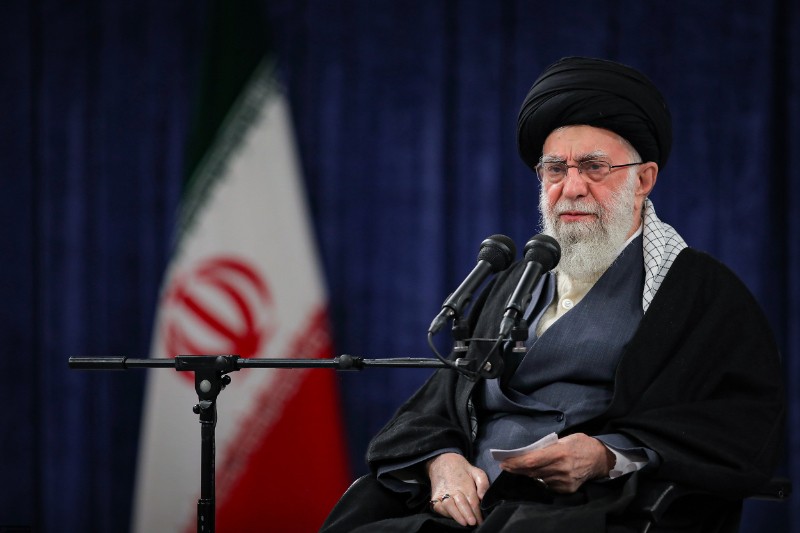
Iran’s Supreme Leader Ayatollah Ali Khamenei has, for the first time in nearly four decades, skipped a major annual meeting with air force commanders — a departure from a ritual he faithfully observed since assuming leadership in 1989.
The break in tradition comes amid heightened tensions with the United States and growing speculation about Tehran’s strategic concerns.
The annual gathering, held each year on February 8, commemorates a historic episode in Iran’s revolutionary history.
On that date in 1979, a group of air force officers pledged allegiance to Ayatollah Ruhollah Khomeini, a turning point that helped topple the Pahlavi dynasty and secure the future of the Islamic Republic.
Over the past four decades, the meeting has become a powerful display of loyalty between Iran’s air force leadership and the clerical hierarchy.
A symbolic tradition interrupted
This year, instead of Khamenei’s familiar presence, Iran’s armed forces chief of staff, Abdolrahim Mousavi, met with the air force commanders on Sunday.
The absence of the Supreme Leader — even though he has remained dedicated to the ritual during times of war, pandemic and internal strife — has drawn intense attention, both domestically and internationally.
Analysts say the decision to skip this ceremony is significant because it highlights the severe security pressures Tehran is facing.
With a robust US military buildup in the Gulf and renewed diplomatic friction, leadership optics carry strategic weight.
Rising tensions with Washington
The backdrop to this unprecedented move is a sharp escalation in tensions between Tehran and Washington.
The United States has expanded its military footprint in the region as part of a broader show of force, deploying aircraft carriers and advanced fighter jets near critical points in the Middle East.
Satellite imagery has also shown surveillance drones and reconnaissance aircraft operating over the Gulf.
Meanwhile, political standoffs persist over diplomatic negotiations.
Washington has stressed that any talks with Tehran must address the full spectrum of its military capabilities, including missiles — a demand Iran has rejected, insisting discussions should be strictly limited to its nuclear programme.
Security concerns or strategic signal?
Khamenei’s decision not to attend the gathering has sparked speculation about what message it sends — whether it reflects security concerns, strategic caution, or internal calculations within Iran’s leadership.
Some analysts note that holding the event on a fixed date in a public ceremony could expose senior leadership to risks, potentially explaining the shift to a lower-profile representative this year.
Though the state has not publicly cited a specific security threat, the unusual break in an otherwise unfaltering tradition has not gone unnoticed.
Historical significance of the February 8 ceremony
The annual meeting commemorated by the event traces its origins back to the early days of the Iranian Revolution.
On February 8, 1979, Iranian air force officers pledged allegiance to Khomeini at a critical juncture that helped topple the US-backed Pahlavi regime — a moment etched deeply in the narrative of the Islamic Republic’s founding.
For decades, Khamenei’s presence at the gathering has symbolised continuity and unity between Iran’s military and clerical establishment.
Support Our Journalism
We cannot do without you.. your contribution supports unbiased journalism
IBNS is not driven by any ism- not wokeism, not racism, not skewed secularism, not hyper right-wing or left liberal ideals, nor by any hardline religious beliefs or hyper nationalism. We want to serve you good old objective news, as they are. We do not judge or preach. We let people decide for themselves. We only try to present factual and well-sourced news.
Support objective journalism for a small contribution.