Afghanistan: children increasingly struggle to access health care and education, UN reports
The report Education and Healthcare at Risk: Key trends and incidents affecting children’s access to healthcare and education in Afghanistan, was jointly produced by the UN Assistance Mission in Afghanistan (UNAMA) and the UN Children’s Fund (UNICEF) and covers the three-year period from 1 January 2013 to 31 December 2015.
“The report’s findings are deeply troubling. It is simply unacceptable for teachers, doctors and nurses to be subjected to violence or threats, and for schools and medical facilities to be misused or attacked,” said Nicholas Haysom, the UN Secretary-General’s Special Representative for Afghanistan.
“All parties must take measures to protect education and health services in Afghanistan,” he added.
In 2015, UNAMA and UNICEF documented 125 incidents affecting access to health care, compared with 59 in 2014, including 20 health workers killed, 43 injured and 66 abducted. Some 132 conflict-related incidents affecting access to education and education-related personnel were also documented, including 11 education personnel killed, 15 injured and 49 abducted, a sharp increase from 2014 figures.
Of the 257 incidents documented in 2015, the majority consisted of threats and intimidation, and represented an increase of 182 per cent compared with 2014.
Acts of threats and intimidation included death threats; assaults of health and education personnel; forced closures of schools; letters prohibiting school attendance, particularly against girls; and extortion and other harmful acts.
UNAMA and UNICEF also documented incidents of improvised explosive devices detonated near schools and clinics, killing and injuring health care and education personnel.
“In 2015 children increasingly struggled to access health and education services in Afghanistan due to insecurity and conflict-related violence, further exacerbated by high levels of chronic poverty throughout the country,” said Akhil Iyer, UNICEF Representative in Afghanistan.
Conflict-related violence resulted in the partial or complete closure of more than 369 schools in 2015, affecting more than 139,000 students and 600 teachers.
The report highlights the particular vulnerabilities faced by girls, noting attacks, threats and explicit prohibitions imposed to restrict girls’ education.
“Conflict-related violence not only puts Afghan children at risk of harm, but also limits their fundamental rights to education and health care,” said Danielle Bell, UNAMA Human Rights Director. “Efforts must be redoubled to enable children – particularly girls – free and safe access to medical services and education.”
The report includes several recommendations to all parties to the conflict so as to enable children’s unimpeded access to education and health care.
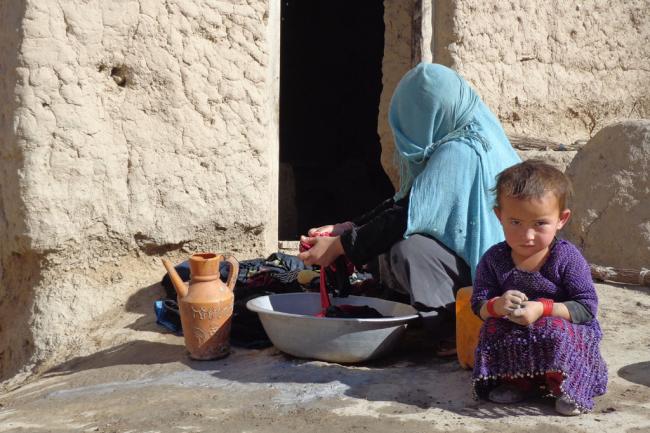
Photo: UNICEF/Zalmai Ashna
Support Our Journalism
We cannot do without you.. your contribution supports unbiased journalism
IBNS is not driven by any ism- not wokeism, not racism, not skewed secularism, not hyper right-wing or left liberal ideals, nor by any hardline religious beliefs or hyper nationalism. We want to serve you good old objective news, as they are. We do not judge or preach. We let people decide for themselves. We only try to present factual and well-sourced news.
Support objective journalism for a small contribution.