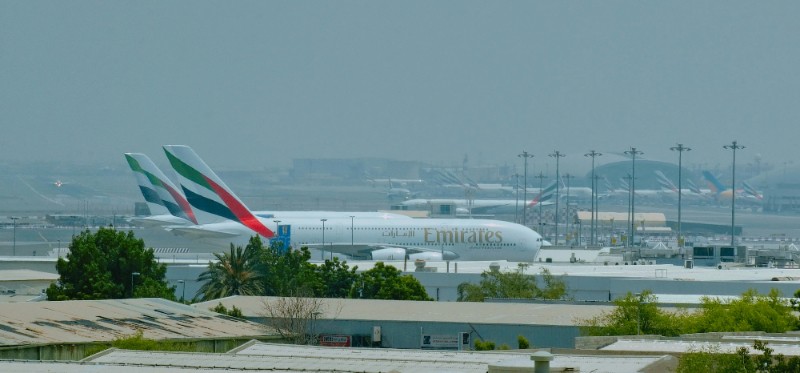
 Middle East
Middle East on edge: How the Iran war is disrupting global travel and aviation
The departure boards once flickered with holiday destinations and business hubs. Now, across parts of the Middle East, they flash cancellations, delays and uncertainty.
As missiles streak across skies and airspace closes with little warning, one of the world’s busiest travel corridors has become a frontline of disruption.
The US-Israeli offensive dubbed “Operation Epic Fury”, which killed Iran’s ruler Ayatollah Ali Khamenei on February 28, has rapidly expanded into a regional conflict affecting more than a dozen nations.
What began as a targeted strike has spiralled into drone attacks on airports, military bases and urban centres — unsettling global aviation and leaving travellers scrambling for answers.
With US President Donald Trump signalling that strikes could continue for weeks, governments worldwide have escalated travel advisories.
In an unusually stark move, the US State Department urged its citizens to “depart now” from 14 Middle Eastern countries, even those not directly hit by missiles.
The impact on tourism, business travel and aviation has been immediate and profound.
Airport chaos in the UAE
The United Arab Emirates, long considered a stable gateway between East and West, has faced unprecedented disruption.
Drone debris damaged Dubai International Airport, the world’s busiest for international passengers, forcing it to close for three consecutive days.
Hundreds of thousands of travellers were stranded as flights were grounded.
A projectile also struck the luxury Fairmont The Palm, igniting a blaze that quickly spread across social media.
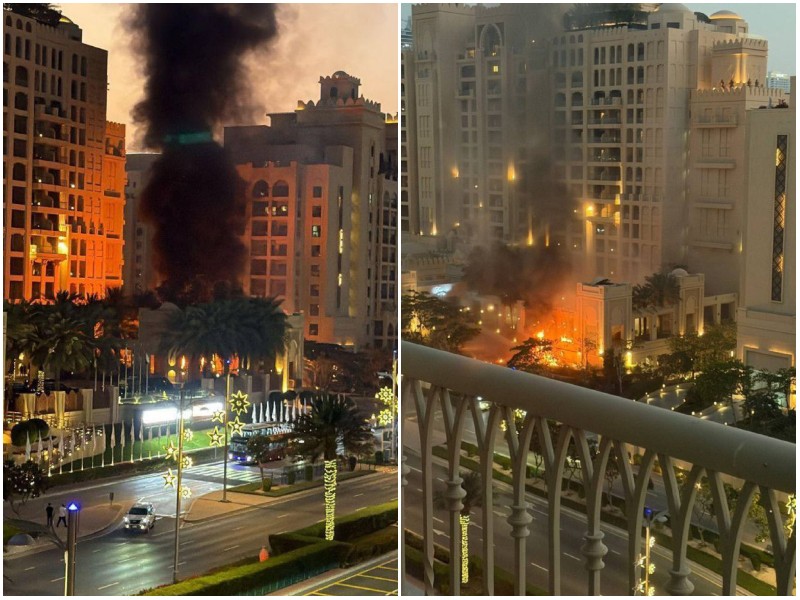 Iranian projectiles hit luxury hotel in Dubai. Photo: X
Although the fire was contained, the symbolism was stark: even flagship tourist landmarks are no longer immune.
Abu Dhabi’s Zayed International Airport also suffered strikes but has begun cautiously restoring operations.
Etihad Airways resumed limited departures from Abu Dhabi, while Emirates restarted select services from Dubai.
Airlines are offering free rebookings, and the UAE government has pledged to cover food and accommodation costs for more than 20,000 stranded passengers.
Despite the turmoil, analysts suggest the UAE’s central economic role could prompt a swift stabilisation if the security situation improves.
Qatar’s airspace closed
In Qatar, authorities intercepted multiple Iranian attacks targeting civilian infrastructure, including near Doha’s Hamad International Airport.
Qatari airspace remains closed, halting all commercial operations.
The US and UK have instructed their citizens to shelter in place, while Australia and Canada have issued “do not travel” warnings.
The closure of one of the Gulf’s most important transit hubs has compounded global flight disruptions, with airlines rerouting or cancelling services across Asia, Europe and Africa.
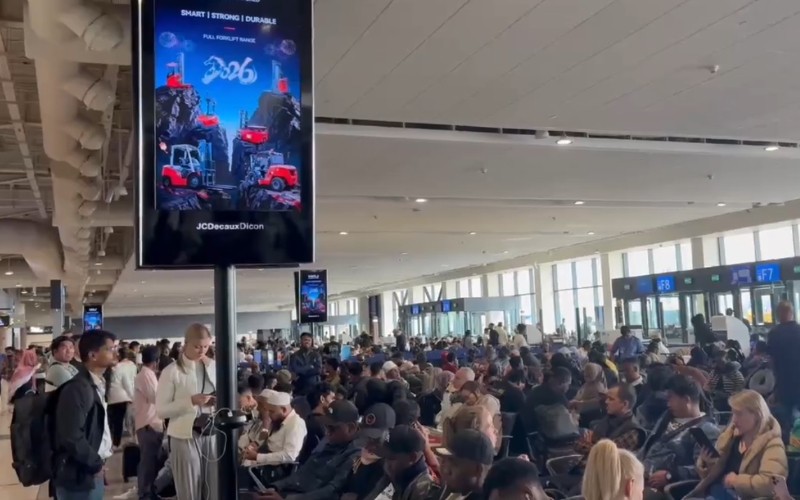 Thousands of passengers were stranded at Dubai International Airport due to airspace closure. Photo: Screen-grab from X
Oman: A partial escape route
As flights from neighbouring states halt, some travellers are driving across borders to Oman, where airports remain operational.
The relative calm, however, is fragile. Iranian drones struck the commercial port in Duqm, surprising observers given Oman’s role in facilitating US-Iran negotiations.
Travel advisories here vary. The UK has urged nationals in Duqm to shelter in place, while advising those near Salalah to leave via commercial routes.
Canada recommends avoiding non-essential travel, and Australia advises reconsidering travel plans. The US has urged its citizens to depart immediately.
Israel and Lebanon: Escalation continues
Israel remains deeply engaged in exchanges with Iran and Hezbollah. Air raid sirens have repeatedly sounded across the country, including in Tel Aviv.
The main international gateway, Ben Gurion Airport, shut down following airspace closures but is expected to resume limited services with Israeli carriers.
In Lebanon, tensions have intensified. Hezbollah has declared it will not remain neutral in a US attack on Iran, prompting the evacuation of non-emergency US embassy personnel.
Several Western governments now advise against all travel to Lebanon, and officials warn that advisories may remain in place for an extended period.
Kuwait, Bahrain and Saudi Arabia under threat
Kuwait and Bahrain both closed their airspace after sustaining Iranian strikes.
The UK has issued shelter-in-place guidance, while Canada and Australia advise against all travel.
The US has urged immediate departure from both countries.
Saudi Arabia has also faced retaliatory attacks, including drone strikes near the US Embassy in Riyadh.
Despite this, Riyadh’s King Khalid International Airport continues operating, making it one of the few functioning aviation hubs in the region.
Stranded passengers from neighbouring Gulf states have travelled overland to Saudi Arabia in search of outbound flights.
Jordan and Iraq: Heightened alerts
Jordan has partially closed its airspace overnight, and the US Embassy in Amman has been evacuated over unspecified threats.
Several governments now advise against non-essential travel, while Washington urges citizens to leave.
Iraq’s airspace is fully closed.
The US, UK, Canada and Australia all maintain their highest-level travel warnings, reflecting the country’s already fragile security environment.
Cyprus: Conflict reaches Europe
The conflict has also touched Europe. A drone strike caused minor damage at RAF Akrotiri in Cyprus, marking the first direct impact on EU territory.
Around 60 flights were cancelled after a radar alert prompted evacuations at Paphos International Airport.
Although the UK has not issued a nationwide travel warning for Cyprus, it has advised nationals near the base to follow local instructions closely.
Egypt: Caution but no direct strikes
Egypt has not been directly targeted, yet it appeared on the US “depart now” list.
Australia and Canada advise travellers to exercise a high degree of caution, while the UK issues region-specific guidance.
Some travel risk analysts argue that, at present, Egypt remains comparatively stable. For travellers, however, perception of risk often carries as much weight as reality.
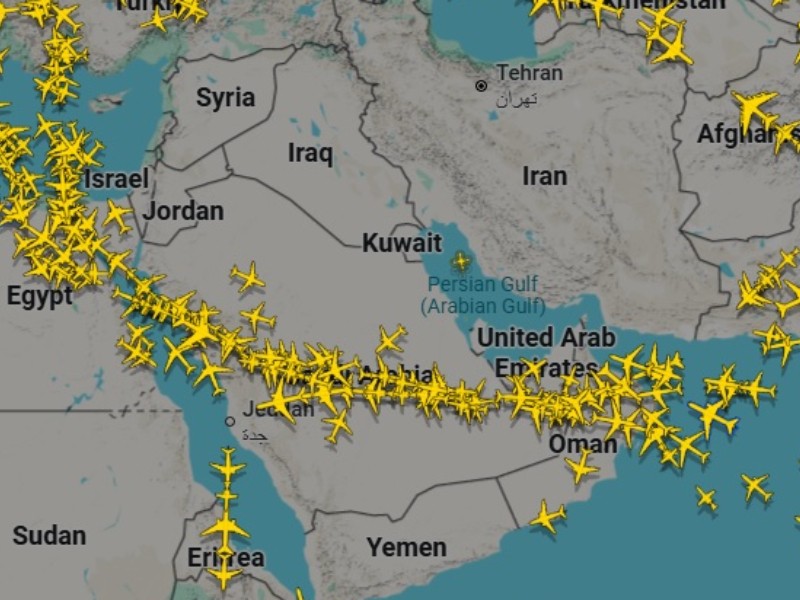 Photo: Flightradar24
A rapidly changing picture
The defining feature of this crisis is volatility. Airspace closures, drone strikes and travel advisories have shifted by the hour.
Aviation authorities will not reopen airports if credible threats remain, and insurers are closely monitoring risk assessments.
Business travellers face supply chain disruptions and rerouted cargo, while tourists confront cancelled holidays and unpredictable itineraries.
The Middle East has long served as a vital aviation crossroads linking continents. Today, it stands at the centre of a geopolitical storm reshaping global travel in real time.
Whether the disruption proves temporary or marks a longer-term shift in aviation patterns depends on how quickly the conflict de-escalates.
For now, the message from many governments is clear: caution, flexibility and constant vigilance are essential for anyone considering travel to the region.
Support Our Journalism
We cannot do without you.. your contribution supports unbiased journalism
IBNS is not driven by any ism- not wokeism, not racism, not skewed secularism, not hyper right-wing or left liberal ideals, nor by any hardline religious beliefs or hyper nationalism. We want to serve you good old objective news, as they are. We do not judge or preach. We let people decide for themselves. We only try to present factual and well-sourced news.