

‘We Wanted to Tell Our Story Through Our Own Eyes’: Tejha Rio on Nagaland and ‘Angh’
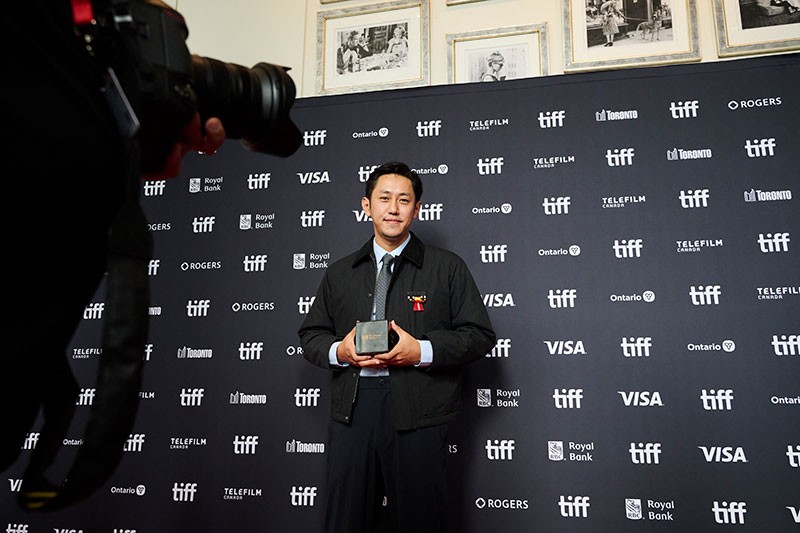
Films from Nagaland rarely find a voice on the international cinema stage. Tejha Rio’s Angh, which premiered in the Platform section of Toronto International Film Festival (TIFF 2026), explores cultural identity, faith and generational change in a traditional Naga village. In Toronto, TWF correspondent Asha Bajaj, speaks with the filmmaker about bringing Nagaland’s stories to world cinema.
Directed and written by Rio, Angh follows Anghba (Anghlong Konyak), an ageing village chief struggling to preserve his community’s traditional way of life amid the arrival of a white American Baptist missionary (Douglas Henshall). As his mute son Amao (Sobino Rengma) becomes drawn towards the new faith, the conflict unfolds through emotional and cultural displacement rather than physical violence. At its heart, the film is an intimate exploration of a society negotiating change, memory and the distance between generations.
Q: Angh began as a short film in 2021. When did you realise the story needed a feature-length treatment?
A: I began writing the screenplay in 2021, and almost immediately realised that I was trying to compress a feature-length story into a short film. After the short's release and its encouraging festival journey, I gained the confidence to expand it.
There was so much complexity in the conflict, the characters and the world they inhabited. A short film simply could not accommodate all the cultural specificity and layers I wanted to explore. I knew from the beginning that there was a much larger story waiting to be told.
Q: Nagaland and its people remain relatively underrepresented in Indian cinema. Was changing that perspective a conscious intention?
A: Absolutely. From the beginning, we wanted to tell the story through the lens of an insider. Films about our region are often told from the perspective of an explorer rather than the people who actually belong there.
We wanted to reverse that gaze. It was important for me to present our experiences through our own eyes and our own lens. That was something we consciously maintained throughout the writing and making of the film.
Q: Why did you choose a father-son relationship to explore such a larger cultural transition?
A: I have always found something tragic, melancholic and, at the same time, profound about generational gaps in cinema.
Our people have experienced an extraordinarily rapid cultural transition. In many ways, we have become culturally disconnected from parts of our own past. I felt that the most organic way to explore this was through a father and his son.
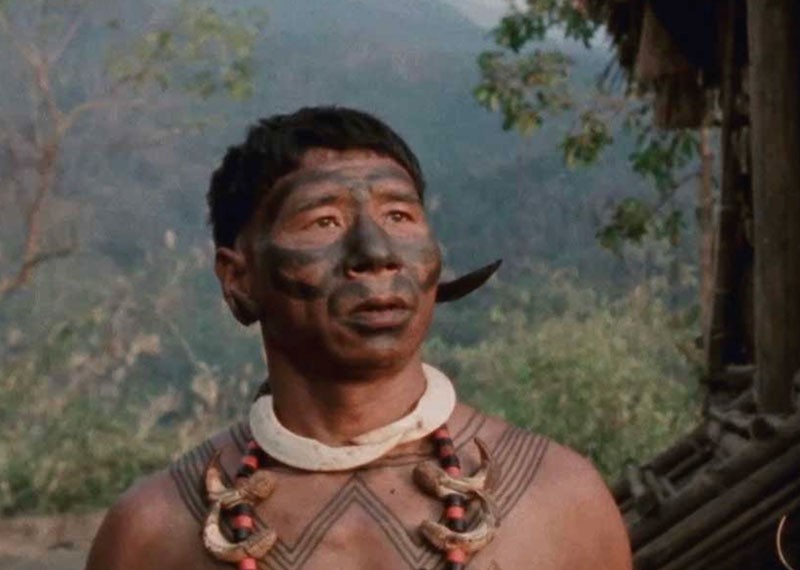
 A scene from director Theja Rio’s Angh, set in 1960s Nagaland. Photo: TIFF website
It is also a universal relationship. Every generation struggles to understand the next. But where we come from, that transition has happened particularly quickly, and we are still dealing with its aftereffects. The father-son dynamic seemed the most authentic way to tell that story.
Q: Amao's attraction to the new faith is portrayed quite subtly. There is no dramatic rebellion against his father or his community. Why did you choose this understated approach?
A: He simply wants to feel more comfortable and be with the other children. There is no dramatic act of betrayal or conscious decision to abandon his community. His journey is shaped more by what is happening around him than by any deliberate internal rebellion. The circumstances gradually influence his choices.
Q: Christianity has a complex place in Naga society. How did you approach depicting its influence without making the film judgemental?
A: I wanted to write about something I was conflicted about rather than something I was completely certain of. I believe that is where the depth of a story comes from. Christianity is central to the lives of people back home. It has brought hope, faith and belief to so many. I was very conscious of that and did not want to take a simplistic position.
The father's outlook is more conservative and he is unwilling to change, while the son sees the possibility of a different and perhaps more comfortable life. These competing influences naturally shape Amao's decisions. I wanted to allow those contradictions to exist rather than impose a judgement.
Q: The film moves between the past and the present. Why was it important to connect these two timelines?
A: We often look back at history through statistics, numbers and archaeological discoveries. But after spending time with a character and experiencing the world through his perspective, you begin to see history differently.
When we look at human remains or excavated skulls, there is so much to learn from them. Yet there is also something deeply melancholic about how easily we can dehumanise those who came before us, viewing them merely as subjects of academic study.
I wanted to reflect on that distance between lived experience and historical memory. It was important to connect the story I was telling in the past to the present, and to remind audiences that behind every historical remnant was once a human life, with emotions, relationships and a world of its own.
Support Our Journalism
We cannot do without you.. your contribution supports unbiased journalism
IBNS is not driven by any ism- not wokeism, not racism, not skewed secularism, not hyper right-wing or left liberal ideals, nor by any hardline religious beliefs or hyper nationalism. We want to serve you good old objective news, as they are. We do not judge or preach. We let people decide for themselves. We only try to present factual and well-sourced news.
Support objective journalism for a small contribution.