


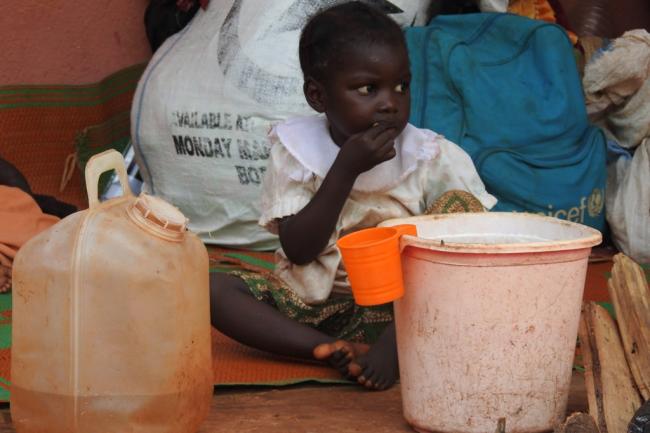
UNICEF says 2017 has been a ‘very difficult year’ for children in Central African Republic
New York, Dec 20(Just Earth News): For children and women in the Central African Republic, 2017 has been a very difficult year and sadly, the situation is not expected to improve in the coming months, the United Nations Children’s Fund (UNICEF) said on Tuesday.i
“2017 has seen a dramatic increase in violence. The previously unstable regions, such as the center and the north west, have remained very tense. In addition, the entire south-west that had previously been spared by the crisis, is now the worst-hit region,” said Christine Muhigana, UNICEF Representative in the country, at the regular press briefing in Geneva.
Children and women are of course the first victims: half of the population in CAR is in need of humanitarian support, that is 2.5 million people, including 1.3 million children.
Currently, 20 per cent of the schools are closed because of insecurity, and those that are open have too many pupils and not enough teachers.
Reports of children’s rights violations are on the rise. In 2017, 50 per cent more documented incidents than the previous year, twice the number of children recruited into armed groups.
Immunization campaigns have been disrupted in several regions due to persistent insecurity, and basic healthcare needs are not met especially in regions where the NGOs are no longer able to operate.
“As UNICEF Representative, I am very concerned about the lasting impact this crisis is having on children. We have a whole generation at risk of growing up traumatized, without proper education, without healthcare and constantly exposed to the most horrific violence,” she said.
UNICEF has helped provide temporary learning spaces for over 50,000 children in 2017, and plans to do so for 85,000 children in 2018.
The agency also provided support for children released from armed groups to reintegrate into society.
Through a rapid response mechanism, UNICEF has been able to provide non-food items, such as mats, mosquito nets, blankets, and cooking supplies, to nearly 25,000 households and emergency water and sanitation interventions to almost 72,000 people.
At the same time, the agency received only 46 per cent of the funding needed to meet the humanitarian needs this year.
“In 2018 the needs are growing: we are going to need every support we can get, if we do not want the children of CAR to be left to a terrible fate,” she said.
Photo: OCHA/Yaye N. Sene.
Source: www.justearthnews.com
Support Our Journalism
We cannot do without you.. your contribution supports unbiased journalism
IBNS is not driven by any ism- not wokeism, not racism, not skewed secularism, not hyper right-wing or left liberal ideals, nor by any hardline religious beliefs or hyper nationalism. We want to serve you good old objective news, as they are. We do not judge or preach. We let people decide for themselves. We only try to present factual and well-sourced news.
Support objective journalism for a small contribution.


