September 21, 2026 04:41 am (IST)

Follow us:


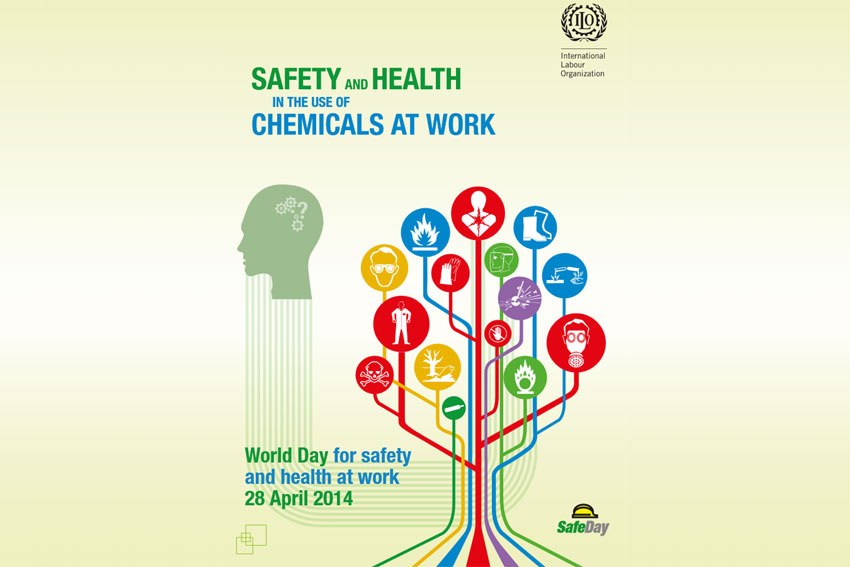
UN urges control of harmful chemicals in workplace
New York, Apr 29 (IBNS): While chemicals can be useful, necessary steps should be taken to prevent and control potential risks for workers, workplaces, communities and the environment, the United Nations labour agency reported, marking the World Day for Safety and Health at Work.
“Chemicals are essential to life, and their benefits are widespread and well-recognized… What create the dilemma are the risks associated with exposure to these chemicals,” the UN International Labour Organization (ILO) said in its report for the occasion.
Chemicals pose a broad range of potential adverse effects, from health hazards such as cancers and physical hazards like flammability, to environmental hazards such as widespread contamination and toxicity to aquatic life, according to the report. Many fires, explosions, and other disasters result from inadequate control of chemicals’ physical hazards.
This year’s theme for the Day, “Safety and health in the use of chemicals at work”, is meant to highlight the benefits achieved through the production and use of chemicals while minimizing workers’ exposure as well as the emission of chemicals into the environment through national and international action.
Nearly 5 million deaths and 86 million Disability-Adjusted Life Years (DALYs) were attributable to environmental exposure and management of selected chemicals in 2004, according to the UN World Health Organization (WHO). These figures include both occupational and non-occupational exposures, such as indoor smoke from solid fuel use, outdoor air pollution and second-hand smoke.
Given these challenges, “a coherent global response is necessary to coordinate the continuous scientific and technological progress, the growth in chemicals production and changes in the organization of work,” ILO reported.
Among its recommendations, it urged new tools to provide readily available information about chemical hazards and risk, and associated preventive and protective measures.
The agency also highlighted the need for more effective record keeping on effects resulting from exposure to chemicals. For example, efforts to establish a connection between an exposure to chemicals 20 years ago and a case of cancer today have been hampered by lack of information about the effects of chemical exposures.
It also noted that governments and organizations focus on individual chemicals instead of risks from mixtures, which are more common.
(Poster for the World Day for Safety and Health at Work. Credits: ILO)
#United Nations
# International Labour Organization
# potential risks for workers
# chemicals use
# workplace
Support Our Journalism
We cannot do without you.. your contribution supports unbiased journalism
IBNS is not driven by any ism- not wokeism, not racism, not skewed secularism, not hyper right-wing or left liberal ideals, nor by any hardline religious beliefs or hyper nationalism. We want to serve you good old objective news, as they are. We do not judge or preach. We let people decide for themselves. We only try to present factual and well-sourced news.
Support objective journalism for a small contribution.



Latest Headlines
Italy PM Meloni announces big school plan: Burqa, hijab ban and cap on foreign students
Sun, Sep 20 2026
North Korea fires two missiles toward East Sea, South Korea confirms
Sun, Sep 20 2026
Houthis claim Saudi F-15 shot down as Mecca drone row escalates
Wed, Sep 16 2026