


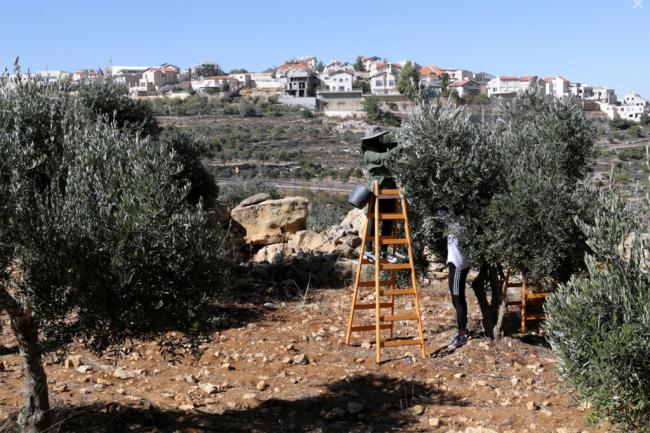
UN trade report highlights impact of loss of land and resources to Palestinian economy
“The fact that, on Tuesday, real GDP per capita in the Occupied Palestinian Territory is at the same level as in 1999 is a clear indication of the human cost and lost economic potential resulting from occupation,” UNCTAD said in a news release on the report on Assistance to the Palestinian People: Developments in the Economy of the Occupied Palestinian Territory.
According to the UN agency, economic growth in all sectors is constrained by the loss of land and resources to Israeli settlements and the annexation of land in the West Bank. The situation is further exacerbated by restrictions on the import of essential inputs, driving up production costs, depressing investment, and leading to high unemployment and widespread poverty.
“This looks set to continue in 2017,” it added.
In the news release, UNCTAD also noted that reconstruction activities have been slow, with only half of the $3.5 billion pledged at the 2014 Cairo Conference on Palestine – Reconstructing Gaza, disbursed. Additionally, 84 per cent of total recovery needs remain unmet.
Furthermore, about 80 per cent of Gaza’s population receive food assistance and other forms of social transfers, half of the population is food insecure and only 10 per cent have access to an improved water supply, noted UNCTAD, highlighting that the region’s electricity crisis has left people without power for up to 20 hours per day in early 2017.
“This cripples all economic activities and the delivery of vital services, especially health services, water supply and sewage treatment,” it noted.
UNCTAD also reported that the Palestinian economy saw a 38 per cent drop in donor support between 2014 and 2016, due in part to the occupation preventing previous aid flows from translating into tangible development gains.
Photo: UNRWA Archives/Alaa Ghosheh
Source: www.justearthnews.com
Support Our Journalism
We cannot do without you.. your contribution supports unbiased journalism
IBNS is not driven by any ism- not wokeism, not racism, not skewed secularism, not hyper right-wing or left liberal ideals, nor by any hardline religious beliefs or hyper nationalism. We want to serve you good old objective news, as they are. We do not judge or preach. We let people decide for themselves. We only try to present factual and well-sourced news.
Support objective journalism for a small contribution.


