


UN expert urges two Koreas to discuss human rights
The Republic of Korea's new President has proposed the resumption of dialogue with the Democratic People's Republic of Korea (DPRK) on military and humanitarian issues.
“While I welcome the initiative by the administration of President Moon Jae-in to resume dialogue, it is important that that engagement serves as a platform for North Korea to discuss ways to improve human rights,” said Tomás Ojea Quintana, the Special Rapporteur on human rights in DPRK.
During his five-day mission to Seoul, from 17 to 21 July, the Special Rapporteur met senior Government officials as well as representatives of civil society and other groups. His requests for access to the North have not been granted.
The Special Rapporteur reiterated his deep concern about human rights violations in the North, including allegations of arbitrary detention, human trafficking and enforced disappearances, as well as sexual and gender-based violence against women detained in holding centres in the border areas.
“The information I have been receiving points to different violations that continue to affect the lives of ordinary North Koreans and even foreigners,” he said.
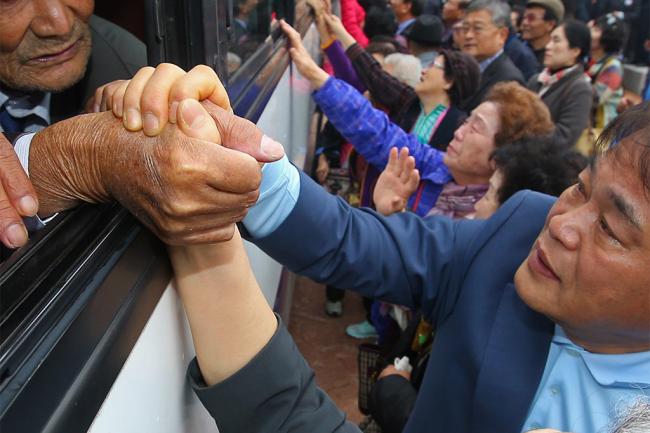
Pyongyang has recently rejected a call by Seoul to resume family reunions, which have not been held for two years, after DPRK resumed nuclear tests and long-range missile launches.
The Special Rapporteur met with a man who wishes to return to DPRK where his wife and son live, despite the risk of being punished for leaving for ROK three years ago.
“If anything, these cases highlight the complexity of the family separation issue that started 70 years ago, and the fact that it continues to take new forms and affect people in the Korean peninsula in profound ways,” he said.
The expert highlighted a surge in the number of Koreans from the North caught in China. They are detained or sent back. Usually harsh labour sentences await them upon their return.
“North Koreans who leave their country are caught in a horrendous cycle of physical and psychological violence, and I received information that some take their own lives when they find out that they are scheduled for repatriation,” said Ojea Quintana.
The expert noted that China has a responsibility to abide by the principle of non-refoulement in international law. “I appeal to the Government of China to halt the policy, protect those in custody and engage with my mandate and with relevant UN agencies to think of alternatives,” he stressed.
The Special Rapporteur will report his findings and recommendations to the UN General Assembly in October 2017.
Special Rapporteurs and independent experts are appointed by the Geneva-based UN Human Rights Council to examine and report back on a specific human rights theme or a country situation. The positions are honorary and the experts are not UN staff, nor are they paid for their work.
Photo: OHCHR
Source: www.justearthnews.com
Support Our Journalism
We cannot do without you.. your contribution supports unbiased journalism
IBNS is not driven by any ism- not wokeism, not racism, not skewed secularism, not hyper right-wing or left liberal ideals, nor by any hardline religious beliefs or hyper nationalism. We want to serve you good old objective news, as they are. We do not judge or preach. We let people decide for themselves. We only try to present factual and well-sourced news.
Support objective journalism for a small contribution.


