


Transfer of Canadian banking records to U.S. tax agency doubles
There had been an increase of 104 percent over the 154,667 records the agency sent in September 2015.
Lisa Damien, spokeswoman for the CRA said the increase in number of reported accounts in 2016 is due to the fact that financial institutions had more time to complete their reportable accounts.
Prior to coming to power, Prime Minister Justin Trudeau opposed the agreement to share banking records of Canadian residents with the IRS. He has since changed his position.
The transmission of banking records of Canadian residents is the result of an agreement of 2014 between Canada and the U.S. after the American government adopted FATCA.
The U.S. tax compliance act required financial institutions around the world to reveal information about bank accounts in an effort to crack down on tax evasion by U.S. taxpayers with foreign accounts.
The deal required financial institutions to share the banking records of those considered to be U.S. persons for tax purposes, even if they are not U.S. citizens.
According to IRS people who can be considered as U.S. persons were Canadians born in the U.S., dual citizens or even those who spend more than a certain number of days in the United States each year.
The Canada Revenue Agency transferred the first batch of Canadian banking records to the IRS in September 2015 in the midst of the election campaign and there were controversies because of the lack of assessment by Canada's privacy commissioner.
Privacy Commissioner Daniel Therrien was worried about the information sharing.
His main concern was if financial institutions were reporting more accounts than necessary.
Under the agreement, financial institutions only have to report accounts of U.S. persons if it is more than $50,000.
NDP revenue critic Pierre-Luc Dusseault was also startled by the increase in the number of files transferred and said he will look into the matter.
Dusseault said the CRA should notify every Canadian resident whose banking records are shared with the IRS.
Lynne Swanson, of the Alliance for the Defence of Canadian Sovereignty, which is challenging the information sharing agreement in Federal Court, was also shocked by double the number of banking records shared with the IRS.
Upon Swanson’s suggestions. U.S. President Donald Trump had promised to do repeal the information collecting legislation, FATCA.
"FATCA not only allows 'unreasonable search and seizures' but also threatens the ability of overseas Americans to lead normal lives," the platform reads. "We call for its repeal and for a change to residency-based taxation for U.S. citizens overseas, " CBCNews reports said.
Swanson's group is also hoping the Federal Court of Canada will intervene, although a date for hearing has not yet been finalised.
"A foreign government is essentially telling the Canadian government how Canadian citizens and Canadian residents should be treated. It is a violation of the Charter of Rights and Freedoms," CBCNews reports said.
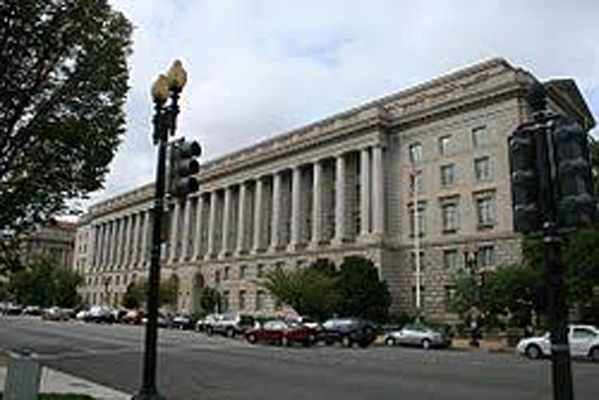
(Reported by Asha Bajaj, Image of Internal Revenue Service Bldg in US: Wikipedia)
Support Our Journalism
We cannot do without you.. your contribution supports unbiased journalism
IBNS is not driven by any ism- not wokeism, not racism, not skewed secularism, not hyper right-wing or left liberal ideals, nor by any hardline religious beliefs or hyper nationalism. We want to serve you good old objective news, as they are. We do not judge or preach. We let people decide for themselves. We only try to present factual and well-sourced news.
Support objective journalism for a small contribution.


