October 06, 2026 08:04 am (IST)

Follow us:


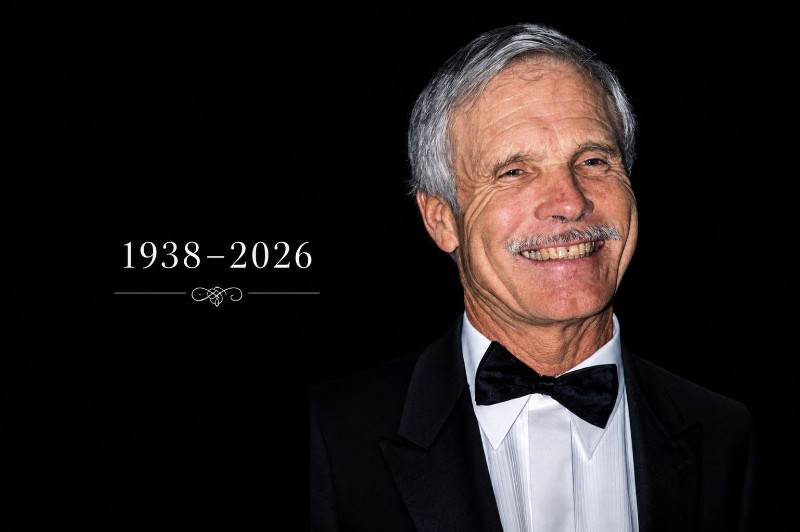 Ted Turner
Ted Turner: Media maverick who founded CNN and changed global TV news forever
One of the most influential figures in modern broadcasting, Ted Turner, who transformed television news by launching the world’s first 24-hour news channel, has died aged 87.
Turner, the founder of CNN and architect of a vast media empire, died peacefully surrounded by family, according to a statement issued by Turner Enterprises.
His career reshaped global television journalism and redefined how audiences consumed live news.
From pioneering the concept of cable “superstations” to creating around-the-clock news broadcasting, Turner became one of the defining media innovators of the late 20th century.
The man who changed TV news forever
Long before continuous news coverage became standard worldwide, Turner launched CNN in 1980. At the time, critics dismissed the idea of a 24-hour cable news network as commercially unrealistic.
However, CNN rapidly transformed into a global broadcasting force, particularly during major international crises and conflicts. The network’s live reporting style and instant coverage established a new benchmark for television journalism.
Turner’s decision to create CNN fundamentally altered how breaking news was delivered and consumed. The network became the template for countless broadcasters that followed across the world.
His influence extended beyond journalism. Turner also pioneered the cable “superstation” model, proving that television stations distributed through satellite and cable could compete with traditional national broadcasters.
Building a media empire
Born in Cincinnati, Turner joined his father’s billboard advertising business in 1961. After his father’s death two years later, he assumed control of the company at just 24 years old.
He expanded aggressively into radio and television, eventually acquiring a struggling Atlanta UHF station. Turner renamed it WTCG and distributed its programming nationally through satellite technology, laying the foundation for the Turner Broadcasting System.
The station later became TBS, one of America’s most recognisable cable channels.
Turner continued expanding his television footprint by launching TNT, Cartoon Network and Turner Classic Movies. He also acquired the extensive MGM film library, a move initially criticised but later viewed as a strategic masterstroke.
His networks became known for airing classic films, sports programming, wrestling and entertainment content to a growing national audience.
CNN’s global reach and political impact
CNN’s rapid rise turned Turner into one of America’s most powerful media figures. The channel’s international coverage expanded during events including wars, political crises and major global disasters.
Observers often credited satellite television networks like CNN with helping expose audiences behind the Iron Curtain to global events during the closing years of the Cold War.
Turner also pushed CNN towards internationalisation. He famously discouraged the use of the word “foreign” in reporting, preferring the term “international”.
The success of CNN eventually led to Turner’s merger with Time Warner in 1996, a deal that significantly increased his wealth but reduced his operational control over the company he had built.
‘Captain Outrageous’
Beyond media, Turner established himself as a successful sportsman and team owner.
He purchased the Atlanta Braves in 1976 and briefly served as the team’s manager during a difficult period. He later added the Atlanta Hawks to his growing portfolio.
Turner also earned acclaim in competitive sailing. In 1977, he skippered the yacht Courageous to victory in the America's Cup.
Two years later, he won the demanding Fastnet race, which became infamous after severe storms caused multiple deaths during the competition.
His flamboyant personality and outspoken style earned him the nickname “Captain Outrageous”.
Feuds, controversies and public persona
Turner’s career often attracted controversy. Known for his outspoken comments and unpredictable public appearances, he frequently clashed with rivals and critics.
His rivalry with media tycoon Rupert Murdoch became particularly famous after a sailing collision during the Sydney to Hobart yacht race in 1983.
Turner also drew criticism for comments that offended various groups over the years, even as he publicly promoted international cooperation and cultural understanding.
Despite controversies, his impact on the television industry remained undeniable.
Personal life and family
Turner married three times. His third marriage to actor Jane Fonda attracted widespread public attention before ending in divorce in 2001.
He was the father of five children and is survived by several grandchildren and great-grandchildren.
Away from broadcasting, Turner devoted significant time and resources to philanthropy and environmental causes. Through the Turner Foundation, he made extensive donations to humanitarian and sustainability initiatives worldwide.
He also became one of the largest private landowners in the United States and maintained the country’s biggest bison herd.
Lasting legacy in global media
Turner’s influence on modern broadcasting extended far beyond the networks he created. CNN’s success permanently changed television journalism, forcing broadcasters worldwide to adapt to continuous live coverage.
His vision for satellite broadcasting, cable expansion and global news distribution helped shape modern media consumption.
From pioneering 24-hour television news to building an entertainment empire spanning sports, films and international broadcasting, Ted Turner left behind one of the most significant legacies in media history.
#Ted Turner
# Ted Turner obituary
# CNN founder dead
# Ted Turner dies
# CNN history
# media mogul Ted Turner
# 24-hour news channel
# Turner Broadcasting System
# Time Warner merger
# Ted Turner legacy
# CNN founder obituary
# media empire
# global television pioneer
Support Our Journalism
We cannot do without you.. your contribution supports unbiased journalism
IBNS is not driven by any ism- not wokeism, not racism, not skewed secularism, not hyper right-wing or left liberal ideals, nor by any hardline religious beliefs or hyper nationalism. We want to serve you good old objective news, as they are. We do not judge or preach. We let people decide for themselves. We only try to present factual and well-sourced news.
Support objective journalism for a small contribution.



Latest Headlines
Canada Post cuts fuel surcharge by 15% on domestic parcels through the holiday shipping push
Mon, Oct 05 2026
Canada: Monument in Victoria lists nearly 25,000 Japanese Canadians uprooted from B.C. homes in Second World War
Mon, Oct 05 2026
Carney unveils National AI Council to guide Canada's push for tech sovereignty and 250,000 new jobs
Sat, Oct 03 2026