


Stop the waste: UN food agencies call for action to reduce global hunger
New York: With one-third of food produced for human consumption lost or wasted, and millions still going hungry, the UN’s food-related agencies are shining a spotlight on the issue: on Monday, the Food and Agriculture Organization (FAO) published its annual State of Food and Agriculture report with findings that could lead to a reduction in food loss and waste, and, earlier in October, the World Food Programme (WFP) launched its awareness-raising #StopTheWaste campaign.
Pinpointing the problem
“How can we allow food to be thrown away when more than 820 million people in the world continue to go hungry every day?”, asked FAO Director-General Qu Dongyu in the foreword to his agency’s report.
The study contains fresh estimates of the scale of the problem, enabling a better understanding of the challenge, and suggesting possible solutions, by looking into why, and where, loss and waste take place. The FAO makes a distinction between food losses, which occur at the stage when food is harvested, up until the moment when it is sold; and food waste, which occurs during the sale and consumption of food.
Getting to the root of the issue
Guidance for countries, suggesting policies and interventions that can reduce food loss and waste, is also part of the report. This include providing incentives for farmers and producers, to make it cost-effective for them to be more efficient and less wasteful. These incentives may involve financial help for smallholders, who don’t have the means to pay for improved techniques and practices.
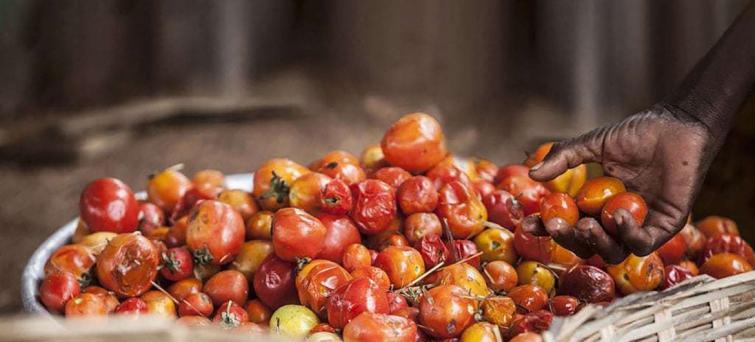
Photo caption and credit:
FAO/Giulio Napolitano
According to the UN, an estimated one-third of all food is lost or wasted worldwide as it moves from where it is produced to where it is eaten.
Armed with better data, such as the information in the report, governments will be able to target their actions more accurately and raise awareness of the benefits of reducing food loss and waste among suppliers and consumers and influence their decision-making.
The World Food Programme is also hoping to bring the problems surrounding food loss and waste to a larger audience, with the launch of its #StopTheWaste campaign, which is encouraging all of us to think about how we can reduce food waste in our daily lives.
In the field, WFP helps smallholder farmers to get their food to the people who need it most, by providing new technologies for storage and transportation, that prevent crops from spoiling prematurely and connecting them with markets.
Find out more about the ways that the WFP, and other parts of the UN system, are working to help reduce food losses and waste, and achieve the Sustainable Development Goal of Zero Hunger by 2030, in our feature story, “Can we feed the world and ensure no one goes hungry?”
Support Our Journalism
We cannot do without you.. your contribution supports unbiased journalism
IBNS is not driven by any ism- not wokeism, not racism, not skewed secularism, not hyper right-wing or left liberal ideals, nor by any hardline religious beliefs or hyper nationalism. We want to serve you good old objective news, as they are. We do not judge or preach. We let people decide for themselves. We only try to present factual and well-sourced news.
Support objective journalism for a small contribution.


