


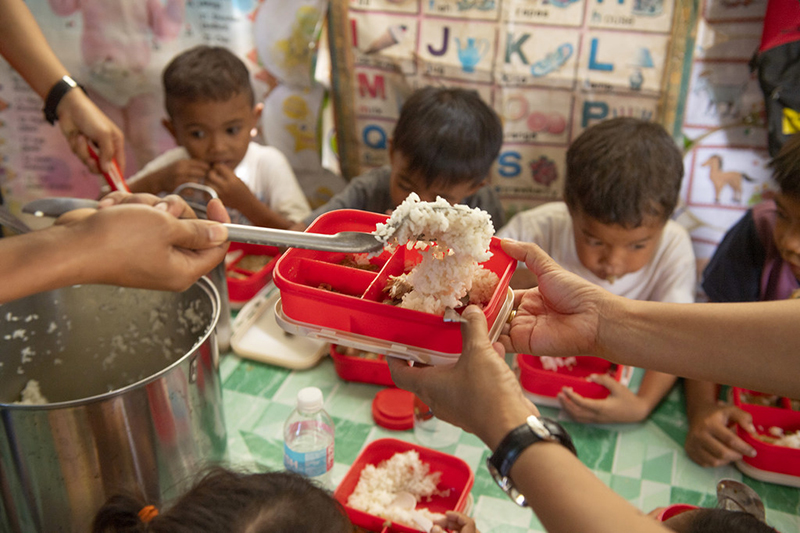
 School Meals
School meals fuel young minds, but most vulnerable still missing out: WFP
New York: Nearly 420 million children across the globe receive school meals – that’s 30 million more than in 2020 - the World Food Programme (WFP) said in a new report published on Tuesday.
Amid the current global food crisis, with many families struggling to put food on the table, governments are increasingly seeing the value of these initiatives, according to the State of School-Feeding Worldwide report.
Critical safety net
School meals are a critical safety net for vulnerable children and households at a time when some 345 million people are facing crisis levels of hunger, including 153 million children and young people.
“As the world grapples with a global food crisis, which risks robbing millions of children of their future, school meals have a vital role to play. In many of the countries where we work, the meal a child gets in school might be the only meal they get that day,” said Carmen Burbano, WFP’s head of school-based programmes.
Learning from the pandemic
WFP said countries worked to restore free lunch programmes following the disruption of the COVID-19 pandemic three years ago. This has led to the rise in boys and girls receiving school meals, who represent 41 per cent of all children in school.
The global recovery received crucial support from the government-led School Meals Coalition, established in 2020 to respond to the pandemic’s impact.
Today, 75 governments are members of the coalition, which aims to ensure every child can receive a daily, nutritious meal in school by 2030.
Greater investment needed
However, the report also highlighted differences between rich countries, where 60 percent of school children get meals, and low-income nations, where only 18 per cent do. This is four per cent below pre-pandemic levels, with Africa registering the biggest declines.
The report also found that some low-income countries have been unable to rebuild their national programmes and need more help. In eight African countries, less than 10 per cent of school children receive a free or subsidized school meal.
“Investments are lowest where children need school meals the most,” said Ms. Burbano. “We need to support low-income countries in finding more sustainable ways of funding these programmes. This will require time-bound support from donor countries as well as increases in domestic investment.”
Wide-ranging benefits
The report also highlighted the wide-ranging benefits of school meals. A free lunch attracts more students to the classroom, especially girls, and helps them to learn better when they are there, for example.
Experts also found that the combination of health and education offers children in poor countries the best route out of poverty and malnutrition.
Furthermore, research has shown that school meals programmes can increase enrolment rates, as well as attendance, by nearly 10 per cent.
Support Our Journalism
We cannot do without you.. your contribution supports unbiased journalism
IBNS is not driven by any ism- not wokeism, not racism, not skewed secularism, not hyper right-wing or left liberal ideals, nor by any hardline religious beliefs or hyper nationalism. We want to serve you good old objective news, as they are. We do not judge or preach. We let people decide for themselves. We only try to present factual and well-sourced news.
Support objective journalism for a small contribution.


