


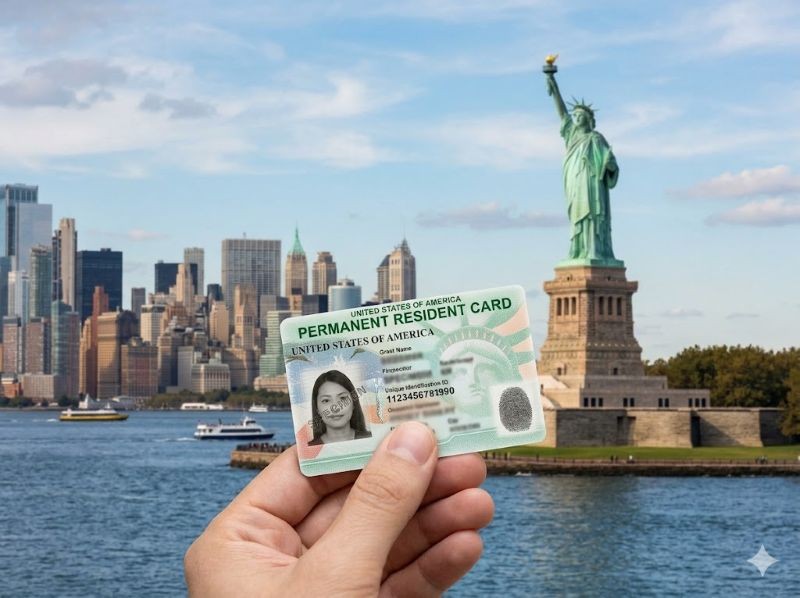
Planning a Green Card? New US immigration policy could send you back home to file
A recent policy memo reportedly issued by U.S. Citizenship and Immigration Services (USCIS) has triggered widespread discussion over potential changes to how foreign nationals on temporary visas may apply for permanent residency in the United States.
According to the claims circulating, the updated guidance significantly narrows the use of “Adjustment of Status” (AOS)—the process that allows eligible individuals already in the U.S. on temporary visas to apply for a Green Card without leaving the country.
An alien who is in the U.S. temporarily and wants a Green Card must return to their home country to apply.
— Homeland Security (@DHSgov) May 22, 2026
This policy allows our immigration system to function as the law intended instead of incentivizing loopholes.
The era of abusing our nation’s immigration system is over. https://t.co/ofyEYGPDLC
'Extraordinary relief' Classification for in-country applications
The reported memo is said to reframe Adjustment of Status as an “extraordinary form of relief,” suggesting that approvals would now be limited to exceptional or case-specific circumstances.
If accurate, this would mark a notable departure from long-standing practice, where AOS has been a standard and widely used pathway for eligible visa holders, including students, skilled workers, and certain family-based applicants.
Consular processing emphasized in reported guidance
Under the alleged new framework, most applicants seeking permanent residency would be required to pursue consular processing—meaning they would need to return to their home country to complete the Green Card application through a U.S. embassy or consulate.
The reported change is described as affecting a broad category of non-immigrant visa holders, including those on student, tourist, and temporary work visas.
Government rationale cited in the report
The memo, as described in circulating accounts, argues that the shift is intended to restore the “original intent” of immigration law and reduce misuse of temporary visa categories.
It also reportedly states that routing applications through consulates abroad would help streamline USCIS operations, allowing the agency to focus more on humanitarian cases, naturalization applications, and visa petitions for victims of crime and trafficking.
Concerns over enforcement and immigration pathways
The purported policy change has raised concerns among immigration observers, particularly regarding its potential impact on individuals already residing in the United States legally on temporary visas.
Critics, in general discussions around such proposals, often argue that limiting Adjustment of Status could increase administrative burden, disrupt long-term residency planning, and require applicants to leave the country during an already complex immigration process.
As of now, the details remain subject to verification through official USCIS publications and formal regulatory notices. Major changes of this scale typically involve public announcements, legal review, and implementation timelines.
Support Our Journalism
We cannot do without you.. your contribution supports unbiased journalism
IBNS is not driven by any ism- not wokeism, not racism, not skewed secularism, not hyper right-wing or left liberal ideals, nor by any hardline religious beliefs or hyper nationalism. We want to serve you good old objective news, as they are. We do not judge or preach. We let people decide for themselves. We only try to present factual and well-sourced news.
Support objective journalism for a small contribution.


