


New UN funding to help sustain critical aid programmes for hundreds of thousands in Ethiopia
New York, Jan 30 (JEN): The United Nations Central Emergency Response Fund (CERF) – a pool of funding which supports critical relief operations around the world – has allocated $10 million to help meet the life-saving needs of the most vulnerable people displaced due to conflict in Ethiopia.
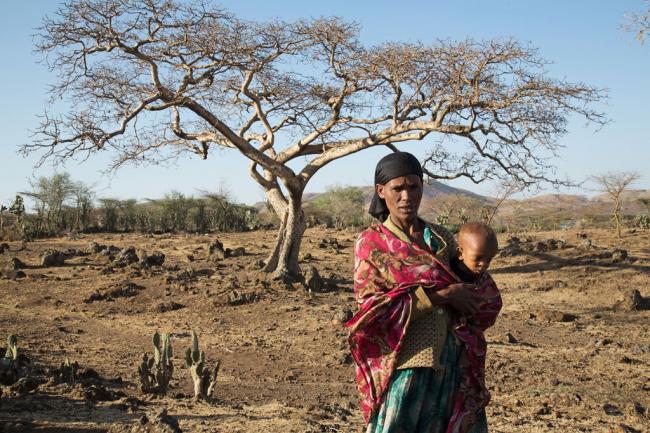
Since early September, escalation of conflict along the country's Oromia and Somali regional borders has driven hundreds of thousands from their homes into about 370 sites for internally displaced persons (IDPs), where they are living with needs many times greater than the response.
“On Monday I visited two IDP re-settlement sites where I saw first-hand the critical importance of scaling up our support to meet their needs,” said Mark Lowcock, the UN Emergency Relief Coordinator and the head of the Office for Coordination of Humanitarian Affairs (OCHA), during a visit to the horn of Africa nation.
According to a news release issued by OCHA, the Ethiopian Government has also stepped up its response and is delivering vital food assistance to those in need. It is also working on efforts to facilitate voluntary returns and provide alterative re-settlement sites.
“The CERF funds will complement the Government plan and will enable humanitarian partners to provide life-saving assistance, including shelter, clean water and sanitation services for those most in need among the displaced and host communities. The funds will also support solutions for displaced people to re-establish their lives,” said Lowcock, who manages the CERF on behalf of the Secretary-General.
In spite of having to brave acute crises, over the past decades Ethiopia has made remarkable strides in development and addressing hunger. However, its susceptibility to drought continues to plague its people with food insecurity, with rains having failed as recently as in 2016-2017.
And therefore, along with humanitarian response there is an urgent need to strengthen the country's long-term resilience to future shocks.
Highlighting this importance, Lowcock was joined during his visit by Achim Steiner, the Administrator of the UN Development Programme (UNDP), to solidify humanitarian and development collaboration and to make joint recommendations for solutions to break the cycle of loss of development gains due to recurrent disasters.
“The international community must seize opportunities to support Ethiopia in strengthening Government-led sustainable development structures at all levels that can mitigate human risks and the threat from increasingly frequent and severe droughts,” added the news release, urging support to strengthen Government and civil society capacities for peace building and reconciliation.
Established by the UN General Assembly in 2006, CERF is a humanitarian funding mechanism that enables a faster and more effective response to vital needs of people affected by natural disasters, armed conflicts, or under-funded crises.
Over the past two years, the Fund has provided $49 million to aid programmes in Ethiopia, sustaining important relief efforts for those in dire need.
Photo: OCHA/Charlotte Cans
Support Our Journalism
We cannot do without you.. your contribution supports unbiased journalism
IBNS is not driven by any ism- not wokeism, not racism, not skewed secularism, not hyper right-wing or left liberal ideals, nor by any hardline religious beliefs or hyper nationalism. We want to serve you good old objective news, as they are. We do not judge or preach. We let people decide for themselves. We only try to present factual and well-sourced news.
Support objective journalism for a small contribution.


