

Netanyahu faces possible exit as Israel President picks Gadi Eisenkot to form next govt
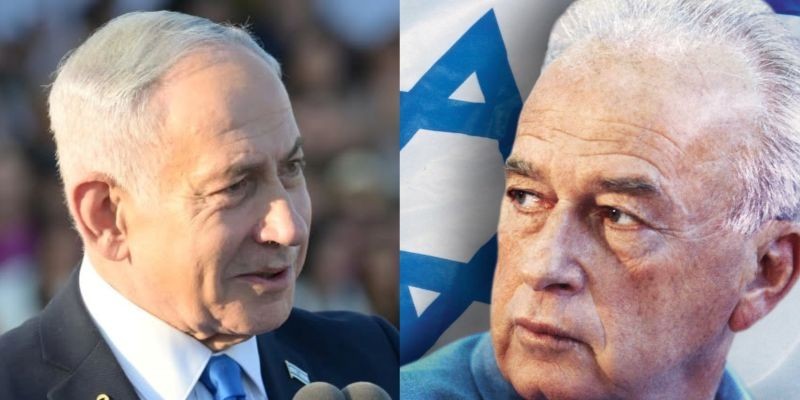
Israeli Prime Minister Benjamin Netanyahu's hold on power faces a fresh challenge after President Isaac Herzog tasked former Israel Defense Forces (IDF) chief Gadi Eisenkot with forming the country's next government following an election that produced a fractured parliament.
Eisenkot, leader of the Yashar party, secured recommendations from 67 lawmakers, giving him the first opportunity to assemble a coalition and potentially end Netanyahu's tenure as Israel's longest-serving prime minister.
He has 28 days to form a government, with the possibility of a 14-day extension.
Herzog announced his decision after consultations with political parties represented in the Knesset, Israel's 120-member parliament.
The October 27 election failed to give any political bloc a clear majority, leaving coalition negotiations crucial to determining the country's next government.
The formal mandate is scheduled to be handed over to Eisenkot at a ceremony at the President's Residence in Jerusalem on Sunday, November 8, at 5 pm local time.
Herzog had also spoken with Netanyahu and Eisenkot before making his decision.
The numbers behind Eisenkot's mandate
The consultations revealed a significant difference in lawmakers' recommendations. A total of 67 legislators backed Eisenkot, while 46 supported Netanyahu. Seven lawmakers declined to recommend either candidate.
Eisenkot's support comprised 48 lawmakers from the Change Bloc, seven from the Arab party Ra'am and 12 from the Joint List.
Netanyahu received backing from his right-wing and religious allies, while the seven members of United Torah Judaism (UTJ) abstained from recommending anyone.
Although the recommendations give Eisenkot the first opportunity to form a government, they do not automatically translate into a parliamentary majority capable of surviving a confidence vote.
Who is Gadi Eisenkot?
A former chief of staff of the Israel Defense Forces, Eisenkot entered politics in 2022 and emerged as Netanyahu's principal challenger in the latest election.
His Yashar party finished second with 21 seats, while the broader Change Bloc secured 48 seats.
His campaign brought together parties from across the political spectrum, including centrist, centre-left and right-wing groups, largely united by their opposition to Netanyahu.
The two Arab-led political factions, which collectively secured 19 seats, also recommended Eisenkot for the premiership.
However, their support presents a challenge. While the Arab parties have indicated their willingness to back an alternative government from outside the coalition, several parties within Eisenkot's own camp are reluctant to depend on Arab lawmakers for parliamentary support.
The ultra-Orthodox parties could also play a decisive role. UTJ's decision not to recommend Netanyahu has left room for negotiations, although disagreements over military conscription could complicate any potential arrangement.
Eisenkot could explore several possibilities, including forming a minority government with outside support from Arab lawmakers, negotiating an agreement with ultra-Orthodox parties or pursuing a broader national unity government.
Netanyahu rejects political setback
Netanyahu has not conceded defeat and continues to advocate a national unity government. He has also criticised the possibility of an administration relying on Arab-led parties, accusing them of supporting terrorism.
Eisenkot's party has pushed back against Netanyahu's remarks, accusing him of portraying Arab lawmakers as a security threat. It has also called on members of Netanyahu's Likud party to reconsider their alliance with far-right political partners.
The political standoff comes amid deep divisions over Israel's war in Gaza, national security, military conscription and Netanyahu's leadership.
Eisenkot briefly served in Netanyahu's wartime cabinet following Hamas's October 7, 2023, attack before returning to the opposition.
He subsequently became a vocal critic of the government's handling of the war and ruled out joining any administration led by Netanyahu.
His military background and security credentials have been central to his political campaign. If he succeeds in forming a government, Eisenkot would also become Israel's first Mizrahi prime minister, representing a community with ancestral roots in the Middle East and North Africa.
What happens if Eisenkot fails?
Eisenkot will have 28 days from formally receiving the mandate to put together a coalition. Herzog can grant him an additional 14 days if required.
If Eisenkot fails, the president could give another political leader an opportunity to form a government.
Netanyahu could potentially receive another mandate, depending on the outcome of subsequent consultations.
If repeated attempts fail, Israel could face another election, potentially in early 2027.
For now, Herzog's decision has opened a new chapter in Israel's post-election political negotiations.
Netanyahu, who has served longer than any other prime minister in the country's history, faces the possibility of losing office after his coalition failed to retain its majority.
Eisenkot, meanwhile, must turn the 67 recommendations into a workable parliamentary arrangement.
The challenge ahead is not simply to bring together parties opposed to Netanyahu, but to find common ground on the issues that will determine whether a new government can survive.
Support Our Journalism
We cannot do without you.. your contribution supports unbiased journalism
IBNS is not driven by any ism- not wokeism, not racism, not skewed secularism, not hyper right-wing or left liberal ideals, nor by any hardline religious beliefs or hyper nationalism. We want to serve you good old objective news, as they are. We do not judge or preach. We let people decide for themselves. We only try to present factual and well-sourced news.
Support objective journalism for a small contribution.