

Nepal: Two months on, UN agency shifts post-quake focus from emergency response to recovery
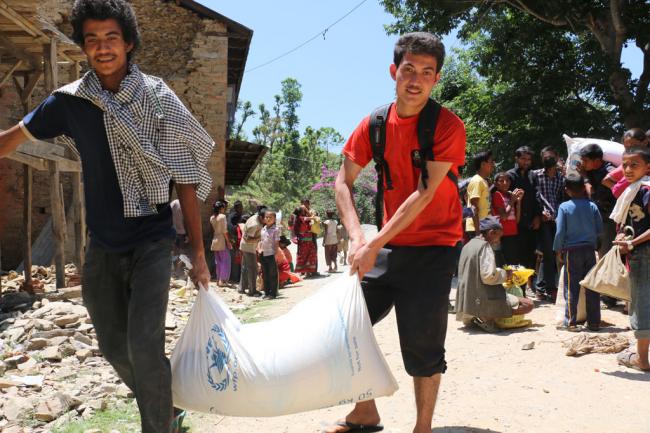
“We have started the difficult transition from the emergency period to the early recovery phase – providing cash, employment and rebuilding opportunities for people heavily impacted by the disaster,” on Wednesday said Richard Ragan, WFP's Emergency Coordinator in Nepal, where the Programme has managed to feed nearly 2 million people.
In addition, a cash-for-work programme in areas with access to markets has already allowed 9,000 households to build transitional shelters and to work on their fields, which in turn have revitalized local markets, highlights a press release.
Up to 20,000 porters, who lost their livelihoods because of the abrupt end to the trekking season, now receive income for repairing vital trails blocked by the quake and for bringing essential supplies to communities that have been cut off.
However, on the eve of the international donor community meeting in Kathmandu, WFP is warning that it is running out of funds. WFP's operation in Nepal is 38 percent funded and US$74 million is needed to keep providing assistance until the end of the year.
As the lead UN agency for logistics, WFP also needs to continue providing essential logistics and telecommunication services, including maintaining a fleet of trucks to transport relief items and building materials on behalf of the entire humanitarian community.
“The hard work begins now”, stressed Ragan. “People need to urgently build temporary shelters against the monsoon rains. The heavy downpours risk causing more landslides on land already unsettled by scores of aftershocks. To maintain and expand an operation of this scope and logistical complexity, sustained financial support is required.”
WFP is the world's largest humanitarian agency fighting hunger worldwide, delivering food assistance in emergencies and working with communities to improve nutrition and build resilience. Each year, WFP assists some 80 million people in around 75 countries.
Photo: WFP/Angeli Mendoza
Support Our Journalism
We cannot do without you.. your contribution supports unbiased journalism
IBNS is not driven by any ism- not wokeism, not racism, not skewed secularism, not hyper right-wing or left liberal ideals, nor by any hardline religious beliefs or hyper nationalism. We want to serve you good old objective news, as they are. We do not judge or preach. We let people decide for themselves. We only try to present factual and well-sourced news.
Support objective journalism for a small contribution.