


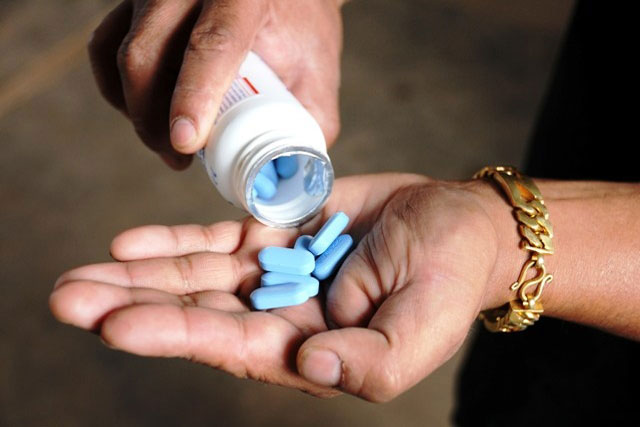
Nearly 21 million people now have access to HIV treatment – UN agency
New York, Nov 22(Just Earth News): About 20.9 million people now have access to the antiretroviral therapy, according to a new report by the UN agency leading the global push to end AIDS, spotlighting that this remarkable progress has been made possible by people living with HIV demanding their rights, strong leadership and financial commitment.
“People, no matter what their health needs, require comprehensive health solutions that are accessible, available, acceptable and of good quality,” Michel Sidibé, the Executive Director of the Joint UN Programme on HIV/AIDS (UNAIDS), said in the foreword of the agency’s new report, Right to health, which was launched yesterday in South Africa.
Sidibé cited South Africa as an example of a dramatic scale-up of HIV treatment, saying that while in 2000, the country had 90 people on treatment, on Tuesday, there are more than four million.
“On Tuesday, South Africa has the biggest life-saving treatment programme in the world […] This is the kind of acceleration we need to encourage, sustain and replicate,” he said.
The rising treatment helps keep more people living with HIV alive and well. As treatment access has increased for pregnant women living with HIV, new infections among children have been rapidly reduced by almost half worldwide, according to UNAIDS.
The new report highlights the gaps in accessing to health, while also providing some innovative examples of AIDS response.
One challenge is to ensure 17.1 million people, including 1.2 million children, have access to HIV treatment, especially in the countries where new HIV infections are rising.
In that regard, the report points out that new HIV infections are rising at a rapid pace in countries that have not expanded health services to those most affected. Wherever the right to health is compromised, HIV spreads, says UNAIDS.
In eastern Europe and Central Asia, for example, new HIV infections have risen by 60 per cent since 2010, and AIDS-related deaths by 27 per cent.
While in sub-Saharan Africa, the majority of new HIV infections are among young women and girls aged between 15 and 24 years.
The report “has been giving a voice to people living with HIV and giving affected communities and civil society the means to demand their right to health,” stressed Sidibé.
He further called on Governments to respect, protect and fulfil the right to health of everyone and reiterated the world’s commitment to Sustainable Development Goal 3, to ensure good health and well-being for all.
Photo: Sean Kimmons/IRIN
Source: www.justearthnews.com
Support Our Journalism
We cannot do without you.. your contribution supports unbiased journalism
IBNS is not driven by any ism- not wokeism, not racism, not skewed secularism, not hyper right-wing or left liberal ideals, nor by any hardline religious beliefs or hyper nationalism. We want to serve you good old objective news, as they are. We do not judge or preach. We let people decide for themselves. We only try to present factual and well-sourced news.
Support objective journalism for a small contribution.


